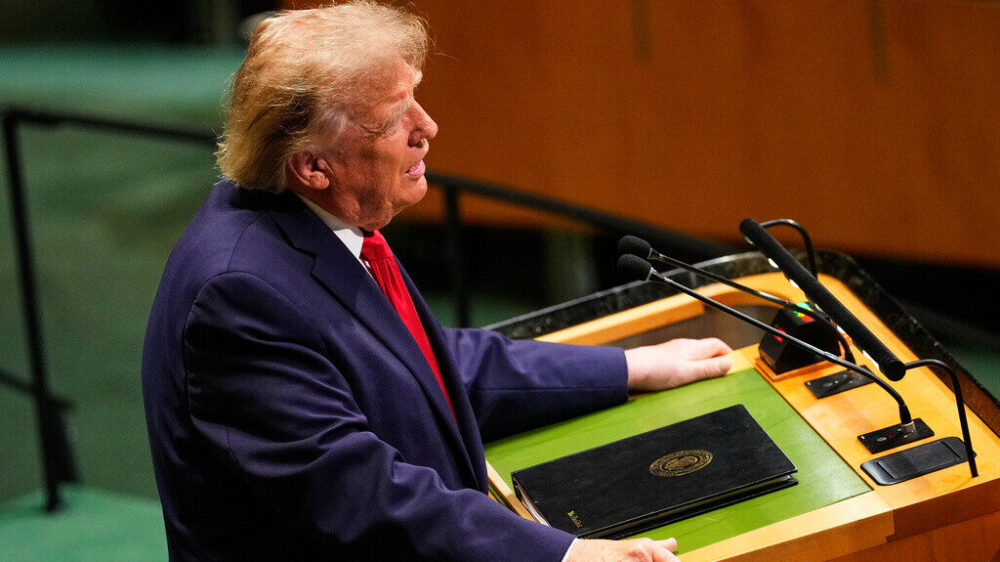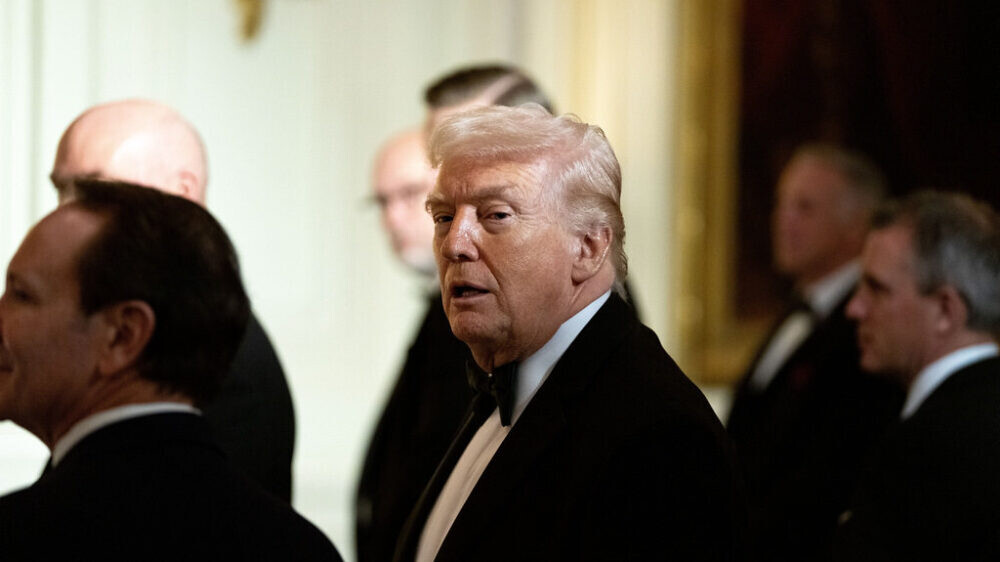

Donald Trump's idea of the presidency is fundamentally different from the views of his predecessors, note The New York Times journalists Maggie Haberman and Jonathan Swan. According to them, the main difference between the current head of the White House is that he does not take into account the opinion of Congress at all. Haberman and Swan's book Regime Change: Inside the Imperial Presidency of Donald Trump was published last week, in which they described how the president showed them a document that claimed he had more power than Attila, Genghis Khan, Napoleon Bonaparte, Joseph Stalin, Adolf Hitler and Mao Zedong.
CNN, which received a copy of the book before its official publication, previously wrote that this interview took place in March of this year. When Haberman and Swan asked Trump about his role in history, he asked an aide to bring over a two-page document containing a list of “powerful historical figures.” The text stated that each of them “although fearsome in their time, had no global influence. Their power was local, whereas Trump’s was not.”
The day after the CNN material was published, Trump posted the document on the social network Truth Social.
“Historically, powerful people were characterized by brutal conquests and the fear they instilled in the populations under their influence. Such famous figures usually include Alexander the Great, Caesar, Genghis Khan, Attila, Tamerlane, Napoleon, and, more recently, Hitler, Mao and Stalin. The key difference between all of these and President Trump is their lack of global influence. Their power was limited to local areas (although in historical context some of these regions were quite extensive). They did not have anywhere near the level of control over modern logistics, human resources, technology and global economic power that President Trump wields,” the document says.
Trump accompanied the publication with the comment: “I'm fine with that.” He also credited Dave King, whom he called a “presidential historian.”
However, according to CNN, journalists found out that King is, in fact, a confidant of South African golfer Gary Player, a member of the World Golf Hall of Fame. According to The Guardian, Trump first met King when he worked as a caddy for Player. King himself told reporters that he first shared his thoughts about the extent of Trump's power with Player, and then personally expressed his views to the president during their golf game together in Florida.
In addition, Haberman and Swan cite a number of other episodes in the book relating to Trump's second presidential term. In particular, they describe the confusion of White House staff amid the scandal surrounding the materials in the case of sex offender Jeffrey Epstein, as well as the decision-making process related to Iran.
Among the scenes described in the book is the moment when White House press secretary Caroline Levitt finds Trump in the Oval Office with a tube of superglue, trying to attach gold decorative elements to a marble fireplace himself.
The authors emphasize the ambiguous nature of Trump's interaction with Israeli Prime Minister Benjamin Netanyahu. According to them, the president's attitude towards the Israeli leader changes from “warm to cold and back again.” The book claims that Trump called Netanyahu a “fraud” in private conversations.
The authors also provide examples of Trump’s harsh statements against members of his own administration, including Commerce Secretary Howard Lutnick. As for former Federal Reserve Chairman Jerome Powell, the book claims Trump chose to “make his life miserable” rather than fire him.