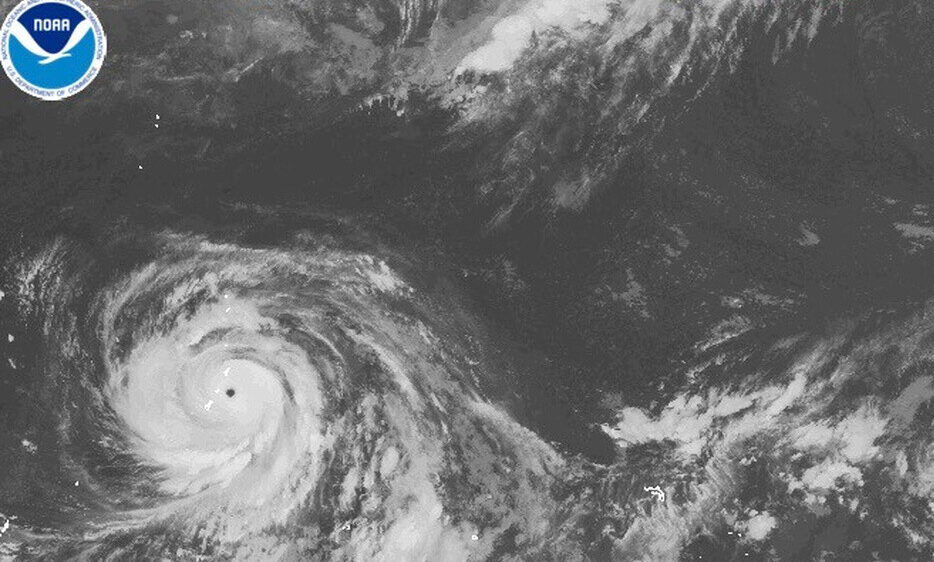

One of the most powerful super typhoons of this year hit US territories in the Pacific region on Monday. The main impact of Cyclone Bavi fell on the island of Rota, part of the Northern Mariana Islands, CNN reports. According to the local branch of the US National Weather Service (NWS), on Monday morning the maximum sustained wind speed in the typhoon zone exceeded 180 mph (about 290 km/h), and wind gusts reached more than 150 mph (about 240 km/h).
A tropical cyclone reaches super typhoon status when maximum wind speeds reach 150 mph (about 240 km/h). This value corresponds to the fifth (highest) category of hurricane activity on the Saffir-Simpson scale, notes the Associated Press.
According to the US National Weather Service, the typhoon brought intense rainfall, with up to 20 inches (51 cm) expected to fall near the storm's epicenter. Within hours on Monday, the storm caused coastal flooding from storm surge and caused widespread destruction and damaged power lines. Strong winds also overturned cars. According to preliminary information, there have been no reports of deaths or injuries yet.
WATCH: Winds ripping through the island of Rota as the eyewall of Super Typhoon #Bavi passes over.
🎥: Masum Bhali pic.twitter.com/t9764SwGt2— Scott (@RandomHeroWX) July 6, 2026
An emergency warning for the island of Rota was issued at 4:30 a.m. local time and was in effect until 6:30 a.m. The population was advised to stay in shelters and not approach windows.
“Going outside can lead to death due to debris and other objects flying at high speed. Unreinforced buildings and structures may be damaged or completely destroyed,” the NWS said.
The disaster also affected the other Northern Mariana Islands, as well as the island of Guam, located about 80 km from Rota. Guam is home to two key US military installations – Andersen Air Force Base and Naval Station Guam. The airbase is home to B-1, B-2 and B-52 strategic bombers, while a second facility is home to five U.S. Navy attack submarines. The total number of American military personnel on the island is more than 7,000 people. On Monday, the military placed Guam on the highest level of alert for the storm.
In a video message, Guam Gov. Lou Leon Guerrero urged residents to avoid travel and stay home, stressing that authorities are “fully prepared to protect the public and respond to emergencies.” Evacuation centers were opened throughout the island. Shelters on the islands of Saipan and Tinian began accepting people on Thursday, earlier than usual, to give local residents additional time to prepare for the storm.
By Monday, all flights at the main airports of Guam and the Northern Mariana Islands had also been canceled, and several seaports were temporarily suspended.
In the afternoon, Bavi continued to move west at speeds of 10 to 13 mph (16 to 21 km/h).
Guam already experienced super typhoon Sinlaku last April and has not fully recovered from its consequences. There were no casualties on the ground, but some residents who lost their homes continue to sleep in tents. In some areas of Saipan and the neighboring island of Tinian, the population is still without electricity.
“This year’s typhoons have almost completely paralyzed our region. Right now, relief efforts are playing a huge role: help from non-governmental organizations, donations from people across the United States, support from partners at the Federal Emergency Management Agency (FEMA) and other agencies. It will be a long recovery,” said Landon Aidlett, a meteorologist with the NWS.