
Scientists from the Vera Rubina Observatory launched the largest digital camera as part of the Legacy Survey of Space and Time (LSST) project. The telescope, perched atop a mountain in Chile, will take hundreds of pictures every night for ten years. The collected data will help create a detailed map of the billions of stars in the Milky Way and billions of galaxies beyond it, reports the Associated Press.
The LSST Camera with a resolution of 3,200 megapixels is comparable in size to a compact car, and its weight is about three tons, notes Space.com. The record size and resolution of the Vera Rubin Observatory camera are the result of twenty years of scientific research and engineering development. The observatory received its first test images last June. Among them are color images of the Triple Nebula and the Lagoon Nebula, located thousands of light years from Earth.
The moment we've all been waiting for is finally here…
On June 29, 2026, NSF—DOE Rubin Observatory officially began the Legacy Survey of Space and Time (LSST)!
🔗: https://t.co/uovjz1hbPW pic.twitter.com/tvNZt0Hzrc
— NSF-DOE Rubin Observatory (@VRubinObs) June 30, 2026
According to scientists, high resolution will reveal details of the Universe that remained inaccessible to previous generations of telescopes. Already in the first month and a half of preparatory observations, the observatory discovered more than 11,000 previously unknown asteroids.
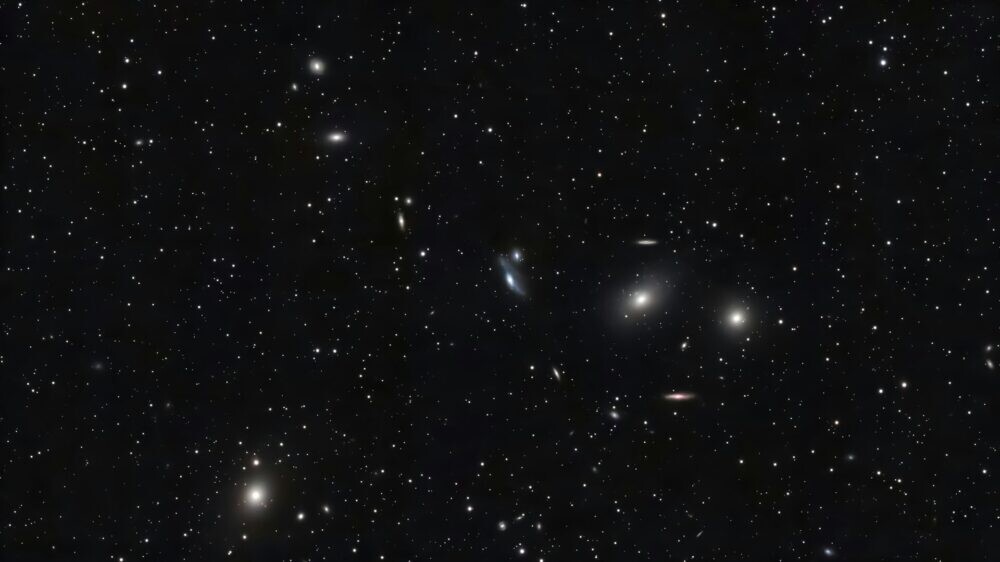
“The LSST survey will give us the opportunity to observe billions of galaxies, approximately 17 billion stars in our Milky Way galaxy, and millions of objects in the solar system,” said Aaron Rudman, deputy director of the observatory.
Unlike many modern telescopes designed to study individual space objects, the LSST Camera has an ultra-wide field of view and will be able to cover almost the entire southern sky. Continuous observation of the same areas for ten years will allow scientists to track changes in the Universe in accelerated shooting mode. In particular, it will be possible to observe the outbreaks and extinction of supernovae, measure the rate of expansion of the Universe and monitor the removal of individual galaxies.
“Many scientists around the world will have access to this wealth of data and will be able to explore the Universe in ways that were not previously possible,” said Phil Marshall, the observatory’s deputy director for operations.
Researchers hope that the project will help get closer to understanding the nature of dark matter – an invisible substance that scientists estimate makes up about 85% of all matter in space – as well as dark energy, which is supposedly causing the expansion of the Universe.
“It is the study of the expansion of the Universe and dark energy that is of greatest interest to me. For now we only call this phenomenon dark energy, because we do not fully understand its nature. The Rubin Observatory data will be much more accurate than anything we have today,” Rudman added.
Special software will be used to process enormous amounts of information. The system will be able to generate up to seven million notifications about new astronomical events every night.
The first images obtained by the observatory are already available for viewing.