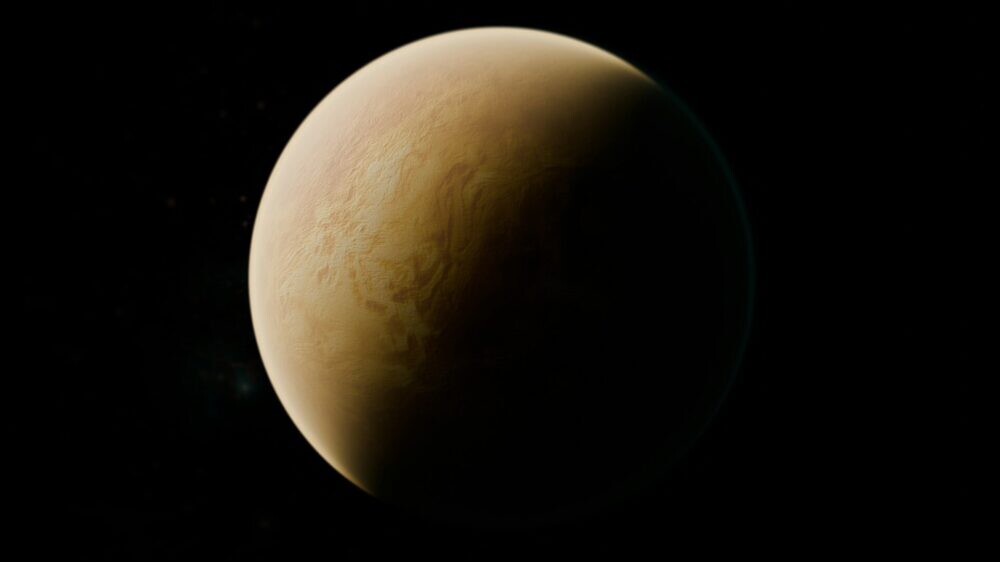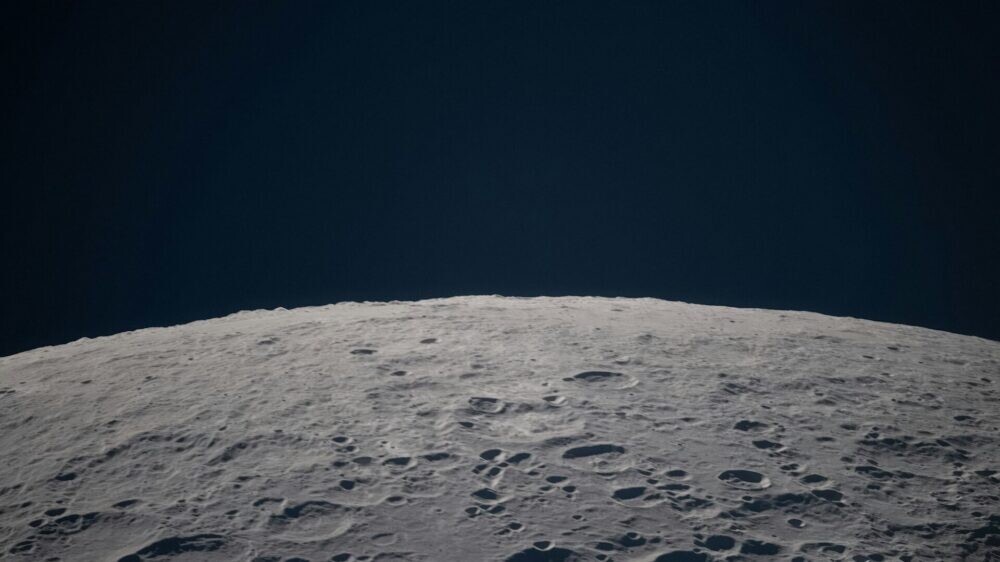

The Chinese Tianwen-2 probe transmitted the first image of asteroid 2016 HO3, one of the few known quasi-satellites of the Earth. The picture was taken from a distance of about 20 km, Xinhua reported, citing the China National Space Administration (CNSA). After the approach, the device began to carry out a scientific research program – as part of the mission, the probe will observe an object in orbit, after which it will collect soil samples and deliver them to Earth.
The asteroid was first discovered by the probe's onboard optical instruments in early June of this year. By June 19, the distance between the device and the object had decreased to 2,000 km, and by the beginning of July, Tianwen-2 approached the asteroid by 20 km, which made it possible to obtain the first enlarged image.
China's Tianwen-2 aims to collect samples from asteroid Kamo'oalewa and return them to Earthhttps://t.co/1dCVYF76vL
— Scientific American (@sciam) July 6, 2026
Asteroid 2016 HO3 was discovered in 2016 and is also called Kamoaleva. It belongs to the class of Apollo asteroids – near-Earth asteroids whose orbits intersect or pass near the orbit of the Earth. In addition, scientists classify it as a quasi-satellite because its orbital period around the Sun almost coincides with the Earth's year. Currently, only seven such objects are known, writes The Planetary Society.
2016 HO3's orbit is so close to Earth's that it appears as if the asteroid is orbiting our planet.
“Because quasi-satellites are relatively close to Earth and often small in size, they are easier to study and even change their trajectory than most other asteroids. This makes them ideal targets for missions like China's Tianwen-2, notes The Planetary Society.
2016 HO3 is reportedly between 40m and 100m in diameter. If these estimates are confirmed, it could be the smallest asteroid ever examined by a spacecraft at such close range.
The probe will study the asteroid for nine months, after which it will collect about 100 g of soil from its surface and deliver samples to Earth. After this, the device will perform a gravity maneuver and head towards comet 311P/PANSTARRS, which is expected to arrive in January 2035.
“In the future, the probe will conduct more detailed scientific research to obtain information about the shape of the asteroid, the substances in its composition and internal structure. This data will help prepare for the sample collection operation,” Xinhua reported.
Scientists want to find out what substances the quasi-satellite is made of, how its unusual orbit was formed and whether it contains traces of water. The samples brought back to Earth will also test the hypothesis that 2016 HO3 may be a fragment of the Moon that was separated as a result of a powerful collision in the past.