




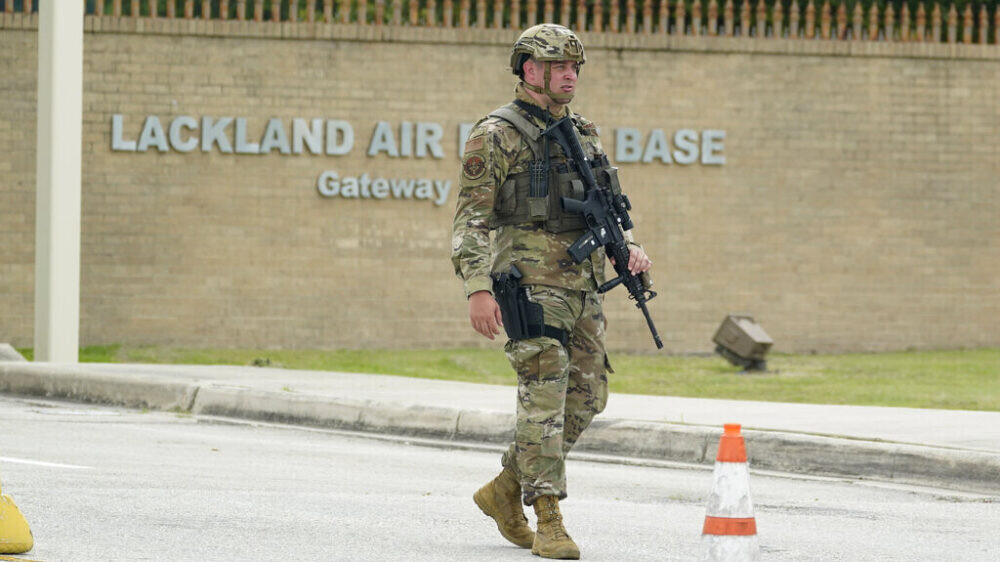

More than 150 cases of influenza infection have been identified among recruits at Lackland Air Force Base in Texas, part of Joint Base San Antonio. Two servicemen were hospitalized, ABC News reported, citing sources.
In April, Pentagon chief Pete Hegseth announced the end of the decades-old requirement that military personnel be vaccinated against influenza every year. He explained this by the need to get rid of “any absurd and excessive regulations that only weaken our combat capabilities.” According to him, the decision is aimed at “restoring freedom of choice and strengthening the armed forces.”
A U.S. Air Force (U.S. Air Force) spokesman told ABC News that a “localized influenza outbreak” began about three weeks ago among basic military training cadets.
“Medical and public health officials have taken steps to isolate and treat symptomatic cadets to reduce further spread of infection and continue to closely monitor the situation,” an Air Force spokesperson said in a statement to ABC News.
According to the source, the sick are receiving the necessary medical care, including antiviral drugs. In addition, medical personnel are monitoring cadets who were in close contact with sick people.
At the same time, the Air Force is investigating the death of one of its recruits at the base. Keon McDaniel was transported to Brooke Army Medical Center last week after feeling unwell, where he later died. It is unclear whether his death is related to the flu outbreak.
Since mandatory vaccinations were lifted, the vaccination rate among new recruits at the San Antonio base is about 40%, sources said. Previously, this figure was close to 100%.
Pentagon spokesman Sean Parnell told ABC News that the department, through the Under Secretary of Defense for Personnel and Readiness, recently granted exceptions to the new policy to the U.S. Army, Navy, Air Force, National Security Agency (NSA) and the Defense Health Administration (DHA). These departments may require vaccination in individual cases.
“These decisions are made based on a thorough risk assessment and are aimed at maintaining maximum combat readiness, combat effectiveness and training of personnel while protecting the most vulnerable groups,” Parnell said.
He added that the responsibility for implementing such exceptions lies with the relevant structures that requested permission.
Public health experts warn that not requiring vaccinations could lead to an increase in flu-related complications among military personnel. They also fear that the number of severe cases will increase in subsequent seasons if the most vulnerable groups do not receive preventive vaccinations.
Recruits are much more susceptible to severe influenza compared to other categories of military personnel. A study published last year by the U.S. Military Health Administration found that between the 2010-2011 influenza season and the 2023-2024 season, those under 25 had the highest rate of influenza hospitalizations among active-duty military personnel.
Influenza vaccination has been mandatory for US military personnel since 1945, due both to concerns about the possible use of biological weapons by US adversaries and to the dire consequences of the 1918-1920 influenza pandemic.
In 1949, compulsory vaccination was abolished due to the declining effectiveness of the existing vaccine. It later turned out that the cause was mutations of the influenza virus. After adaptation of the vaccine to new strains, mandatory immunization of military personnel was reintroduced in the early 1950s.