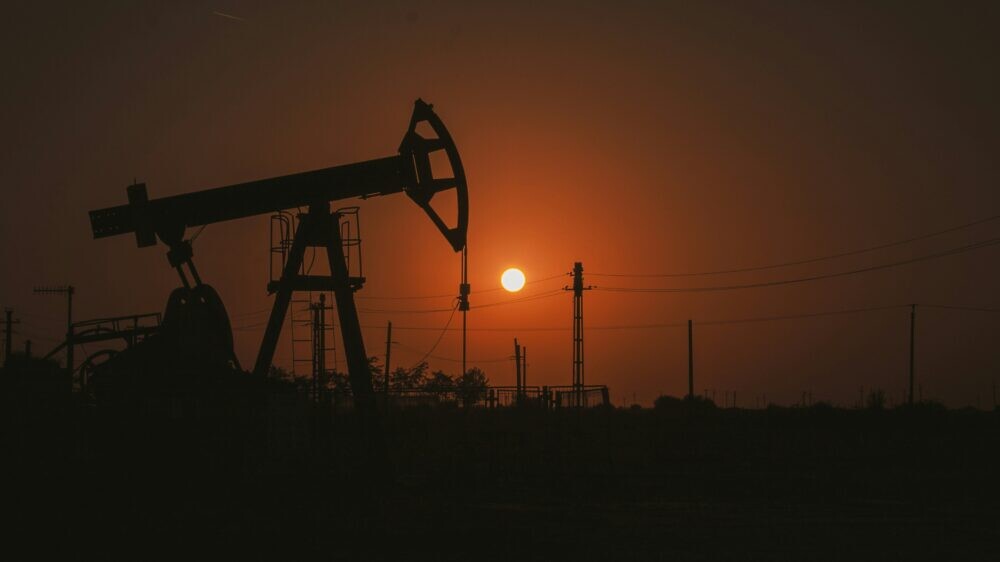






The US Strategic Petroleum Reserve (SPR) has approached one of its lowest levels in history at 307 million barrels of crude, Michael Mische, a professor at the University of Southern California Business School, said in an interview with RTVI. The expert linked the indicators published by the US Energy Information Administration not only with a 26% drop in reserves during President Donald Trump’s administration’s operation against Iran, but also with a previous 39% decline in reserves from 2021 to 2025 during Joe Biden’s leadership.
As Miche noted, SPR is one of the largest crude reserves in the world and has a maximum volume of 714 million barrels, which are stored in 61 underground reservoirs along the Gulf Coast. The figure disclosed by the authorities on July 26 was only 43% of the maximum level, which turned out to be an anti-record since 1983.
“Despite this close to the lowest rate in history, the magnitude of the reduction in reserves due to the Iranian operation release was less as a percentage than the overall reduction during the Biden administration,” Miche said.
The regular release of oil reserves by the Biden administration was associated with attempts to curb inflation and reduce global commodity prices, but, as Miche noted, they were not successful.
Upon returning to the White House, Trump ordered an increase in production, which, coupled with US access to resources from Venezuela, Brazil, Ecuador, Canada and Guiana, will allow the American market to avoid catastrophic consequences when reserves are released, the expert believes.
“The constraint remains the transportation problem, which must be solved by expanding and modernizing the US pipeline system,” Miche said.
In this regard, the expert also positively assessed the Trump administration's decision to suspend the so-called Jones Act of 1920, which required the use of only US-made ships to transport goods between American ports. According to the expert, this has simplified the delivery of fuel by tankers from the Gulf of Mexico region to California, which is one of the main consumers in the country.
The professor said logistics would also continue to play a role internationally due to instability around the Strait of Hormuz, Bab el-Mandeb and the Black Sea, but the market was “more creative” than expected.
“It is obvious that there was a short-term “shock” that affected the prices of raw materials, gasoline and aviation fuel, but it turned out to be short-lived and manageable. Compared to the oil shocks of 1973 and 1978, markets responded relatively quickly and confidently. The release of SPR reserves, together with the US military presence, as well as the country’s export of raw materials, helped reduce the level of fear and stabilize market volatility,” Miche said.
The specialist added, however, that in the long term, oil producers and consumers will still have to “rebuild their logistics networks” to avoid a repeat of the problems due to the blocking of the Strait of Hormuz during the American military operation.