



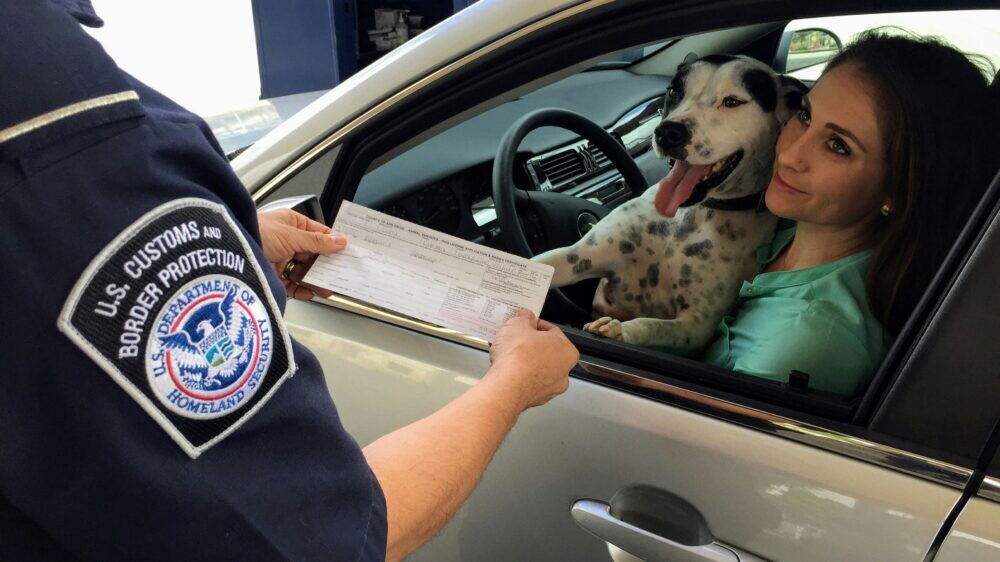

The US Supreme Court has expanded the power of federal border agents to deport permanent residents or green card holders who return to the country after traveling abroad. Now, suspicion of committing crimes is enough for this, but previously it was necessary to have evidence.
The 6-3 decision was based on the case Blanche v. Lau, in which a green card holder, Chinese national Mook Chai Lau, was accused of counterfeiting trademarks when selling a shipment of clothing in New Jersey. While the investigation was underway, he traveled abroad, and upon returning to the United States, border guards did not allow him through as a Lawful permanent resident (LPR), but let him in with a temporary permit.
Lau was later found guilty and authorities began deportation proceedings. The Chinese himself argued that the border authorities did not have the right to change his legal status upon entry, since at that time he had not yet been convicted, but was only accused. His lawyers insisted that such a decision required “clear and irrefutable evidence” of guilt, which was not there. As a result, the Supreme Court ruled that now only suspicion is sufficient for deportation.
“The Immigration and Nationality Act (INA) does not require a border officer to have clear and convincing evidence that a lawful permanent resident has committed an act involving moral turpitude before considering that resident as an applicant for entry,” the court's decision said.
Lau himself was not deported; the case was sent back to a lower court to determine whether his actions amounted to “immoral misconduct” that warranted deportation. At the same time, Judge Ketanji Jackson, joined by Sonia Sotomayor and Elena Kagan, said in a dissenting opinion that the government must prove that a green card holder actually committed a crime before stripping him of his LPR status, ABC News reports.
“With this decision, the court allows the government to return a person who has been granted permission to enter the country to the status of “applicant for permission to enter.” This sequence of actions contradicts the plain language and essence of the law,” Jackson said.
The liberal organization Alliance for Justice echoed the concerns, and its president, Rachel Rossi, said the decision could expand the ability to revoke green cards. He characterized this decision as the desire of US President Donald Trump to “use the law as a weapon to attack his opponents.” Separately, the human rights activist called for preparations for “fabricated” deportations.
“It [решение Верховного суда США] provided the Trump administration with yet another way to circumvent the law and advance its xenophobic agenda. If the government wants to take away someone's green card, all they have to do now is charge that person with a crime, regardless of whether they are found guilty,” Rossi said.
At the same time, immigration lawyer Daniel Hernandez said in an interview with WFLA that the decision does not cancel green cards and does not affect all legal permanent residents. It concerns only a narrow category of cases involving returnees being accused of committing certain criminal offenses, the expert explained.
“This has always existed. When people with criminal records leave the country without understanding the immigration consequences, they may face additional scrutiny upon their return. If you don’t have a criminal record, you have nothing to fear,” Hernandez added.
The Department of Homeland Security (DHS) also responded to the decision. The agency's general counsel, James Percival, noted the positive impact of the ruling in a letter to Newsweek.
“The Supreme Court has upheld the legality of an important tool that the Department of Homeland Security has long used to prevent criminals from entering our country. Big victory! – Percival wrote.