
A team of scientists from the US, Canada and the UK were able to establish for the first time how the exoplanet WD 1856 b, discovered in 2020, survived the decay of the star it orbited. The breakthrough study, published in the journal Nature, was based on observations from the James Webb Telescope and, astronomers hope, will make it possible to predict the evolution of the solar system.
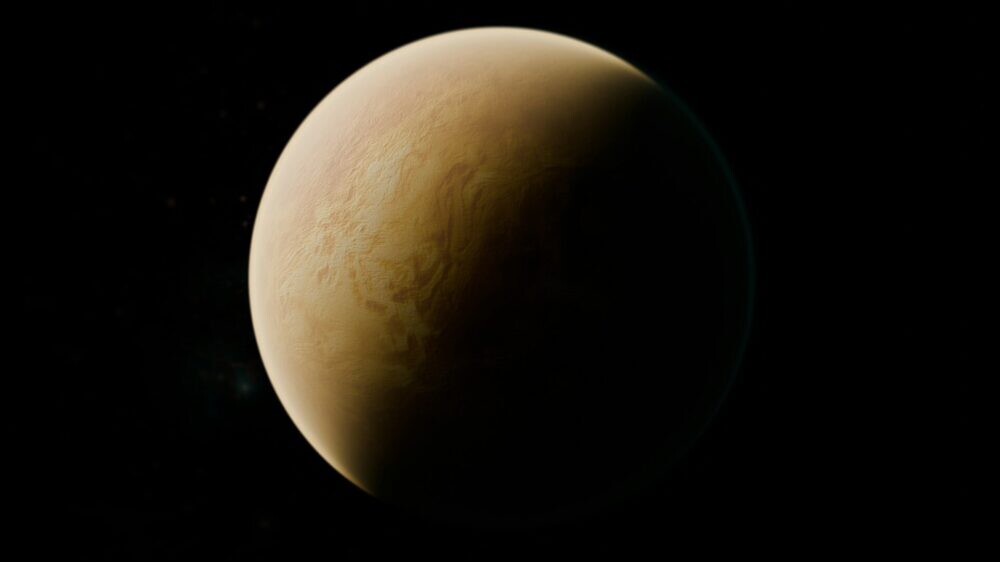
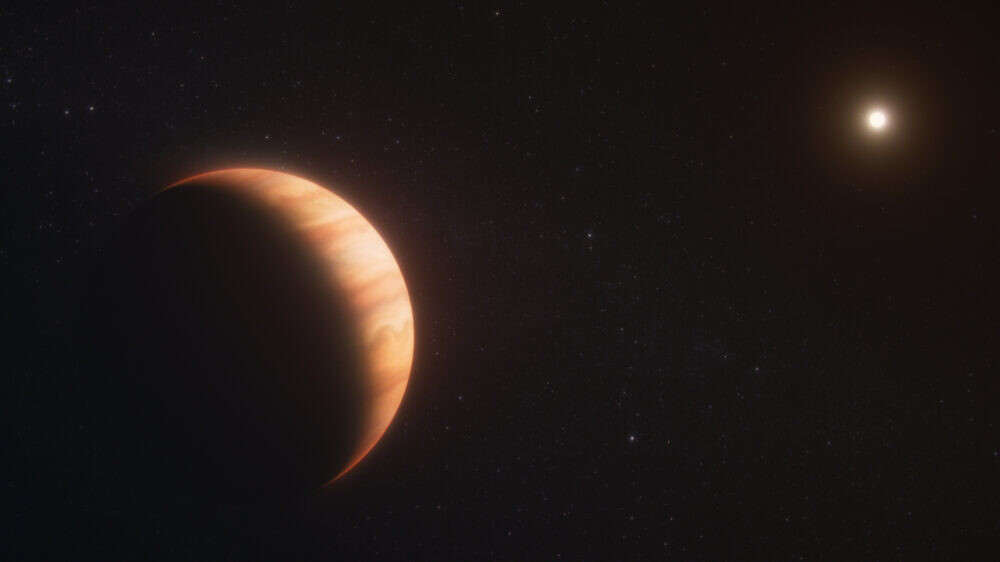
WD 1856 b is a gas giant, that is, a large celestial body consisting primarily of hydrogen and helium, as well as other gases. The exoplanet is significantly larger than Earth in size and mass.
At the time of observation, WD 1856 b was orbiting a white dwarf – the dim, cooling core of a star, at a distance 50 times less than the distance from the Earth to the Sun. During the period of cooling of the core and shedding of the outer layers, stars usually go through the red giant stage and begin to attract nearby planets in order to extend their life cycle.
As Newsweek notes, there is a consensus in astronomy that the Sun will suffer the same fate in the next few billion years, and the role of “fuel” before its extinction will be played by at least Mercury and Venus.
The gravitational influence of neighboring red dwarfs and other stars helped prevent WD 1856 b from approaching its star during this dangerous period, noted the lead author of the publication, Ryan McDonald from the University of St. Andrews in Scotland.
“Our research shows that this inward migration occurred billions of years after the death of the star,” Newsweek quoted MacDonald as saying.
In addition, the researchers found that the planet retained an atmosphere containing methane. The discovery marks the first time astronomers have been able to characterize a planet orbiting a dead star in this way, and gain unprecedented insight into its chemical composition and condition.
This demonstrates that even planets around stellar remnants can retain measurable atmospheres, opening up new possibilities for studying the evolution and potential habitability of planetary systems, said study co-author Christopher O'Connor of Northwestern University's Center for Interdisciplinary Studies and Research in Astrophysics.
“In about five billion years, our Sun will go out, and we don’t know exactly what will happen to the planets at that time. The fact that planets can survive into this final stage of a star's life cycle really expands the range of possibilities for where and when habitable planets could exist in the universe,” O'Connor says.
A similar movement of planets can occur in the solar system, the scientist adds. After the Sun fades and dies, the surviving planets will initially move further away because the remaining white dwarf will have less mass. The study proves that the death of a star is not the end for planets in their system, its authors believe.