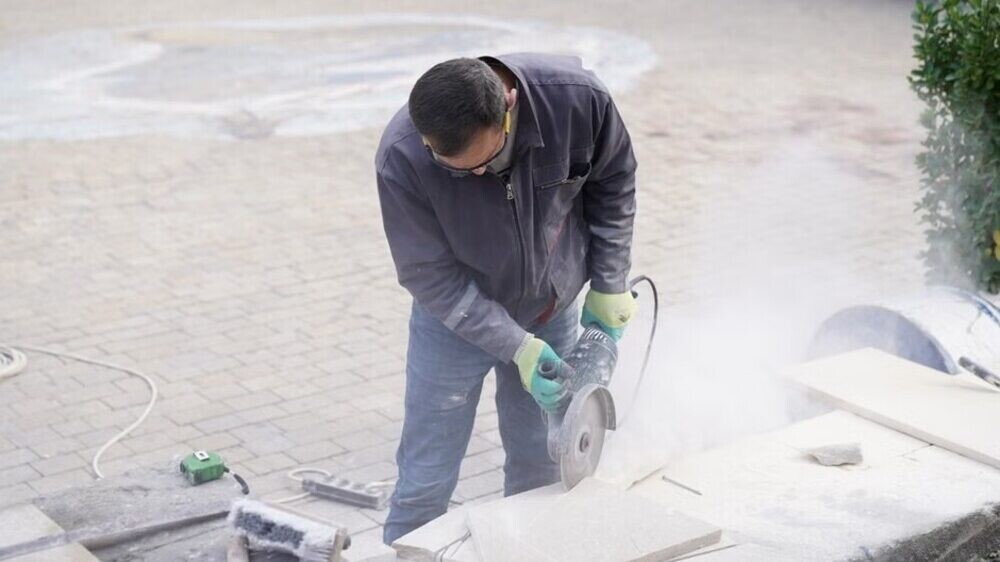

From January 2019 to June 2026, the California Department of Public Health (CDPH) identified 592 cases of silicosis, a disease caused by silica dust. However, it was not the end consumers of popular kitchen countertops made from this stone that were affected, but the workers who were involved in their manufacture.
Silicosis is an incurable disease resulting from chronic occupational exposure to silica dust. It often affects those who work with stones and various rocks that contain quartz. Workers in mines, pottery workshops and manufacturing industries are at risk. Since 2000, silica dust has been classified by the US government as a known human carcinogen.
The mortality rate from silicosis in California has been at least 5% in recent years, with 31 deaths reported and 65 workers requiring lung transplants, a new report notes.
According to a California Department report, the average age of workers diagnosed with silicosis is 46 years, and the average age of workers who die from the disease is 52 years. Additionally, 99% of all cases occur in men, and about half of the cases have been reported in Los Angeles County.
In May 2026, the California Occupational Safety and Health Standards Board ordered the development of emergency regulations, including a ban on working with engineered stone (the so-called raw material for making countertops) containing more than 1% crystalline silicon.
Despite the measures taken, there are a number of problems, for example, ventilation systems and dust control tools are not installed in kitchen interior manufacturing areas due to the high cost of their installation and maintenance. Also, at such enterprises the permissible level of dust is many times exceeded.
“Compliance with current regulations is difficult. In 2024, OSHA was able to inspect only 85 of more than 1,300 California countertop shops, and 95% were found to have safety violations,” the CDPH study clarified.
The study was co-authored by David Michaels, a professor of environmental and occupational health at the Milken Institute School of Public Health at George Washington University and a former assistant secretary of labor at the U.S. Occupational Safety and Health Administration. He emphasized that engineered stone typically contains more than 90% crystalline silica, putting workers who cut, grind and polish the material at particular risk.
“Hundreds of workers have gotten sick because of the production of quartz countertops, a product we don't need, especially when there is a safer alternative. With hundreds of diagnosed cases of silicosis in California, it is likely there are thousands across the country,” Michaels said.
Doctors and health departments must continue to identify cases of the disease, the expert said. Doctors, in his opinion, should join the efforts “to stop this epidemic and save the lives of workers.”
As CDPH explains in the document, silicosis can be prevented by reducing or eliminating exposure to silica dust. That is why an integrated approach is needed to protect workers from its negative impacts, the study authors note.
According to analysts, this requires identifying cases of the disease, informing health authorities about them, strengthening epidemiological surveillance at both the state and local levels, and introducing new safety standards into legislation.