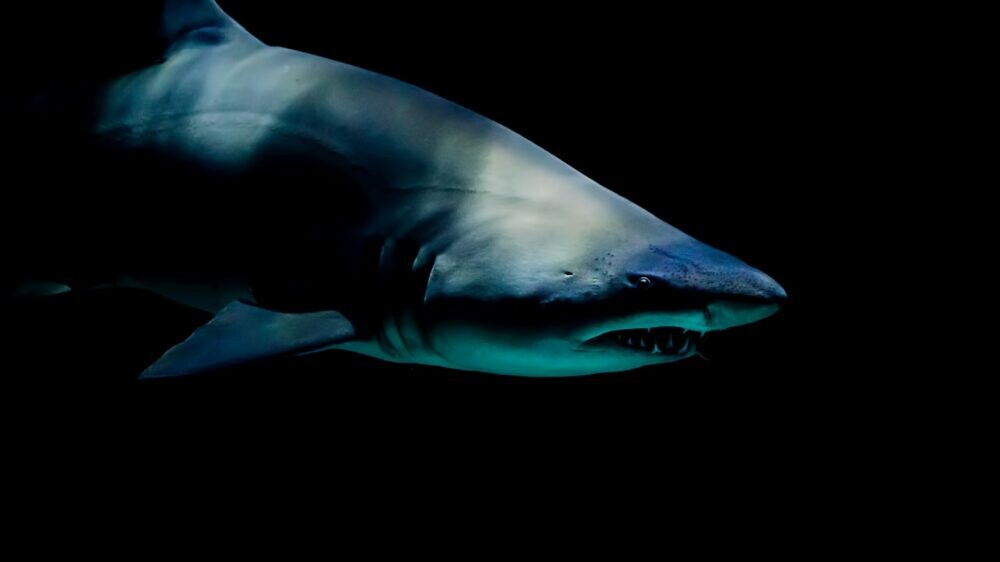

The ability to glow in the dark in the Dalatia or American straightmouth shark may help it in hunting, follows from the results of a study published in the journal iScience. As scientists have found out, in this species the “illumination” was not associated with camouflage, as in many other inhabitants of the depths of the ocean.
Researchers studied bioluminescence, or the ability to emit light through a biochemical reaction, in the species Dalatias licha, which is also known as the black shark. It is a large bottom-dwelling predator that is widespread and is found, among other places, off the coast of the United States in the Gulf of Mexico and the northeastern region. Caught individuals were used for the study.
It's usually understood as a way of hiding from things that might eat you. The kitefin shark could flip that idea on its head.https://t.co/rmqOKnraQK#NatureIsWild #GlowingShark pic.twitter.com/uU1NVQbgWH
— ScienceAlert (@ScienceAlert) August 7, 2026
Scientists measured the emission spectra and angular distribution of the light emitted by the predators. To do this, they used special equipment: spectrometers and luminometers. The biologists then compared the organisms' radiation to the theoretical distribution of light in the ocean.
“The ecological context, combined with the prominent dorsal luminescence and wide angular distribution of emission, indicates that its primary role is in detecting and capturing prey rather than camouflage for defense against predators,” the study notes.
Ichthyologists have also found that some deep-sea fish, squid and crustaceans have a kind of protection from the shark’s “headlights” – counterluminescence, that is, the ability to block the light emitted by predators. Such animals adjust the intensity, spectrum and angular distribution of their light to the ambient light.
“Counterluminescence is a common camouflage strategy in mesopelagic organisms, in which abdominal luminescence reduces visibility from below. Although its camouflage function to avoid predators is well known, its potential role in protection against predators remains poorly understood,” the scientific publication clarifies.
In the future, scientists plan to study the species in their natural habitat, but the data already obtained have helped to better understand the behavior of deep-sea animals, scientists are sure.
As RTVI previously reported, the US fears that more sharks will appear off the coast of California as the El Niño climate phenomenon intensifies. The habitats of stingrays, tropical fish, birds and sea snakes will also shift north.