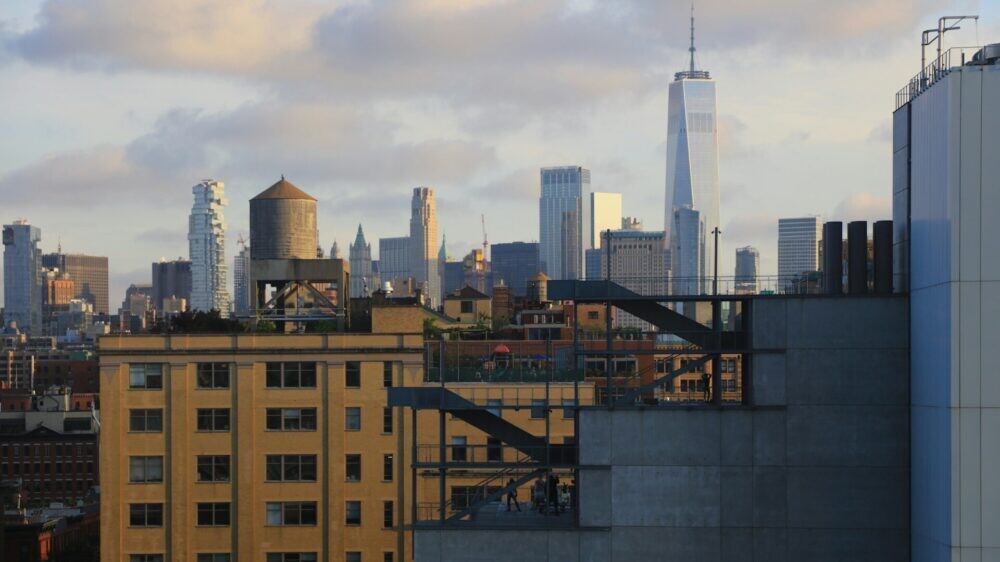

The New York City Department of Health is investigating cases of Legionnaires' disease in two Upper East Side neighborhoods, Carnegie Hill and Yorkville. The suspected source of infection is the vapors generated in cooling towers, cooling units that are usually located on the roofs of buildings.
According to the head of the city Department of Health, Alistair Martin, 14 cases of the disease have been confirmed so far. There are no deaths associated with this outbreak yet.
“We identified the outbreak early, with just two cases confirmed, and then acted quickly and decisively, putting holiday plans on hold to help our New Yorkers,” Martin said.
Crews are inspecting all cooling towers in the potential contamination area, which covers the 10028, 10128 and 10075 zip codes.
“In the coming days, we have a lot of work to do to establish the source of infection and identify new cases of the disease,” the head of the department noted.
It is emphasized that the spread of the disease is not associated with the water supply system of buildings. New York City Mayor Zohran Mamdani confirmed that Upper East Side residents can safely drink tap water, shower, cook and use air conditioning in their homes.
“Our Department of Health began an investigation earlier this week, and thanks to Commissioner Martin and his dedicated team, water sampling, laboratory testing and community outreach continued throughout the Independence Day holiday. This is not related to the building plumbing systems or air conditioning units,” Mamdani said.
Martin urged residents of the Carnegie Hill and Yorkville areas to closely monitor for flu-like symptoms and seek immediate medical attention. The warning also applies to anyone who has recently visited the east end of Central Park between East 76th and East 97th Streets.
Legionellosis, also known as Legionnaires' disease, is an acute infectious disease caused by the Legionella bacterium and most often occurs in the form of severe pneumonia. The most common method of transmission is inhalation of aerosols generated by spraying contaminated water. Without timely treatment, the disease can lead to serious complications and even death, says the World Health Organization (WHO).
The Legionella bacterium was first identified in 1977. A year earlier, it caused the death of 34 participants at an American Legion veterans' convention in Philadelphia, Pennsylvania. It was after this incident that the infection became known as Legionnaires' disease.
The incubation period for Legionnaires' disease usually ranges from two to 10 days. In the early stages, the disease may manifest itself as chills, loss of appetite, headache and general weakness. Some patients experience muscle pain, diarrhea, and confusion. The severity of the disease varies from a mild cough to rapidly developing pneumonia.
Without treatment, the patient's condition usually worsens within the first week after symptoms appear. The main risk factors for death are late diagnosis, untimely prescription of antibiotics, advanced age and the presence of concomitant diseases.