




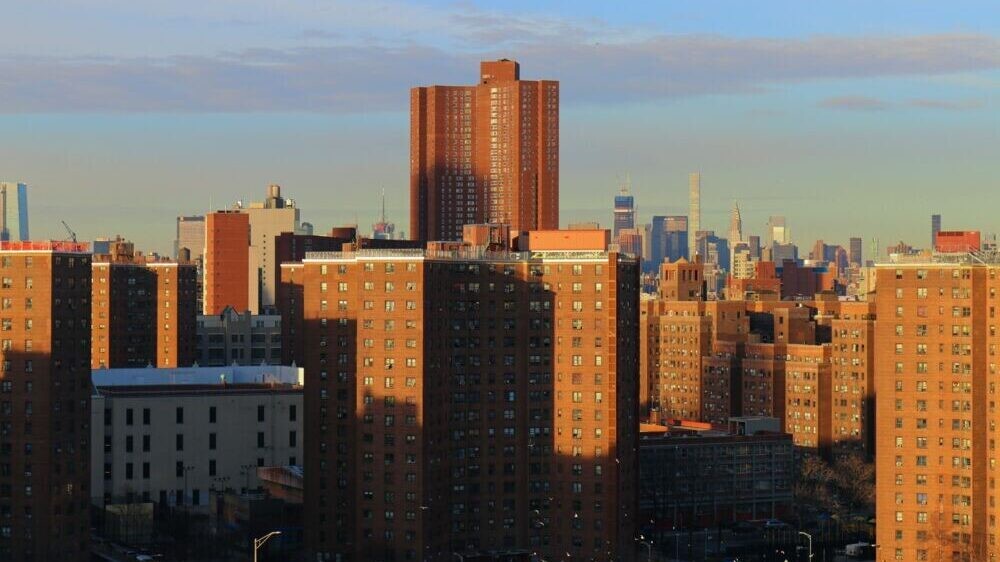

In New York, the problem of non-payments for rental housing is intensifying, including in the affordable housing segment – subsidized and regulated apartments for low-income families. As Politico writes, declines in rent collections that began during the COVID-19 pandemic have persisted even as the city's economy recovers and are beginning to threaten the financial viability of affordable housing operators.
Affordable housing has for decades been considered the main tool in the fight against homelessness and the displacement of poor residents from the city. Now the very financial stability of this model is under threat, the publication writes. The turnaround came during the COVID-19 pandemic, when the city's economy came to a virtual standstill and thousands of low-income families lost income. But even after the labor market recovered, payment discipline has not returned to pre-pandemic levels.
According to market participants, before the pandemic, owners of affordable housing typically collected at least 95% of expected rent payments – this is the level considered the minimum necessary to cover the costs of maintaining buildings, servicing debts and repairs. However, in 2025 the average was 89%. According to the New York Housing Conference, many properties are operating at a deficit, and the number of buildings with critically low rental collections continues to grow.
At first glance, the decline looks moderate, but affordable housing traditionally operates with minimal margins. Even the loss of a few percent of income becomes critical against the backdrop of rising costs for insurance, utilities, loan servicing and major repairs.
An additional burden is created by the growing number of problem objects. According to a study by Enterprise Community Partners and the National Equity Fund, the share of projects with critically low rental collection rates—less than 80%—increased from 3% in 2017 to 11% in 2024.
The reasons for the decline in payment discipline remain the subject of debate. Some operators attribute the problem to the consequences of the pandemic. From 2020 to 2022, New York State maintained a moratorium on evictions of tenants for nonpayment, and launched an emergency tenant assistance program that distributed more than $4 billion.
Some homeowners believe that the pandemic has changed the behavior of renters. During the lockdown, the state had a moratorium on evictions, and the tenants' rights movement promoted the slogan Cancel Rent – a call to write off accumulated rental debts. The essence of the idea was that the state should forgive or compensate tenants for housing debts that had accumulated due to job loss and a drop in income during lockdowns. Activists demanded that New York State not just freeze evictions, but cancel accumulated debts. As a result, some housing operators say, some tenants have a feeling that late payments no longer lead to immediate consequences.
However, housing policy experts say this explanation is incomplete. They point out that the problem primarily reflects the deteriorating financial situation of the city's low-income residents.
According to the Rent Guidelines Board, 51.6% of New York City renters are considered rent-burdened—that is, they spend more than 30% of their income on rent. Almost 29% of households spend more than half of their earnings on housing. In such conditions, even a relatively affordable rental rate can become unaffordable if income decreases or everyday expenses increase.
Families living in private affordable housing are especially vulnerable: upon move-in, the rent is calculated based on current income, but if earnings later drop, the rent is not always automatically reduced. As a result, debt begins to accumulate psychologically like an avalanche. Once the debt reaches several thousand dollars, many tenants simply no longer see a way out.
Similar problems are observed in the public housing stock. According to the New York City Housing Authority (NYCHA), residents' rent arrears are approaching $500 million, much of which has accumulated since the pandemic.
The paradox is that the crisis hits both sides at once – the growth of rental debts creates a systemic risk for the entire affordable housing market. On the one hand, renters face high costs of living and stagnant incomes. On the other hand, building owners lose the cash flow necessary to maintain their facilities in working order.
Essentially, New York is facing a new reality: the affordable housing crisis can no longer be attributed solely to a shortage of apartments. Even where housing is formally considered affordable, it may remain financially unaffordable for low-income families. In this sense, the current rise in rental debt is a symptom of a deeper problem associated with rising inequality and the rising cost of living in one of the most expensive cities in the United States.