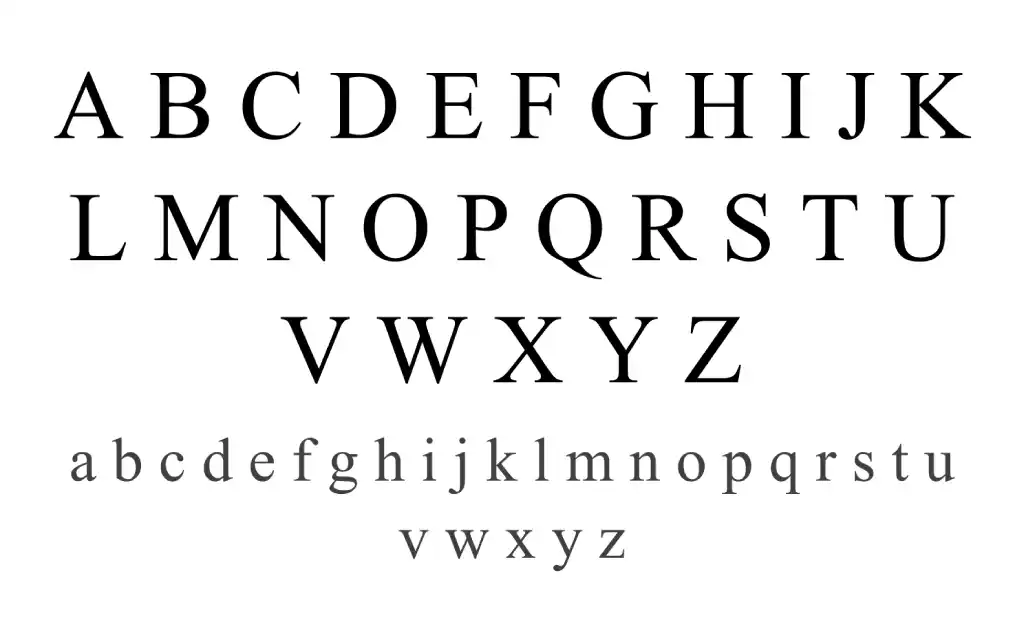

It would seem, what could the ancient Roman inscriptions on marble slabs possibly have in common with the modern program code that powers the most powerful digital systems? The answer lies in the brilliant simplicity and flexibility of the writing system, which over two millennia transformed from a narrow instrument of an ancient empire into a global standard of communication. It was Latin that became the intellectual bridge connecting different continents, language groups, and eras, allowing humanity to accumulate knowledge and exchange ideas with unprecedented speed. Examining this phenomenon, we see not just a set of symbols, but a history of the triumph of human thought, which managed to standardize the way of expressing meanings, making it understandable to billions of people regardless of their origin or native language.
From Rome’s Ambitions to Global Standard: Historical Transformation
The evolution of writing began with a rather limited set of graphic signs borrowed by the Romans from the Etruscans and Greeks, but thanks to the empire’s expansion, this graphic code spread across vast territories of Europe, North Africa, and the Middle East. Interestingly, the graphics of the signs themselves adapted over time to the needs of new languages emerging on the ruins of great civilizations, demonstrating extraordinary resilience. The main stages of this historical path look like this:
- Monumental script (Capitalis Monumentalis) — the classic lettering still considered the benchmark of elegance and proportion.
- Medieval book culture — the emergence of the Carolingian minuscule, which laid the foundation for the modern appearance of lowercase letters.
- Renaissance humanism — a revival of interest in antique graphics, which gave birth to the modern font families we see on our gadget screens every day.
- The Age of Discovery — the spread of the alphabet in the Americas, Australia, and Asia during the process of colonization and trade development.
- Digital revolution — the transformation of Latin signs into the basis for programming languages that became the language of technological progress.
This list indicates that the writing system was not a static constant, but was always in a state of dynamic development, adapting to new conditions. It managed to survive the fall of entire states, religious upheavals, and radical changes in the way information is transmitted. Today, looking at the keyboard of our laptop, we see the result of a thousand-year process of selection and refinement, where each letter has passed the test of time, becoming an indispensable element of global information architecture.
The Magic of Graphics: Why Did This Alphabet Become the Basis for Languages?
The success of this system is due to its extraordinary rationality: a limited number of signs allows for the transmission of an almost infinite palette of sounds, which is ideal for learning and recording. This graphic proved extremely convenient for rapid handwriting, and later — for mechanical reproduction on printing presses and digital devices. The universality of the system is expressed through several key features that have made it dominant in the modern world:
- High adaptability — the ease of adding diacritical marks to express the specific sounds of any language.
- Visual clarity — the absence of an excessive number of details, making text easy to perceive in any size.
- Ergonomics — the structure of the signs allows for the creation of fonts that minimize eye fatigue during prolonged reading of large amounts of information.
- Internationality — most international terms in science, medicine, and law are based precisely on this graphic foundation.
- Standardization of encoding — full compatibility with all modern computer operating systems and network protocols.
Thanks to these characteristics, the system became the “interface” of humanity, allowing different peoples to easily acquire new knowledge. It became a tool that removes barriers between scientists, artists, and businesspeople, ensuring rapid data exchange. When we see Latin letters, we subconsciously feel a connection to the vast space of modern civilization, where a common code allows for finding understanding without even having a deep grasp of the interlocutor’s language.
Cultural Influence: How Writing Shapes Thinking
The influence of this alphabet extends far beyond simple graphic representation of sounds, as the way of writing significantly affects cognitive processes and the structure of thinking as a whole. Mastering such a writing system opens access to vast arrays of Western culture — from philosophical treatises to modern internet content. The significance of this cultural phenomenon becomes evident when analyzing its impact on the development of the modern individual:
- Expansion of educational horizons — the possibility of free access to scientific literature, which is primarily published in international languages.
- Promotion of digital literacy — simplification of learning programming languages, which is a key skill for the professions of the future.
- Cultural integration — facilitation of translation and adaptation of works of art for a wide international audience.
- Support for global communication — creation of a unified communication space in social networks and messengers.
- Formation of visual aesthetics style — influence on design, architecture, and modern art through the harmony of font lettering.
We do not just use letters; we find ourselves inside a great flow of information that shapes our modernity. Every text written in this alphabet is a particle of a great mosaic canvas that paints a portrait of our time. This writing has become the language of progress, which does not set boundaries, but rather creates opportunities for a constant dialogue. In a world that is constantly changing, this system remains an unchangeable foundation upon which we build the future, while maintaining respect for the majestic history behind every written word.