


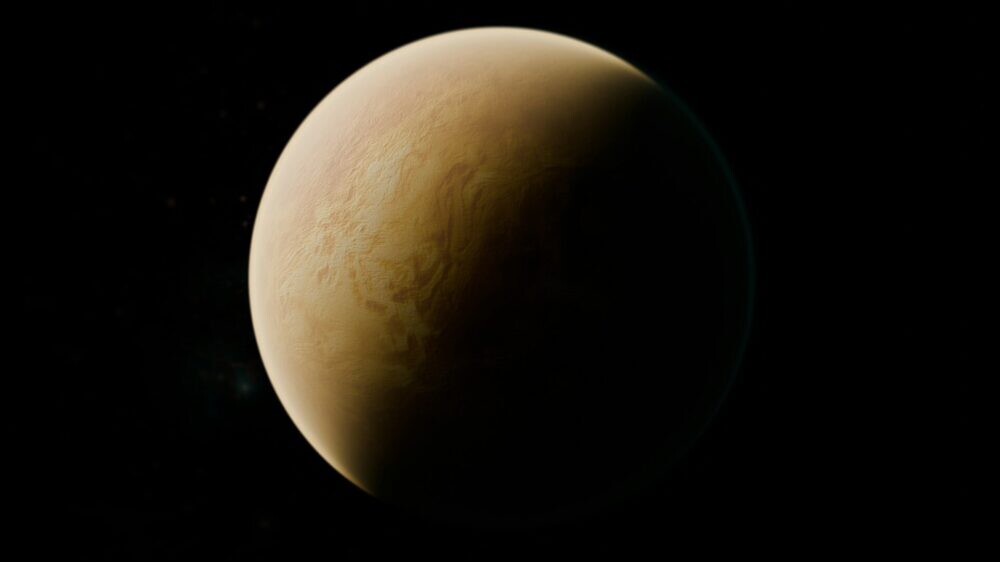

Astronomers have confirmed the existence of the youngest planet known to date. The object, called Elias 2-24 b, is less than a million years old – the planet is still in its formation stage and continues to gain mass from the disk of gas and dust surrounding its parent star. Research results published in The Astrophysical Journal Letters.
About ten years ago, data from the ALMA (Atacama Large Millimeter/submillimeter Array) radio telescope complex in Chile showed the presence of a gap in the protoplanetary disk of the star Elias 2-24 – a rotating collection of gas, dust and other matter left after its formation.
The presence of such a gap indicated that a planet could be forming in this area: according to modern ideas, planets are formed from the material remaining from a star, accumulating it and clearing the space around their orbit. However, it was not possible to directly confirm the existence of the object.
A team of researchers from the Universidad Diego Portales in Chile combined data from three observatories—the W. M. Keck Observatory in Hawaii, ALMA, and the European Southern Observatory's Very Large Telescope in Chile. Researchers were able to not only image Elias 2-24 b and confirm the existence of the planet, but also estimate its age.
BREAKING 🚨: Astronomers have found the youngest planet ever discovered
It's less than a million years old, called Elias 2-24 b pic.twitter.com/7cK9rGtoPk
— Latest in space (@latestinspace) September 17, 2026
“We usually hear about how telescopes work individually, but this discovery was only confirmed by using data from multiple observatories together. Elias 2-24 b is almost at the limit of the capabilities of modern telescopes, but with the advent of new instruments, such as NASA's Nancy Grace Roman Space Telescope, it will be easier to detect such objects,” said lead author of the study Andrea Bernardi.
Astronomers have discovered very young exoplanets before, but until now there was some kind of age limit below which such objects were practically impossible to observe directly. If we compare the age of Elias 2-24 b with the average human lifespan, the planet can be compared to a baby only two or three days old.
“What makes Elias 2-24 b special is its age. This is the youngest planet discovered to date. Because it is still actively absorbing matter from the surrounding space, we can observe a stage of planet formation that is extremely rarely seen directly,” Bernardi said.
Scientists estimate that Elias 2-24 b's mass is about two to four times that of Jupiter. The planet is located from its star at a distance almost twice the distance between Neptune and the Sun. The Elias 2-24 system itself is located approximately 450 light years from Earth.
In the future, scientists expect to make more direct observations of young exoplanets using the coronagraphy instrument of the Nancy Grace Roman Space Telescope, launched on August 30. Such a device blocks the bright light of stars, allowing astronomers to better study fainter objects in their immediate vicinity.