


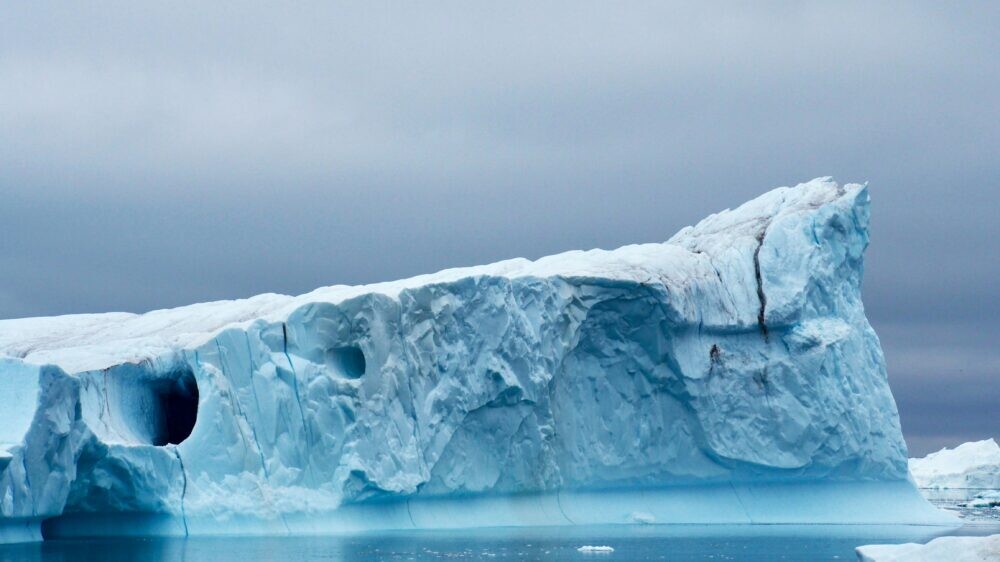

Since 1972 in Greenland and since 1979 in Antarctica, 11.3 trillion tons of ice have melted until 2023, according to the results of a study published in the journal Scientific Data. As scientists from an international team suggest, such changes could pose a risk of flooding in the future for several million people.
The researchers wanted to understand how much ice Greenland and Antarctica are losing and how this affects sea levels. To find out, they collected data from 27 satellites over these periods: they measured the height of the ice cover, tracked changes in the Earth's gravity, and calculated how much ice was going into the ocean and how much was melting on the surface.
🫠 Half a century of satellite data shows 11 trillion tons of ice loss 🫠
The longest satellite data record of ice-sheet change ever assembled reveals that Greenland and Antarctica have lost a staggering 11 trillion tons of ice since the 1970s, driving global sea level up by… pic.twitter.com/HL40xYyVZu
— ESA's CryoSat mission (@esa_cryosat) September 16, 2026
Scientists have found that over the years, Greenland has lost more than 6,200 gigatons of ice, and Antarctica – over 4,800 gigatons. Because of this, sea level rose by about 31 mm. Moreover, in 2022-2023, in eastern Antarctica, due to very heavy snowfalls, there was even a little more ice – this briefly slowed down the overall loss of ice cover.
“We use regional climate models to separate the overall mass balance into components related to surface mass balance and dynamic ice imbalance. This data set can be used to track the contribution of ice sheets to sea level rise and improve predictions of further sea level rise,” the scientific publication clarifies.
The information will help predict how sea levels will rise, which affects, for example, how vulnerable coastal cities and ecosystems are, study lead author Ines Otosaka, an ice scientist at Northumbria University in England, told The Associated Press (AP).
“There is a clear trend for ice sheets to lose more mass, and this trend is increasing every decade, especially when you look at the ice that ends up in the ocean. It is clear that this is due to climate change,” Otosaka explained.
The Jakobshavn Glacier in Greenland is now retreating at a rate of 164 feet (50 meters) per day, she said. While one inch (2.5 centimeters) of melting may not seem significant, for every third of an inch (or centimeter) of sea level rise, 2 to 3 million people will experience flooding at least once a year, Otosaka said.
“This is cause for concern because the changes are occurring decades after global warming, meaning we can expect them to continue for decades to come—even if we succeed in stopping the planet from warming,” said study co-author Andrew Shepherd.
The amount of melted water would be enough to cover the continental US with a layer of ice five feet (152 centimeters) thick, AP adds. Eric Rigno, an ice scientist at the University of California, Irvine, told the news agency that declining ice cover in polar regions is exacerbating the vulnerability of coastal regions around the world to flooding.