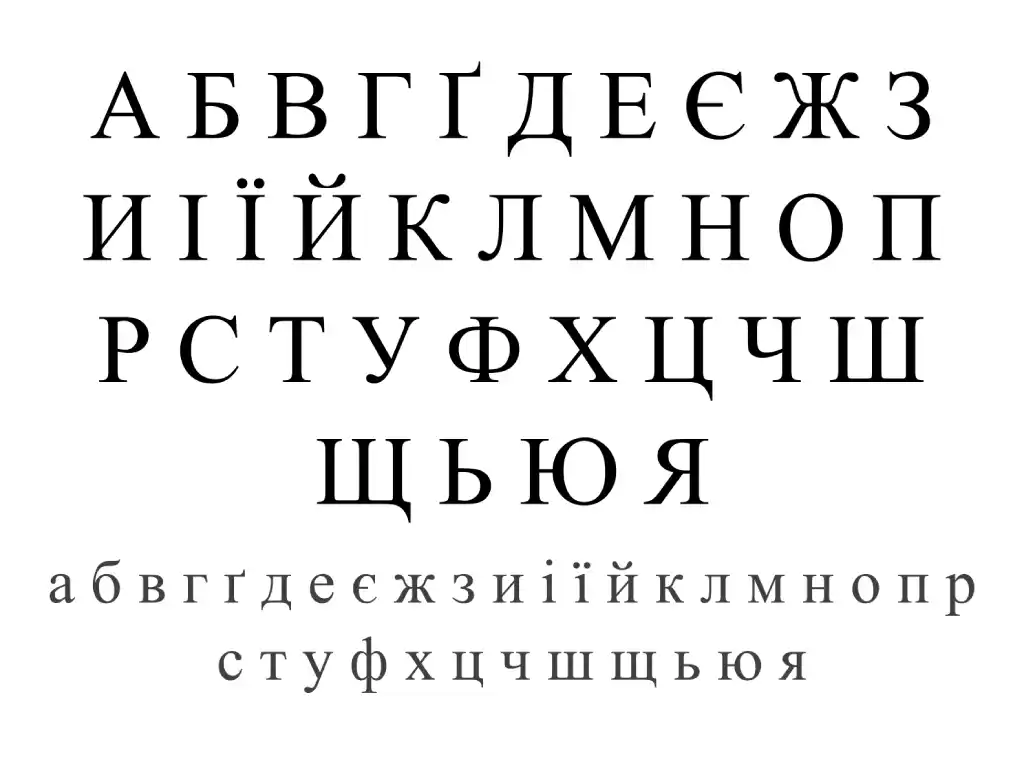

In the history of human civilization, there are few writing systems that do not merely function to record language but become true guardians of the cultural code of entire nations. For millions of people across Eastern and Southeastern Europe, it was the Cyrillic script that became the unshakeable foundation upon which literature, justice, theology, and philosophical thought were built for centuries. This alphabet is not just a set of graphic signs; it is a unique graphic worldview that has traveled a complex path from a missionary project to the status of a state symbol. Today, in an era of globalization, it continues to remain a powerful marker of identity that connects us to the origins of our statehood and spirituality, offering the opportunity to read primary sources written in the languages of our ancestors thousands of years ago.
From Enlighteners to the Present: Origins and Evolution of Writing
The history of this writing system is inextricably linked to the names of two brothers, Cyril and Methodius, who in the 9th century performed a true intellectual feat by adapting Greek graphics for the needs of Slavic languages. This decision became a catalyst for massive changes, allowing nations to speak in their own language in written records, rather than just in oral tradition. The evolutionary path of this alphabet was full of transformations, each of which brought it closer to its modern appearance:
- The creation of Glagolitic — the first Slavic alphabet, which was too complex for mass use.
- The emergence of Cyrillic based on the Greek uncial script — an adaptation that simplified the lettering and made them more understandable.
- Peter I’s reforms — the introduction of the “civil” script, which approached antique-style samples and moved away from a purely ecclesiastical style.
- The appearance of regional variants — the formation of unique graphic traits in Ukrainian, Bulgarian, Serbian, and other alphabet systems.
- Modern standardization — the consolidation of orthographic norms, which allows for easy learning and use of this system in the digital space.
This process of transformation was long-lasting and required not only linguistic skill but also political will to implement new standards. Every change in letter graphics reflected the cultural demands of that time: from a desire for the elegance of handwritten manuscripts to the need for rapid book printing. Today, we utilize the result of a millennial process of selection, where every letter has passed the test of time, becoming a perfect instrument for expressing the finest nuances of human thought, feelings, and complex scientific concepts.
Structural Perfection: Why the Alphabet is Convenient for the Language
The uniqueness of this system lies in its exceptional phonetic accuracy, as for most Slavic languages, a “one sound — one letter” correspondence is characteristic. This makes learning to write and read logical, and the structure of the language itself transparent for understanding. Due to this quality, our alphabet became an effective tool for forming literary norms, which appear particularly clear through the following advantages:
- A large number of signs for transmitting specific consonant and vowel sounds that other language groups do not possess.
- An intuitively understandable writing system that requires a minimal number of additional symbols for complete phonetic transmission.
- High visual expressiveness of letters, allowing for the creation of font compositions with a high level of readability.
- Full compatibility with modern computer encodings, ensuring stability of operation in the global network.
- Cultural continuity, which allows for free work with archives and manuscripts of past centuries without the need for additional translation.
Thanks to such a structure, we have the ability to accurately transmit the richness of our phonetics, preserving the melodiousness and refinement of the language in any genre. This allows Ukrainian culture to develop at its own pace without losing the connection to its roots. When we write in our letters, we do not just encode information; we reproduce the sound of our native land, which is a true art accessible to everyone who possesses this amazing and multifaceted system of symbols.
Cultural Code as a Guarantee of National Unity
Today, the alphabet is not only a means of communication but also a marker that defines belonging to a certain civilizational community that unites millions of people around the world. It has become an instrument that protects our cultural space, allowing us to preserve uniqueness despite the influence of global processes. The significance of this code for the modern person is hard to overestimate, as it influences key aspects of life:
- The formation of a national worldview through access to classical literature written in our native script.
- The preservation of spiritual heritage, where texts become carriers of centuries-old tradition and the life wisdom of ancestors.
- The strengthening of social cohesion due to a shared understanding of cultural signs and symbols.
- The stimulation of creative potential through the ability to use the language’s rich lexical and semantic arsenal.
- The protection of linguistic sovereignty in the conditions of the modern world, where it is important to remain faithful to one’s own origins.
Our alphabet is a kind of genetic memory of the people that lives in every written word and read sentence. It does not limit us in development, but on the contrary, provides a clear vector, showing who we are and where we came from into this complex world. Conscious use of this cultural code allows us to remain part of the great European family while preserving our own uniqueness. This is our contribution to the world treasury of knowledge, where every letter is proof that Ukrainian culture is alive, strong, and capable of creating the future based on the wisdom of past generations.