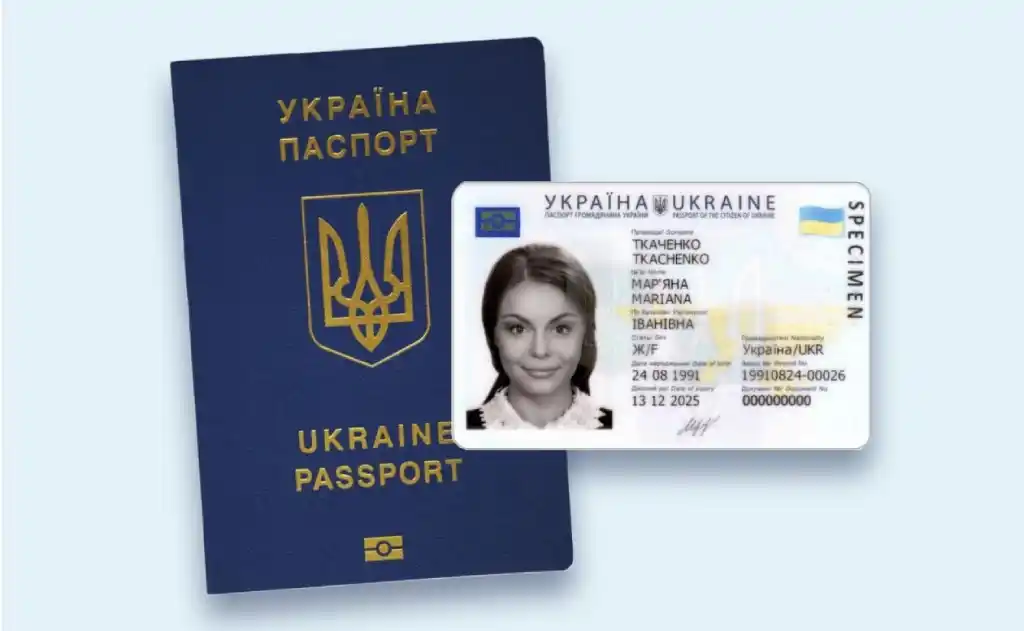

The digitalization of public services and the systematic transition to European standards have significantly changed the perception of personal documents. Today, citizens increasingly choose the high-tech ID card, which is gradually replacing the obsolete paper booklets of the 1994 model. It is not just a plastic rectangle, but a fully functional electronic data carrier that provides a high level of personal data protection and opens up access to many digital services.
The new document format was created taking into account the strictest ICAO international security requirements. Thanks to the built-in contactless microchip, this plastic document combines both visual data and encrypted electronic information that cannot be forged or imperceptibly altered.
- The holder’s personal data: surname, first name, patronymic, date and place of birth, gender, citizenship, and a digitized signature.
- A unique record number in the Unified State Demographic Register (USDR), the document number itself, and its expiration date.
- Biometric parameters: a digitized graphic image of the face and fingerprints.
- Maximum protection against forgery thanks to multi-level security features, cryptographic encryption, and high material quality.
- Material durability: robust polycarbonate is fully resistant to moisture, mechanical damage, and everyday wear and tear.
- Fast identity verification via specialized readers or modern mobile devices equipped with an NFC module.
- Reaching 14 years of age (the initial acquisition of the document is completely free of charge).
- Loss, theft, physical damage, or the expiration of the official validity period of the previous document.
- Changes to personal data (surname, first name, or patronymic), as well as the discovery of errors in the records.
The updated passport of Ukraine significantly simplifies interaction with state and private institutions, the banking sector, and notary offices. Holders no longer need to worry about worn paper pages or blurred seals, as all critical information is reliably backed up in the electronic register.
Level of Protection and Technological Features
The main difference of the modern document lies in its technological sophistication. The plastic card is made of multi-layered polycarbonate onto which personal data is applied using laser engraving. This completely rules out physical forgery or delamination of the material without its complete destruction.
The electronic chip contains secure encryption keys. Access to biometric data is regulated by strict security protocols, which excludes unauthorized reading by third parties. In addition, the plastic contains optically variable elements, microtext, holograms, and tactile patterns that are easily verified visually and with the help of ultraviolet or infrared equipment.
Application Procedure and Validity Terms
You can apply for a new document at any department of the State Migration Service, Administrative Service Center (ASC), or at branches of the “Passport Service,” regardless of your registered place of residence. For teenagers receiving the document for the first time at age 14, the validity period is 4 years. Starting at 18 years of age, the plastic document is issued for a term of 10 years.
The basic package for replacement includes the previous document, the tax identification number (RNOKPP), a receipt of administrative fee payment, and documents confirming any change in information (if applicable). Photos and fingerprints can be taken directly during the application process with the operator.
Integration with the Digital Ecosystem
The plastic card serves as a solid foundation for building a digital state. Information from the document is automatically synchronized with the Unified State Demographic Register, allowing for the instant generation of a digital equivalent in the Diia mobile application. The electronic document holds the exact same legal validity within the country as the physical plastic carrier.
Furthermore, a qualified electronic signature (QES) can be written onto the chip. This transforms the document into a universal tool for signing electronic contracts, receiving government services online, and conducting business without needing to be physically present at institutions.