





The first full Moon of this summer – the so-called “strawberry” – will rise on June 29. Why it received such a name, what is remarkable about it and where it can be seen – in the RTVI.US material.
The moon will reach full phase Monday evening and maximum brightness at 7:56 pm ET, according to The Old Farmer's Almanac. The best time to view Earth's satellite is shortly after sunrise, when it is low on the horizon and may appear especially large.
The name “Strawberry Moon” comes from the Algonquin Indian tribes who inhabited the northeast of what is now the United States. This is how they designated the period of ripening of strawberries, which could already be picked in June. Similar names were also used by the Ojibwe, Dakota and Lakota peoples. The term “Berry Moon” in the Haida language also has a similar meaning, since June is the time of early fruit bloom.
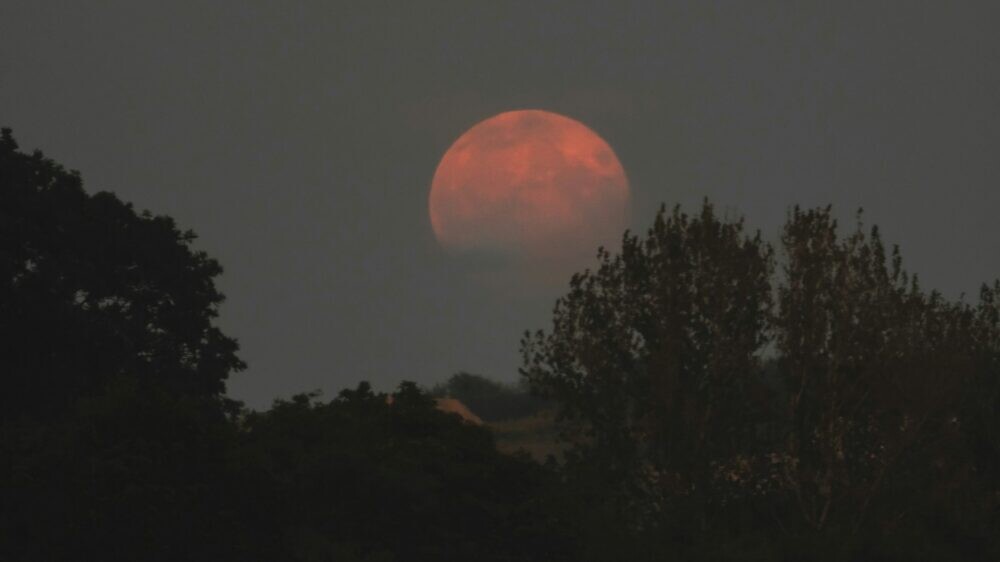
The June full moon—usually the last full moon of spring or the first full moon of summer—is traditionally called the “Strawberry Moon,” the publication clarifies. Although the berry has a reddish-pink color and a round shape, this is not directly related to the Earth’s satellite itself during this period. Rather, it appears reddish when close to the horizon because light rays must pass through the thickest layers of the atmosphere.
To observe the “strawberry moon”, it is important to choose a suitable place at dusk, because it rises at the most extreme point, emphasizes Space.com. Having a clear south-eastern horizon is important and is easiest to see on a beach, open field, hilltop or on a road outside populated areas.
“The moon is low on the horizon. As it rises higher, it quickly returns to its normal bright white color. You have approximately 20-30 minutes of peak traffic,” the publication clarifies.
Full moons that coincide with the apogee, that is, the maximum distance of the Moon from the Earth, are called micromoons, so during such periods the satellite appears 12-14% smaller and dimmer than usual, Forbes clarifies. The publication emphasizes that the satellite rise can be seen in the evening at 8:48 New York time and at 8:26 pm Los Angeles time.
According to NASA, on June 29, the celestial body is 252,225 miles (405,917 kilometers) from Earth; naked eye observers will be able to see two lunar seas – Crisis and Abundance, as well as the Tycho crater. With the help of binoculars it will be possible to detect the seas of Humidity and Cold with the ridge of the “Alpine Valley”. Those armed with a telescope will see the landing sites of the 11th, 14th and 17th Apollo expeditions.
Even though the Strawberry Moon is the second largest full moon of the year, the moon will appear huge at sunrise due to an optical illusion. According to the US space agency, this is an effect in which a celestial body appears much larger near the horizon than high above, although its actual size and distance from the Earth do not change at the time of movement.