



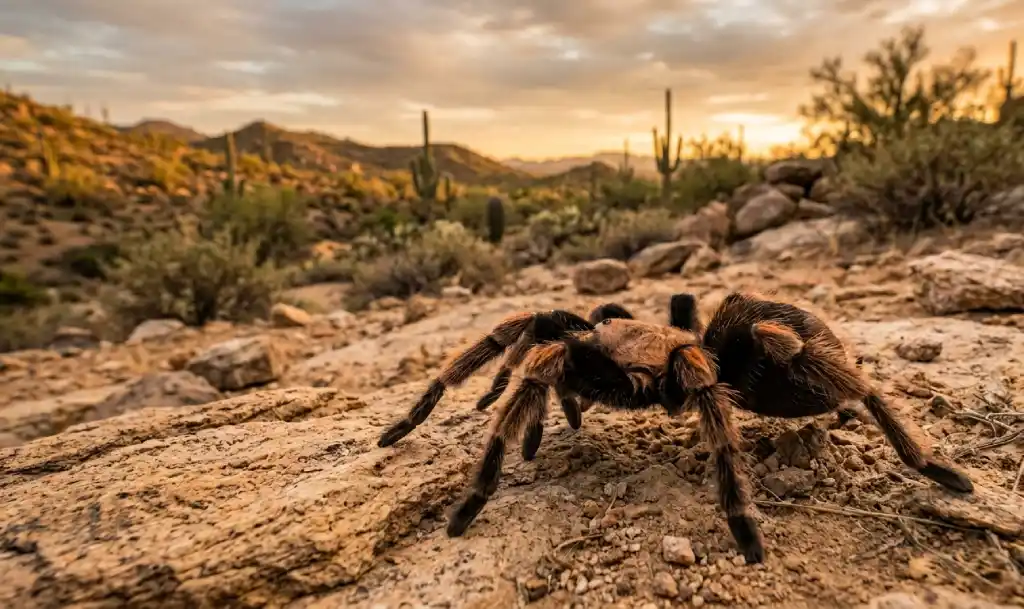

Nature never tires of creating creatures that evoke both panic and deep fascination in humans. Among all the diversity of fauna, few can compare in their level of demonization with the large, densely haired spiders that for centuries have been the protagonists of horror legends and Hollywood thrillers. However, behind the eerie culinary or cinematic image hides an amazing, highly adapted predator that plays a crucial role in the balance of our planet’s ecosystems. The legendary Tarantula has become a true symbol of hidden underground life, whose name once forced medieval Italians to dance to exhaustion, and today attracts thousands of naturalists and exotic enthusiasts around the world. Who is this shaggy recluse in reality, how dangerous is its venom, and what secrets does it hide in its deep labyrinths beneath the earth?
Anatomy of Fear: Biological Features and Body Structure
From a scientific point of view, belonging to this group often causes confusion, because in English-speaking countries this name refers to huge tarantulas (theraphosids), whereas in the European tradition, these are representatives of the wolf spider family. True tarantulas, including the South Russian tarantula well-known in Ukraine, prefer arid steppes, deserts, and semi-deserts, where they act as uncompromising night hunters. Their body structure is an ideal evolutionary tool for survival in harsh conditions, combining the following unique anatomical and behavioral elements:
- Powerful chelicerae — strong jaws that serve not only for injecting venom but also for digging deep vertical burrows in dense soil.
- Dense hair covering — functions as tactile organs that detect the slightest vibrations of the air and ground at a great distance.
- Eight vigilant eyes — arranged in several rows, providing the spider with an excellent 360-degree panoramic view at night.
- Camouflage coloration — gray, brown, and black shades of the body allow the predator to blend completely into dry grass, stones, and soil.
- Special claws on the legs — help them move confidently along the vertical slopes of their underground homes.
Thanks to such natural equipment, this spider practically does not need the classic weaving of capture webs like its other relatives. It acts as a classic ambush predator: it waits for prey near the entrance to its burrow, orienting itself by the vibrations of signal web threads spread across the soil surface. When an incautious insect approaches, a lightning-fast strike follows, lasting fractions of a second and leaving the victim no chance of escape.
Underground Architects and Hunters: Lifestyle and Diet
For most of its long life, this shaggy recluse lives in complete isolation from the outside world, setting up a comfortable vertical burrow that can reach a depth of more than half a meter. In summer, saving coolness reigns there, and in winter, the spider carefully seals the entrance with dry grass and cobwebs, plunging into a state of anabiosis until the first warm spring rays. Despite their grim reputation, these creatures are very clean housekeepers who regularly clean their homes of food remains and debris. As for the culinary preferences of the underground lord, its diet consists of a wide variety of living organisms:
- Large beetles, grasshoppers, crickets, and mole crickets, which form the basis of the daily summer menu.
- Butterflies and other nocturnal insects that incautiously land on the ground in search of rest.
- Smaller species of spiders, including representatives of their own species during territorial disputes.
- Small lizards or frogs, which can become prey for the largest individuals during periods of active hunting.
Interestingly, the digestion process in tarantulas is external, like in most arachnids: after a bite, they inject special enzymes into the victim’s body that liquefy the internal tissues of insects, turning them into a nutritious cocktail. This method of feeding allows them to go without water and fresh food for a long time if environmental conditions become unfavorable. They are important regulators of agricultural pest populations, destroying a colossal number of insects per season.
Shattering Myths: How Dangerous the Bite Is to Humans
Perhaps the greatest number of artistic fictions and exaggerations exist around the toxicity of these creatures, tracing their roots back to the southern Italian city of Taranto. In the Middle Ages, it was believed that the bite of this spider caused madness — “tarantism,” the only cure for which was frantic, exhausting dancing, which later transformed into the famous tarantella. Modern toxicology has long dispelled these superstitions, proving that the venom of most species does not pose a fatal threat to a healthy adult human. However, an encounter with the predator requires respect and caution due to the following risk factors:
- Severe pain syndrome, which in intensity resembles the sting of a hornet or several wasps simultaneously.
- The appearance of local swelling, redness around the wound, and prolonged, unpleasant itching of the skin.
- A possible allergic reaction in individuals with increased sensitivity to animal toxins.
The spider itself never displays unprovoked aggression first and always tries to escape or hide in its burrow when a large object approaches. It attacks only when a person accidentally steps on it barefoot or tries to dig up the burrow with their hands. The study of these amazing creatures teaches us to discard absurd fears in favor of scientific facts, because every inhabitant of our planet, even the scariest at first glance, has the right to life and respect for its unique natural mystery.