


Asteroid 1998 SH2, which in 2025 approached the Earth along an unpredictable trajectory, actually turned out to be a representative of the category of so-called dark comets, which are characterized by similar behavior and an almost complete absence of a tail, a group of scientists from the USA, Canada and Europe found out. Experts were able to study the object in detail for the first time using telescopes in Chile and Hawaii.
1998 SH2 was originally discovered in 1998, giving the object its name. As scientists noted, in previous photographs it really appeared to be an asteroid, since no visible tail or coma (cloud of gas and dust around the core) was visible on them
The team hypothesized that the object belongs to the dark comets already known to the scientific community, since in 2025 it shifted from its orbit in a manner unusual for asteroids when it approached the Earth. The assumption was confirmed during observations from August to September 2025.
“The images showed a constant emission of dust during the period from late August to late September 2025, indicating sublimation-induced cometary activity,” notes the article published by the journal Nature Astronomy.
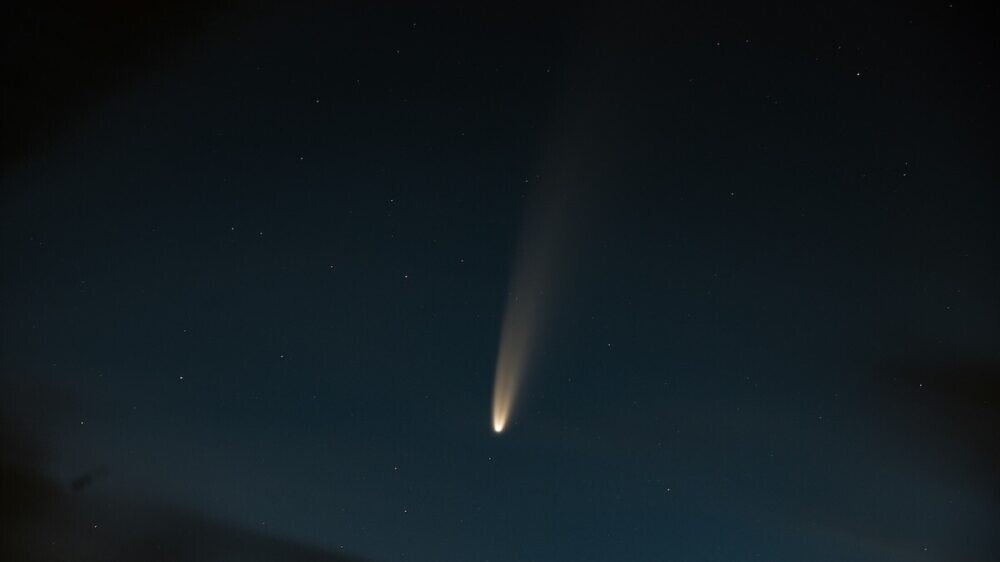
The scientists added that 1998 SH2 has both a coma and a tail, but the former is faint and the latter is narrow and short.
Astronomers called the predisposition of dark comets to change trajectory “frightening,” but emphasized that 1998 SH2 specifically does not pose a threat to Earth. They noted that their work should help colleagues more effectively identify these types of risks, and space agencies create plans to respond to them.
“The likelihood that a certain number of potentially hazardous objects that are classified as asteroids will turn out to be comets may increase the risk of their collision with Earth,” the authors emphasized.