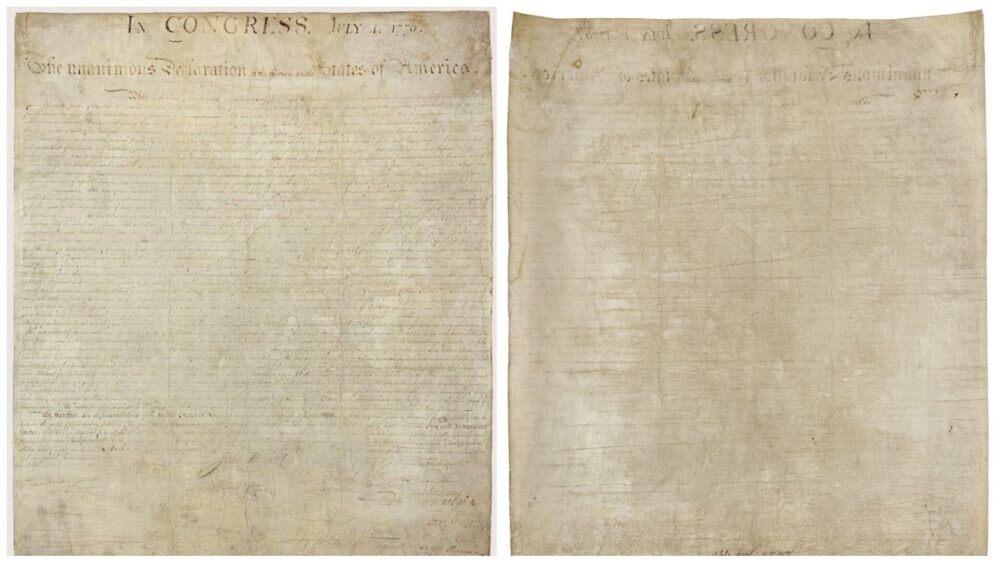

The original Declaration of Independence of the United States, which is kept in the National Archives in Washington, today looks completely different from what you would expect from one of the main symbols of American statehood. The ink is almost completely faded, the text is hard to read in places, and the parchment itself is covered in creases, water stains, and even a mysterious handprint. Compared to the almost flawlessly preserved US Constitution on display nearby, the Declaration looks noticeably worse. According to The Washington Post (WP), the history of damage to the document largely reflects the history of the United States itself.
The United States will celebrate the 250th anniversary of the signing of the Declaration of Independence next week. WP calls her story a story of American controversy. The words proclaimed in 1776 that “all men are created equal” initially did not correspond to reality – most of the signatories were slave owners, and political rights belonged only to white male owners. However, over time, this phrase became a political and moral reference point – the ideas of the Declaration were referred to by abolitionists, women's rights activists and supporters of civil liberties. She was quoted by Frederick Douglass, Susan Anthony and Abraham Lincoln.
It is interesting that the damage to the document was also caused by attempts to save it. For example, in the 1820s, Secretary of State John Quincy Adams commissioned engraver William Stone to create a facsimile version—an exact copy of the document. To do this, a technology was used to transfer the image to a copper plate, during which part of the original ink was actually removed from the parchment. Historians believe that it was then that the document lost much of its readability.
In subsequent decades, the Declaration's condition only worsened. In the mid-19th century, it was kept for more than 30 years on the sunny wall of the Patent Office building, where the document was constantly exposed to light, humidity and temperature changes. The Declaration was later kept in the US State Department library, where it was exposed to cigar and fireplace smoke.
A separate mystery remains the handprint in the lower left part of the document. According to National Archives historian Jessie Kratz, it may have appeared between 1912 and 1924, when the Declaration was being transported between the State Department and the Library of Congress. Now experts do not rule out that the FBI database can be used to identify the owner of the fingerprint.
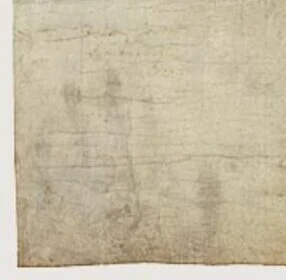
National Archives
Over two and a half centuries, the ink on the parchment has faded almost completely, including John Hancock's famous sweeping signature.
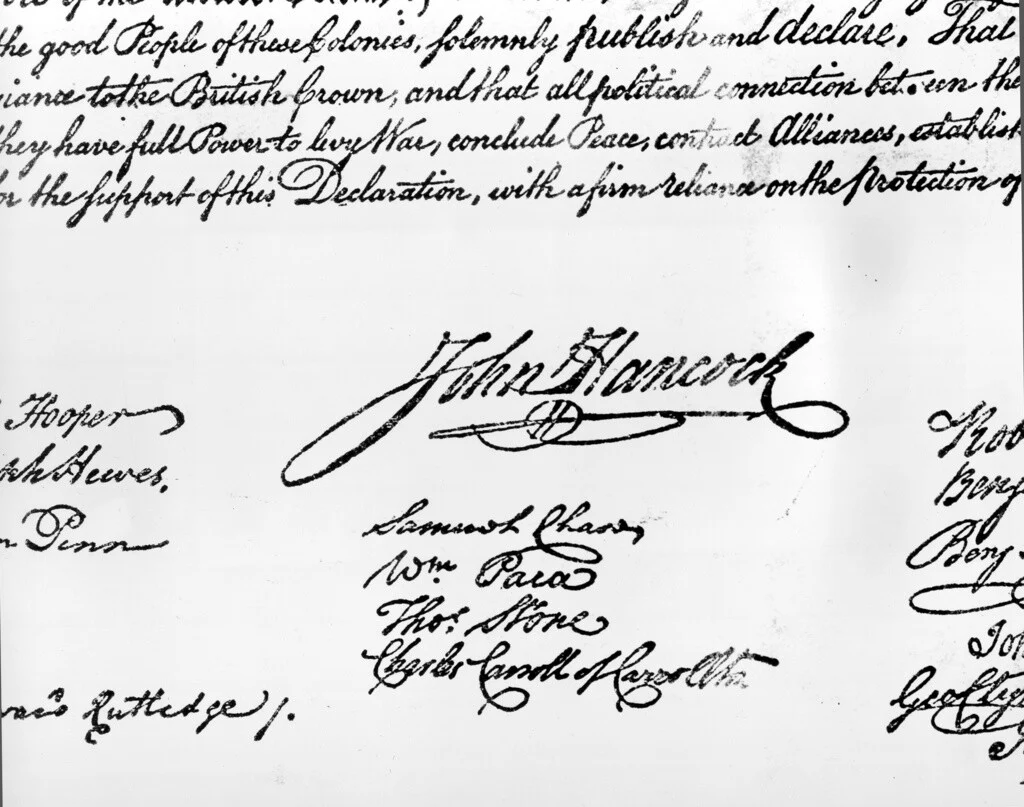
John Hancock's signature. Photo date unknown
AP Photo, File
Throughout its history, the Declaration has been under threat of destruction more than once. During the Anglo-American War of 1812, State Department official Stephen Pleasanton smuggled the document from Washington to Virginia, hiding it in a wagon among other government papers. This saved the relic: British troops soon burned the capital, including the State Department building.
A similar operation was carried out during World War II. Fearing the possible bombing of Washington, American authorities secretly transported the Declaration along with other key government documents to a storage facility at Fort Knox in Kentucky.
Today, the document is kept in a sealed protective container filled with inert gas. Every night, capsules containing the Declaration, Constitution and Bill of Rights are automatically stored in a classified vault. The original is kept under the strict control of archivists, and access to it remains one of the main historical attractions of Washington.