

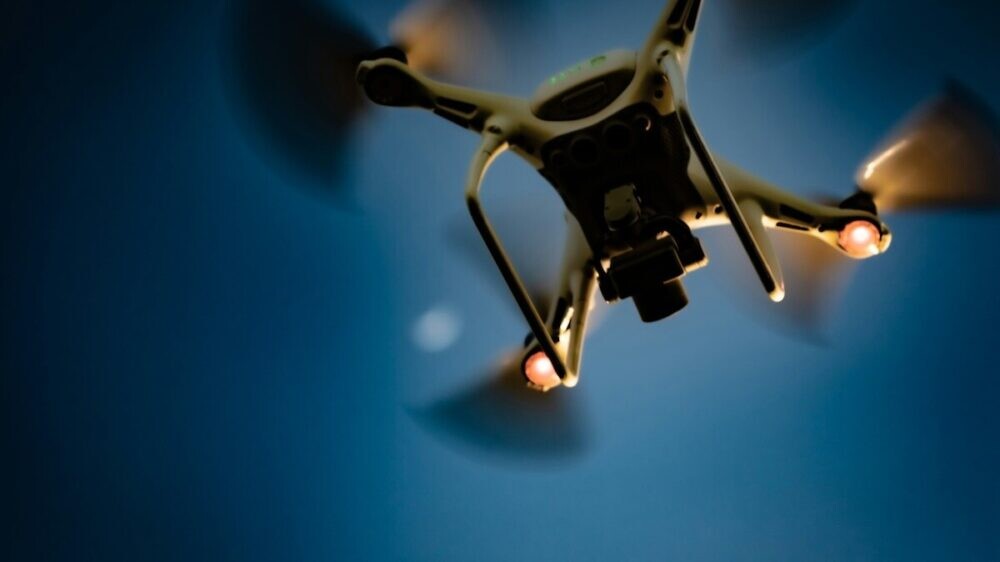

Scientists from China have presented a new algorithm that could change the approach to destroying targets by military drones using swarm tactics. As follows from the results of a study published in the journal Acta Aeronautica et Astronautica Sinica, the HG-STR system gives each drone individual memory and the ability to make decisions autonomously if communication with the control center or with each other is lost.
The algorithm is called “Spatio-Temporal Reasoning with a Heterogeneous Graph” (Heterogeneous Graph Spatio-Temporal Reasoning, HG-STR). According to the researchers, it is capable of achieving a target kill efficiency of nearly 100% while operating quickly enough to keep up with the pace of modern warfare.
“Decision-making time is reduced from seconds to milliseconds, and task success rates reach 94%, even when communication between drones is weak and limited,” the study notes.
The innovation is particularly significant because most unmanned aerial vehicle (UAV) operations today are still controlled remotely by humans, an anonymous expert told the South China Morning Post (SCMP).
“This technology promises a future in which swarms of UAVs can be sent into a high-risk area, in a jammed environment, cut off from human control, with only one final order: 'Find and destroy everyone,'” he said.
As noted in the study by Zhang Dong, a professor at Northwestern Polytechnic University, and his colleagues, HG-STR takes 6.6 milliseconds to make decisions.
The algorithm is based on a heterogeneous graph – a data structure that includes friendly drones, the area of operation and opponents in the form of separate nodes. If there is communication between drones, the system allows you to combine information from them, even if they are far from each other, and also form priorities.
What distinguishes the system from ordinary scripts is its adaptability – in case of unforeseen situations, the individual memory of each drone and the “hierarchical brain” are activated. Thanks to it, the UAV independently makes a choice between continuing to search for the enemy and striking, and is also able to determine the required amount of ammunition.
Experiments with such drones have shown that, compared to traditional algorithms, the speed of completing tasks has increased by 37%.
As RTVI.US wrote, Pentagon chief Pete Hegseth recently said that the United States “continues to learn” the development and use of drones from Ukraine, and President Donald Trump has included more than $50 billion in the draft budget for next year for expenses in this area.
Trump also personally announced that the design for the White House ballroom under construction includes a drone port on the roof of the building. Additionally, the Wall Street Journal (WSJ) reported in March that his eldest sons had invested in a new drone company, Powerus.