

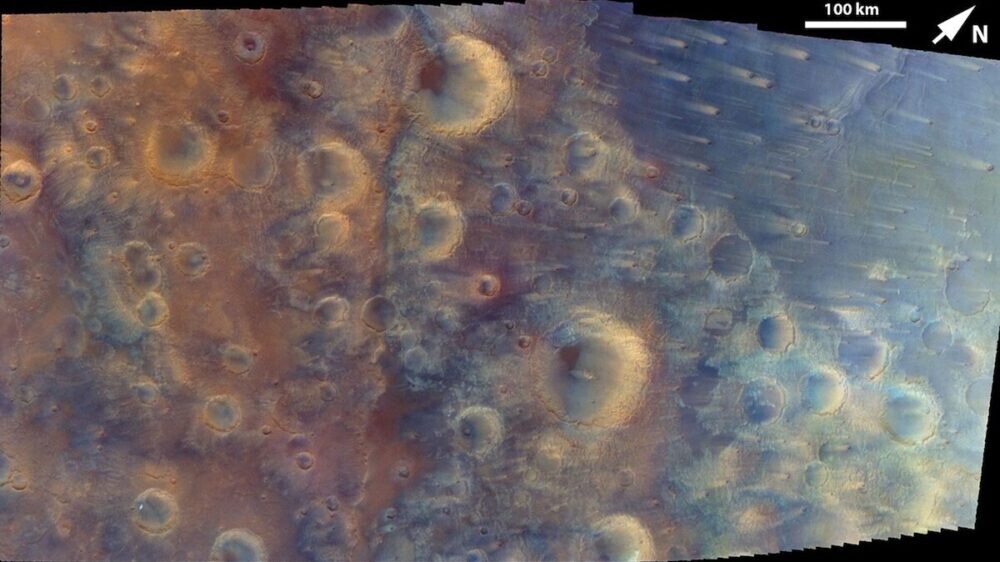

The US NASA spacecraft Psyche, launched to study the asteroid of the same name, successfully transmitted to Earth data from instruments that it tested during its approach to Mars. The published video, compiled from footage taken over a month, showed the large impact crater Huygens, smaller depressions formed by the wind, as well as the icy south pole of the Red Planet.
Psyche's approach to Mars took place in May of this year and was intended to help the device accelerate towards the main goal of the study. The asteroid Psyche (or (16) Psyche) was first discovered in the 19th century and orbits in the main asteroid belt between Mars and Jupiter.
Psyche is expected to reach the site in 2029 and help study its composition, which could contain rocks worth tens of quintillions of dollars, hundreds of thousands of times the total global economy.
During its approach to Mars, the device did not make any scientific breakthroughs, but it successfully used the latest neutron and gamma spectrometers, which it will need to perform its main task, NASA noted.
“By the time of closest approach to Mars, the neutron spectrometer detected an increase in the count rate, as we expected. It was very pleasant,” a NASA press release quotes the head of the device’s development.
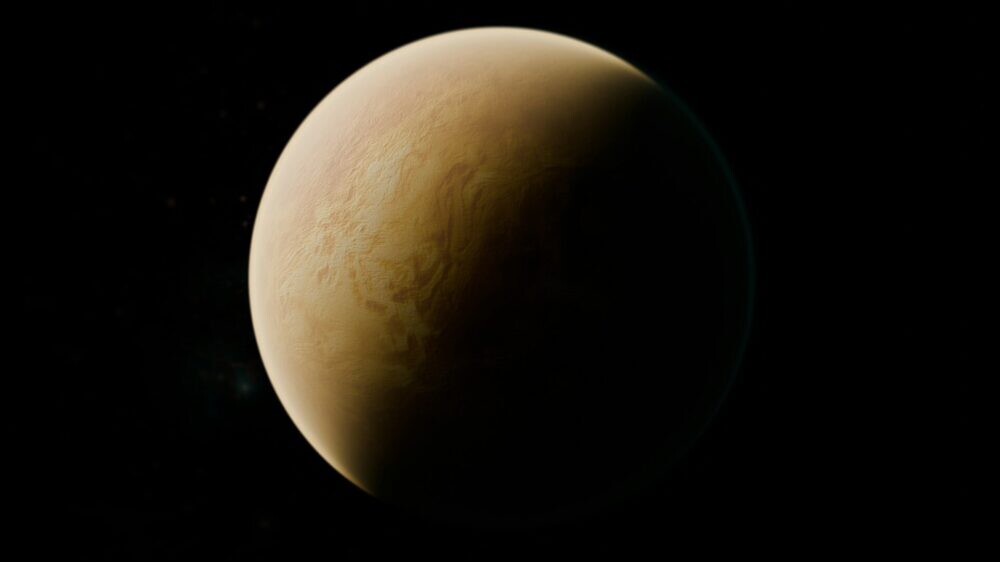
The head of the team responsible for the multispectral camera, Jim Bell, added that the images transmitted by Psyche turned out to be quite rare. The new montage opens with a previously published photograph of Mars in the form of a crescent—it is in this form that the planet first appeared before the apparatus upon approach.