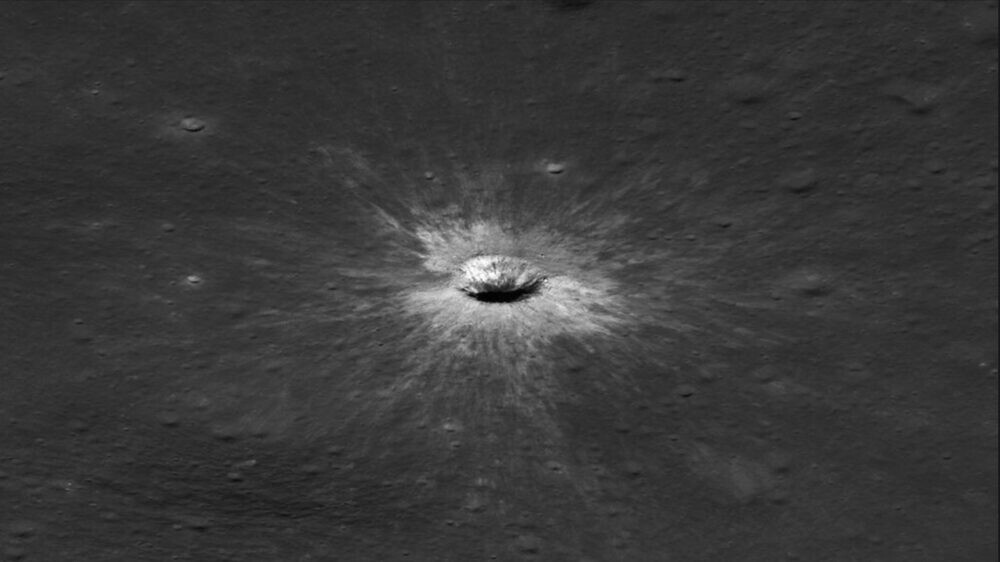

NASA's lunar orbital probe took a series of images of a new crater on the Moon from August 11 to 12, the American space agency reports. The object appeared on the Earth's satellite after the spent upper stage of the SpaceX Falcon 9 rocket hit the lunar surface on August 5.
Let us remind you that the stage fell in the area of the Einstein crater at the western edge of the Moon. The impact occurred on the visible side of the satellite, but it was not possible to record this moment using spacecraft. Earlier, cosmogeologist Kirby Runyon from the Planetary Science Institute in Arizona, in a conversation with RTVI, called the incident a “successful field experiment” that will allow scientists to study the deep layers of lunar soil.
To take pictures of the impact site, engineers tilted the NASA spacecraft so that its cameras were pointed at the crater each time it passed about 60 miles (96 km) above the moon, moving at a speed of 1 mile (1.6 km) per second.
To photograph a specific location, the spacecraft had to wait until it came into view. This took six days, the US space agency clarified. In addition to precise camera aiming, the timing also had to be precise, because if the device had triggered even 10 seconds earlier or later, the target would have moved 10 miles (16 km) from the center.
Thanks to the variety of angles, scientists were able to observe the crater under different lighting conditions – this made it possible to identify its unique features. In images that clearly show the edge of the crater, researchers measured its width to be 60 feet (18 meters).
Experts also determined that the crater's depth is less than 10 feet (3 meters), based on the length of its shadow. To capture these details, the probe used a narrow-angle camera that can capture objects up to 3 feet (1 meter) wide at different degrees.
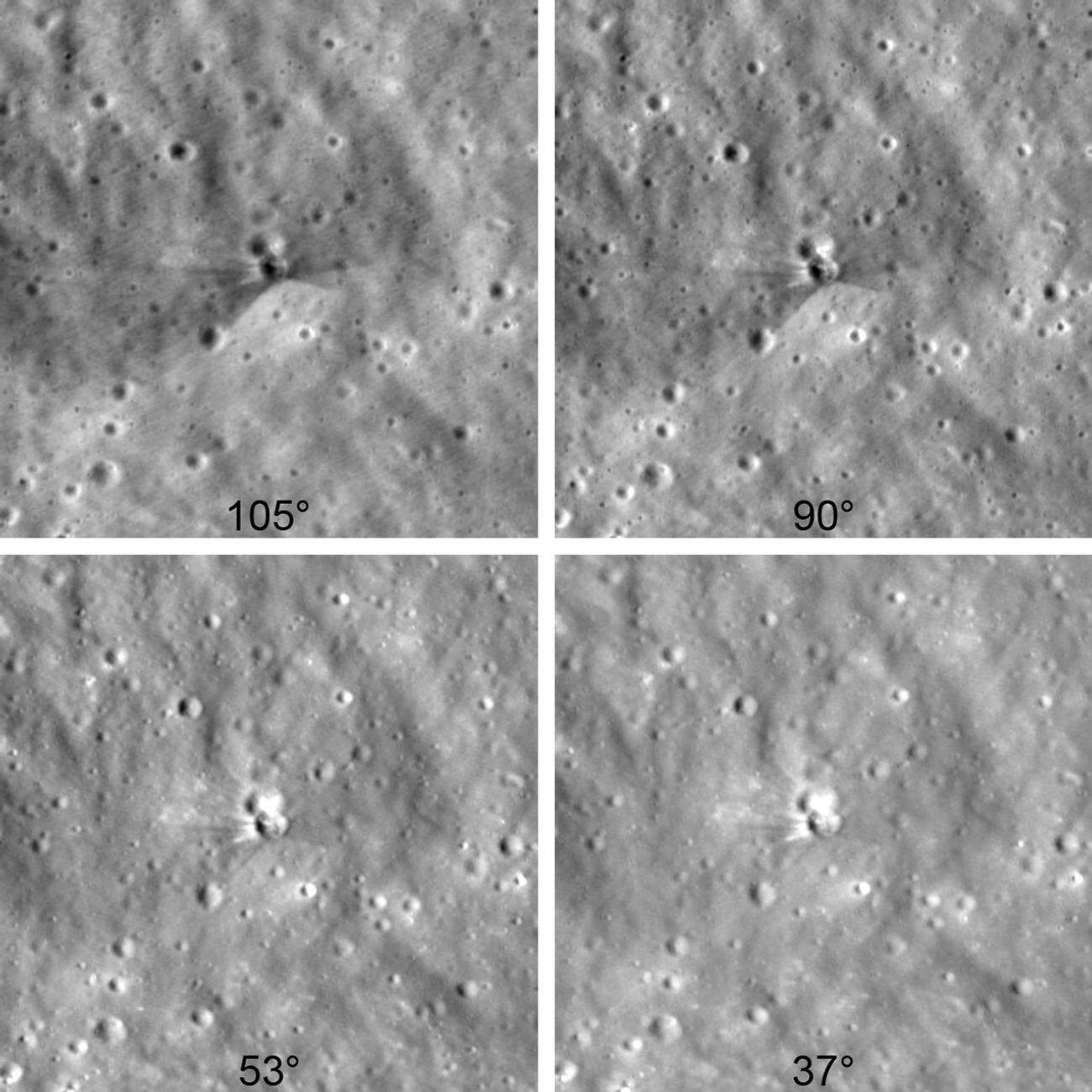
NASA Goddard/Intuitive Machines
The collision threw up to 1.5 feet (45 cm) of material to the surface. The lighter streaks near the edge of the new object on the satellite consist of fresh material brought up from deeper layers, the space agency added.
“The images above show light and dark rays radiating from the crater. The darker streaks consist of surface dust and rocks that have been exposed to solar wind, galactic cosmic rays, and micrometeorite impacts for long periods of time,” NASA said.