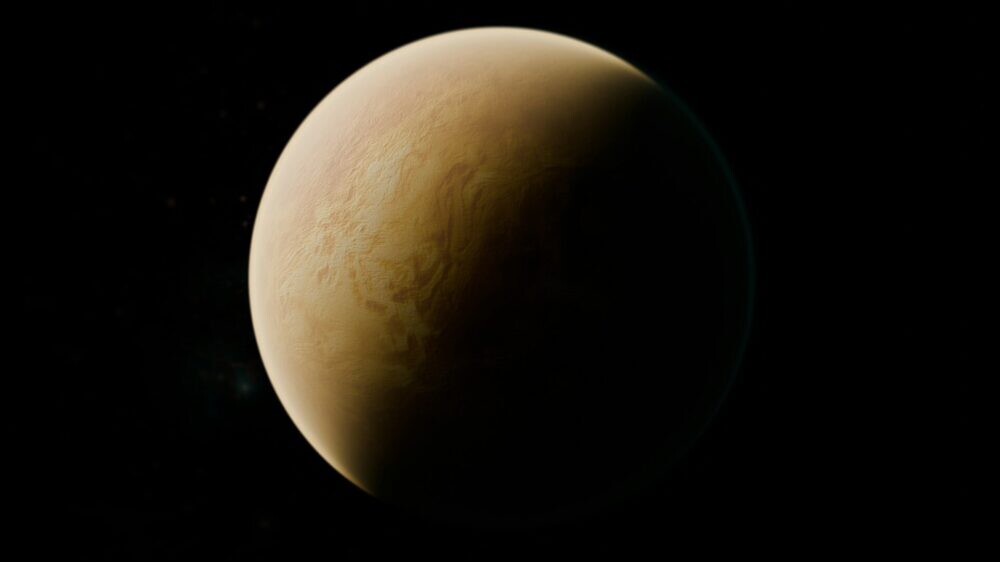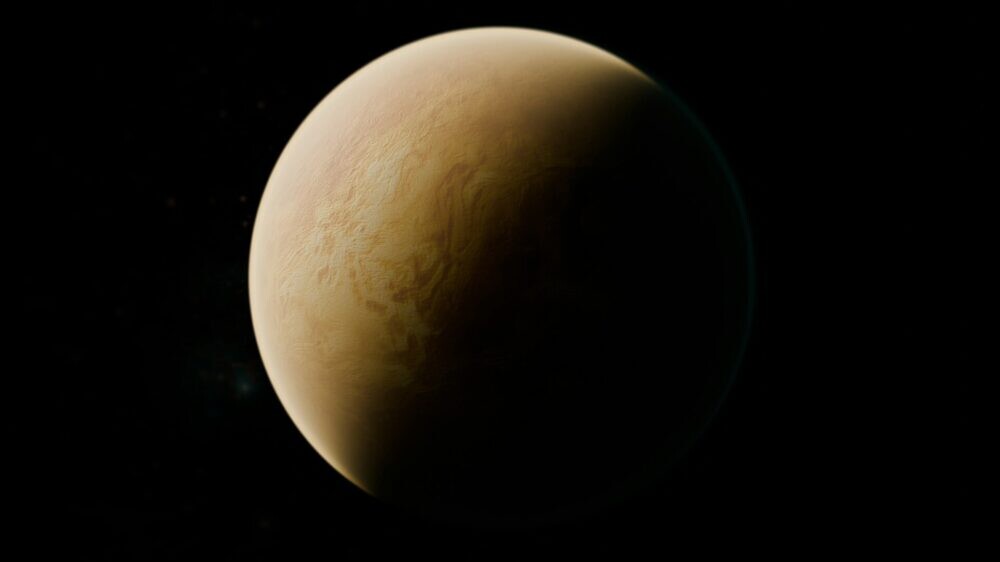

Researchers at the University of Wisconsin-Madison have discovered a rare object that belongs to so-called “mega-Earths” – unusually massive planets made mostly of rock. The celestial body that received designation GJ 523b, is about 23 times more massive than Earth and more than 2.5 times its diameter. Despite its impressive size, the planet has a weak atmosphere. The study has not yet been peer reviewed, but has already available for review in the open archive arXiv.
GJ 523b was found using data from the TESS (Transiting Exoplanet Survey Satellite) space telescope, which detects exoplanets by periodically decreasing the brightness of stars as they pass in front of the star. The astronomers then made additional observations using the WIYN 3.5-meter ground-based telescope at Kitt Peak National Observatory in Arizona. Using a spectrograph, scientists measured how the planet's gravity affects the movement of its parent star.
Combining the observations, the researchers found that GJ 523b has a mass about 23.5 times that of Earth, and its radius is about 2.55 times the radius of Earth. The average density of the planet is estimated to be approximately 7.7 grams per cubic centimeter. The planetary system itself is relatively young – its age is about 170 million years.
This combination of mass, size and density does not fit into generally accepted ideas about the formation of planets. According to existing models, a planetary core is first formed from stone and metal, which, having reached a certain mass, begins to attract hydrogen and helium from the gas and dust disk surrounding the young star. In the Solar System, for example, the gaseous shells of Jupiter and Saturn began to form with a core mass equal to about 20 Earth masses.
“This is not at all what we expected. Dense planets themselves are not uncommon, but they are usually small, rocky objects similar to Earth or Mercury. And this planet is two and a half times larger than Earth,” explained study co-author Max Croft.
Scientists are considering several possible explanations for GJ 523b's unusual properties. According to one version, the planet was once too close to its star, which is why it lost a significant part of its gas shell.
“In this case, the atmosphere literally blows away. If a planet gets very hot, it is not able to retain a gas envelope,” Croft noted.
According to another version, GJ 523b could have formed after a collision of two large planets. The heat released during this process could lead to the release of the atmosphere and the formation of one large dense rocky object.
“The term “mega-Earth” has been used for more than a decade, but until now we did not have a planet from which we could specifically define what it meant. GJ 523b finally makes this possible. It’s also notable that astronomers can’t come up with a precise definition of a “mega-Earth” on their own: we need geologists who understand how iron and rocks behave at pressures that are unattainable in any laboratory on Earth, and atmospheric scientists who can determine what proportion of the parameters we measure are actually solid rocks,” said co-author Thomas Beatty.