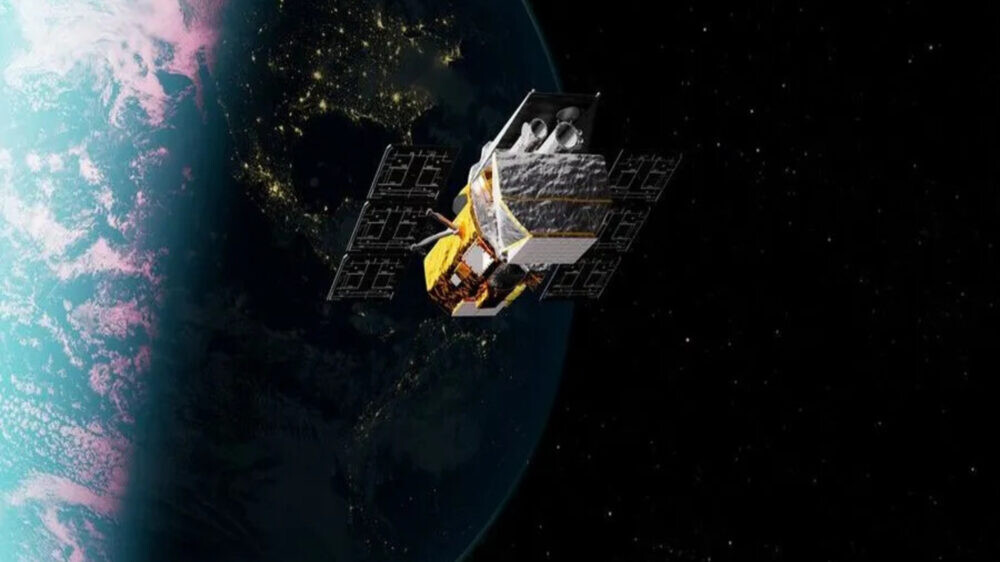

National Aeronautics and Space Administration (NASA has abandoned its attempt to save the Swift orbiting observatory from burning up in the Earth's atmosphere, the agency said. The decision was made due to ongoing problems with the control of the LINK apparatus, which was supposed to lift the telescope to a higher orbit and thereby extend its life. Without intervention, Swift, which has spent more than 20 years in space, could enter the atmosphere before the end of this year.
As part of the development of spacecraft servicing technologies, NASA signed a $30 million contract with Katalyst in September 2025. It envisioned a robotic mission to service Swift using LINK in less than a year.
LINK was launched into space on July 3, 2026, by a Northrop Grumman Pegasus XL launch vehicle from Kwajalein Atoll in the South Pacific Ocean. A few weeks later, the spacecraft developed control problems that would prevent Swift from being captured and moved.
The original plan was to capture and lift Swift into a higher orbit to extend its scientific mission. Although that effort has now been abandoned, LINK will attempt to approach and fly close to the observatory to demonstrate key technologies that will benefit future space exploration, NASA Administrator Jared Isaacman said.
“This is not the result we were looking for, but it does not change the fact that this mission was worth it. The team moved with incredible speed to enable Swift to conduct more scientific research while developing the capabilities America will need to service satellites in the future,” he said.
Sean Domagal-Goldman, director of astrophysics at NASA Headquarters in Washington, called the mission to save the observatory a first-of-its-kind effort, developed “on an unprecedentedly tight time frame.” Without intervention, the US space agency predicts that the telescope will enter the Earth's atmosphere later this year.
“Swift was launched in 2004 to study gamma-ray bursts, the most powerful explosions in the Universe, as well as other cosmic objects and phenomena. It was designed for a two-year main mission. After 21 years of scientific research, the observatory’s low Earth orbit began to rapidly decline due to increased solar activity,” NASA said.
Swift carries three multi-wavelength telescopes that collect data in the visible, ultraviolet, x-ray and gamma-ray ranges. Thanks to this, the observatory helped scientists discover a pair of giant black holes that are destroying a gas cloud at the center of a galaxy located 1 billion light-years from Earth.
The spacecraft provides astronomers with a unique tool to study different classes of astronomical phenomena, from gamma-ray bursts and supernovae to spinning neutron stars and even planets located outside the solar system, as well as various comets and asteroids.
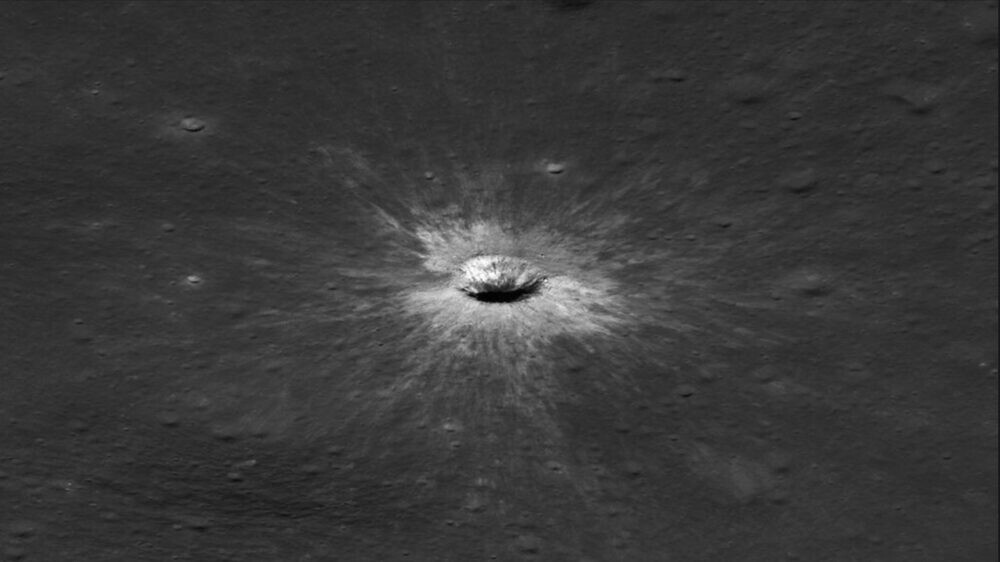
Earlier, the American space agency for the first time showed in detail a photo of a new lunar crater formed after the fall of the spent upper stage of the SpaceX Falcon 9 rocket.