



August promises to be rich in astronomical events: this month, US residents will be able to see partial solar and lunar eclipses, the peak activity of the Perseid meteor shower, as well as bright Venus, which will be at its maximum visible distance from the Sun within a few days, Science Daily reports.
Solar eclipse over 20 states
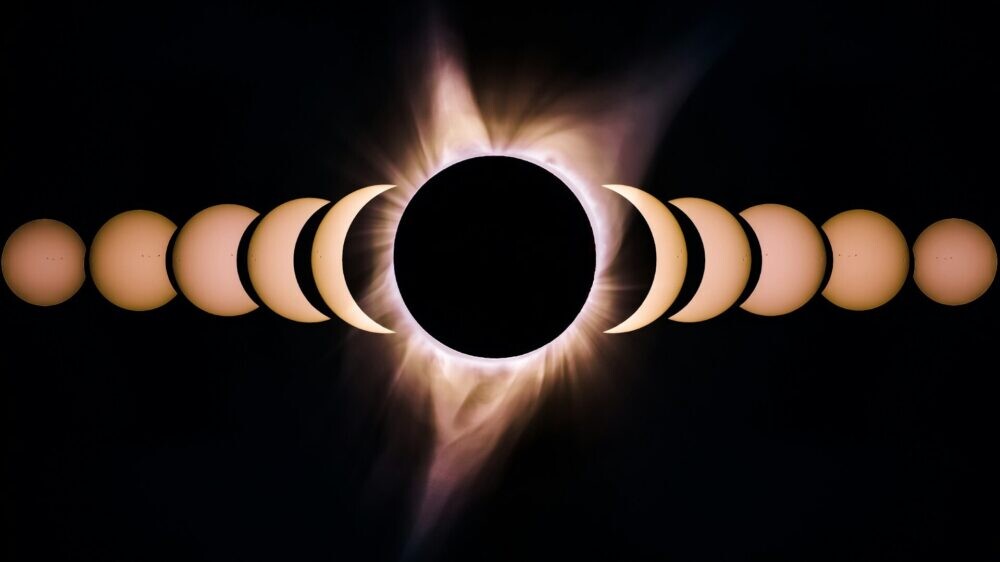
On August 12, the band of total solar eclipse will pass through northern Russia, Greenland, Iceland and northern Spain. A small area of Portugal will also fall into the full phase zone. A total eclipse occurs when the Sun, Moon and Earth line up: the Moon comes between the Earth and the Sun, completely covers its disk and casts a shadow on the surface of the planet.
In some US states – from Alaska to North Carolina – only the partial phase of the eclipse will be visible. In this case, the Moon also passes between the Sun and the Earth, but the celestial bodies do not line up in one line, as a result of which the Moon covers only part of the solar disk, and the Sun for the observer takes on the shape of a sickle.
The eclipse will be visible to varying degrees in 20 states, with it being most complete in the northeast of the country. In Alaska, the Moon will cover up to 37% of the solar disk, and the maximum of the eclipse will occur at approximately 8:27 a.m. local time (AKDT). In New York City, the peak is expected around 1:54 pm Eastern Time (ET), but the Moon will only obscure about 10% of the Sun.
The next partial solar eclipse will be visible in parts of the United States as early as August next year, while a total eclipse over the continental United States will not occur until 2044.
August Perseids
Those planning to watch or photograph a partial eclipse through a telescope should also pay attention to the Perseid meteor shower.
The Perseids appear annually in late summer as the Earth passes through a trail of particles left behind by Comet Swift-Tuttle. Tiny fragments of cometary material enter the earth's atmosphere at enormous speed, heat up and leave bright luminous traces in the sky.
On the evening of August 12, the Perseids will reach their peak activity, which will last until the early morning of August 13. The new moon will create favorable conditions for observation: bright moonlight will not interfere with viewing meteors.
Those wishing to see “shooting stars” should choose a dark place away from city lighting with an open horizon. It is recommended to wait about 30 minutes before observing to allow your eyes to adjust to the darkness.
After nightfall, you should turn your gaze to the northeastern part of the sky and wait for the constellation Perseus to rise above the horizon. There is a shower radiant – the point from which, as it seems to an observer from Earth, meteors fly out. Moreover, they can appear in almost any part of the sky, so it is better to try to cover as much of it as possible with your gaze.
Elongation of Venus
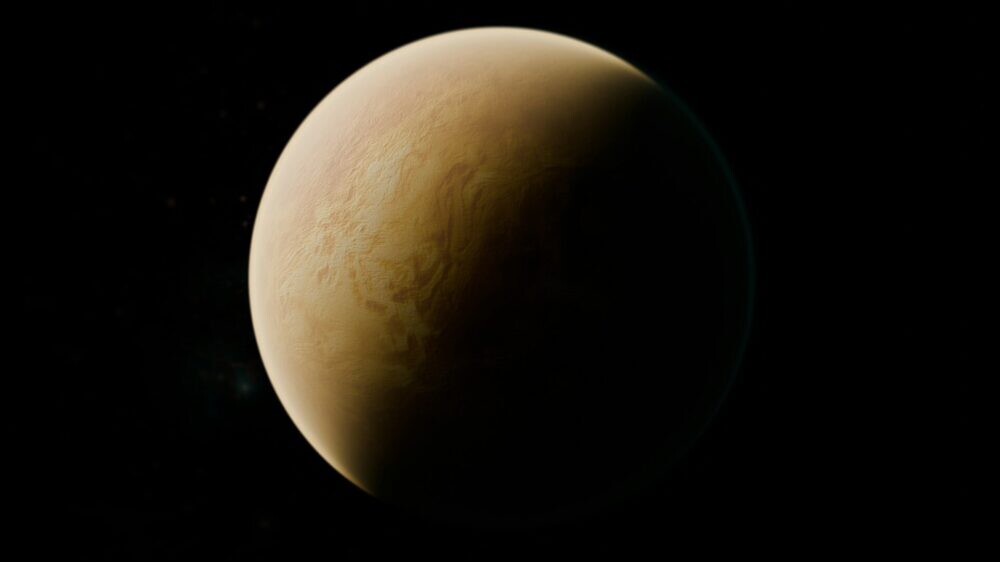
Already on the night of August 15, Venus will reach its greatest eastern elongation. This means that the planet will be at its maximum visible distance from the Sun and will stand out especially brightly in the evening sky after sunset for several days. It will be easily visible above the western horizon – Venus will appear brighter than any nearby star, and in a telescope the planet will appear about half illuminated and resemble a smaller version of the Moon in one of its phases.
Lunar eclipse
Another notable astronomical event is expected on the night of August 28, when the Moon enters the Earth's shadow. About 96% of its disk will be inside the dark part of the earth's shadow – the umbra, so the eclipse will not be considered total. During a total lunar eclipse, the Moon is completely immersed in the umbra, and the Earth is located between it and the Sun, blocking most of the sunlight.
During the maximum phase, a significant portion of the lunar disk may take on a dark red, brown or copper hue, while a small bright edge will remain outside the Earth's shadow. The eclipse will reach its maximum at approximately midnight on August 28 Eastern Time (ET).
All stages of the eclipse will be visible across much of the central and eastern United States, including New York, Illinois, Florida and Texas. Observers will be able to follow the phenomenon from a barely noticeable penumbral dimming to the maximum phase and subsequent emergence of the Moon from the Earth's shadow. In Alaska, Hawaii, and the far western Pacific, conditions will be less favorable: In some places, the Moon will rise after the eclipse has begun, so you won't be able to see all of its stages.