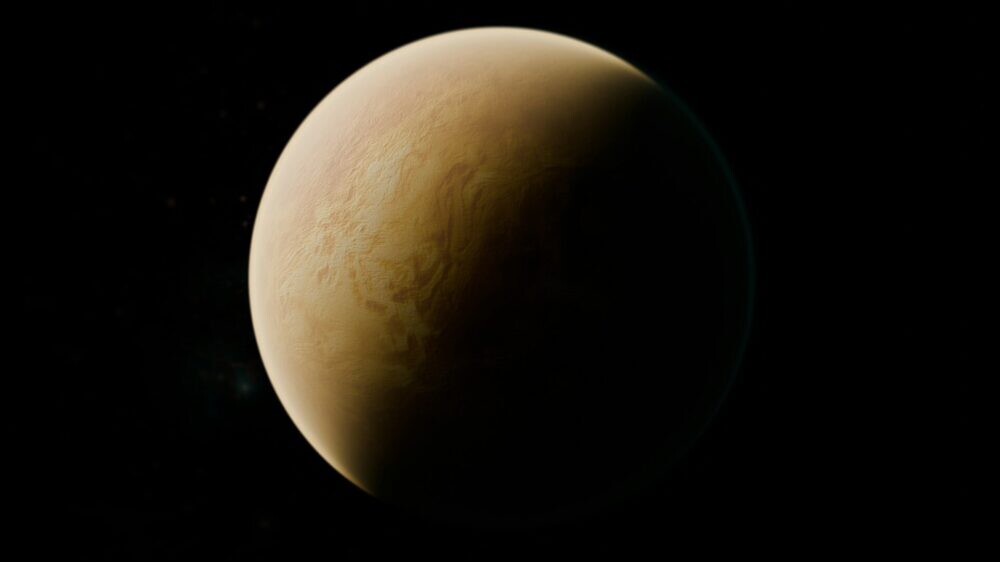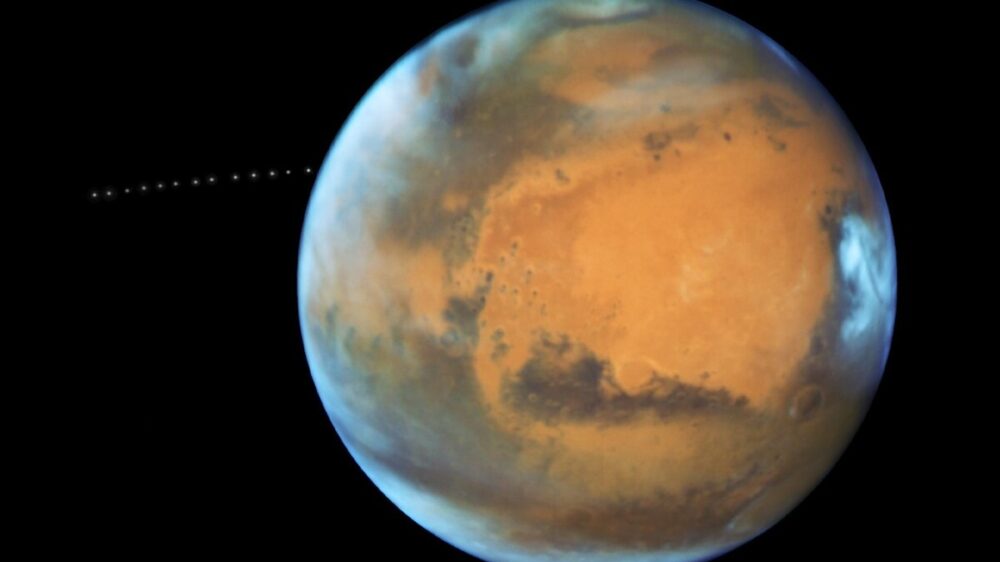

The fourth and seventh planets from the Sun, Mars and Uranus, will be visible in the sky extremely close to each other on the morning of July 4 – Independence Day of the United States, when the country celebrates its 250th anniversary, reports Space.com. As the online publication notes, this kind of visual rapprochement of planets with a difference of a tenth of a degree will not happen again until 2147.
Astronomers expect the phenomenon to be noticeable around 5 a.m. UTC on Saturday. Mars and Uranus will appear at a slight angle above the northeastern or eastern horizon. Experienced observers with good eyesight will have a chance to see both planets without additional equipment, but Space.com recommends using binoculars or a small telescope at a minimum.
Experts recommend first finding Mars as the brighter of the two objects, and above it should appear paler and resembling a dim greenish star, Uranus. As the publication notes, despite the visual rapprochement, the planets are located at a distance from the Earth that differs by almost 10 times.
Typically, Mars and Uranus come together in the sky every two and a half years, but this kind of position with a small angle between the objects occurs on average no more than once every 40 years. According to Space.com, the phenomenon won't happen again for another 121 years (until December 8, 2147), but the chance to see it could come in 2053, according to astronomers at the College of Southern Idaho.
Astronomers also note that telescope owners will be able to spot the star HD 284146 (also cataloged as HIP 19146) between Mars and Uranus on July 4th. It is actually located even further than both planets – at a distance of more than 1,000 light years from Earth, Forbes notes.