





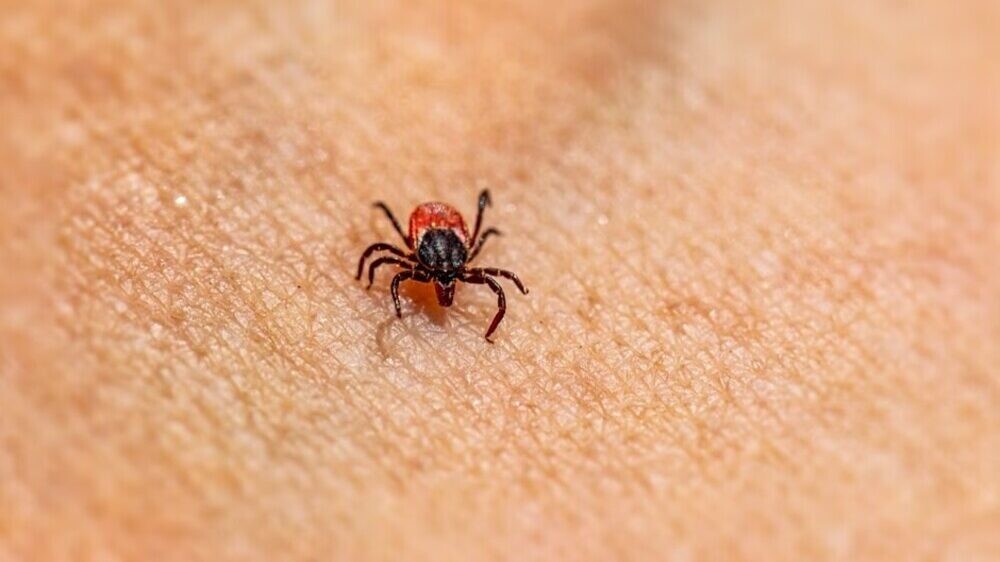

In recent months, the number of cases of infection with the Powassan virus, which can lead to serious consequences, including death, has increased in the United States, writes The Washington Post (WP). The virus is transmitted by tick bites and there is no cure.
Cases of infection are mainly recorded in the states of New Jersey and New Hampshire. The Powassan virus is named after the city in Ontario, Canada, where it was discovered in 1958. In the United States, it is distributed primarily in the Northeast and Midwest. The virus can enter the central nervous system and cause encephalitis, an inflammation of the brain, or meningitis, an inflammation of the tissues surrounding the brain, Saravanan Thangamani, a professor of microbiology and immunology at the State University of New York Medical University, told WP.
There is no cure for this disease, nor is there a vaccine to prevent it. Treatment for severe cases usually includes supportive care such as intravenous fluids and, if necessary, respiratory support or feeding tubes, he said.
Ticks typically carry Lyme disease, which can cause fever, rashes, arthritis and heart problems. Powassan is quite rare, but according to the US Centers for Disease Control and Prevention, there is an increase in the number of cases of its detection. If in 2015 there were seven cases of infection reported in the United States, then in 2025 there will already be 76.
Katherine Valentine, an assistant professor of infectious diseases at New York University Grossman School of Medicine, talks to WP and points out one of the most dangerous features of the disease is how quickly it spreads in the body.
“Unlike Lyme disease, in which the tick typically needs to feed on your blood for 16 to 24 hours to transmit the disease, with Powassan the tick does not need to stay on you for more than 15 minutes or so,” Valentine emphasizes.
Experts suggest that most people who become infected with the virus do not show symptoms. Others develop a fever first and may feel flu-like, with muscle aches, fatigue, or general malaise. But in some cases, the virus penetrates the central nervous system, affecting the spinal cord and brain within a few weeks.
At this point, signs of the disease become neurological and may include confusion or cognitive impairment, slurred speech, loss of coordination, and even seizures or paralysis. As Valentine notes, some people may think they are having a stroke. The key difference is the duration of symptoms – with a brain infection they last several days, but with a stroke they last only a few hours.
Among patients with severe symptoms, the mortality rate is as high as 15%, and half of those who survive experience long-term neurological problems that can range from minor problems with memory to serious problems with speaking, walking, and sometimes even eating.
The disease is carried by resident ticks that parasitize gophers and squirrels, as well as the deer tick, or black-legged tick, which becomes active in hot and humid weather. According to doctors, the increase in average temperature has significantly increased the period of their activity. For a similar reason, the climatic phenomenon “Super El Niño,” as told by RTVI.US, can not only change weather conditions, but also increase the risk of contracting hantavirus infections in some regions of the United States.
Doctors advise not to leave areas of skin exposed while hiking or walking in the forest. Experts also recommend treating clothes with anti-tick products, and upon returning home, drying things at high temperature for 10 minutes to kill all insects that could cling to the fabrics. Separately, doctors mention the importance of checking skin and things for the presence of virus carriers after any outdoor activity.