
American plans to deploy nuclear bombers in additional European countries will not affect those states that currently do not have this type of weapons, John Irat, director of the Washington Center for Weapons Non-Proliferation Control, told RTVI.US. Thus, nuclear weapons should not appear in Poland and the Baltic countries.
The RTVI.US interlocutor noted the lack of specifics in the plans of the administration of US President Donald Trump regarding American forces in Europe. Let us recall that earlier in Washington they announced their desire, on the contrary, to reduce the military presence in the Old World.
“It is unclear what exactly the planned changes will be. This may simply be part of an ongoing reassessment of the US presence in Europe and a reorientation towards those capabilities of the US military that are most likely to be useful in the European theater of operations,” Irat admitted.
Earlier, the Financial Times reported that the United States is discussing the possibility of deploying nuclear bombers in additional European NATO member states. According to the newspaper, we can talk about Poland and the Baltic countries. At the moment, nuclear weapons in Europe are located in Belgium, Germany, Italy, the Netherlands and Great Britain.
The corresponding negotiations were confirmed to Politico by Lithuanian Defense Minister Robertas Kaunas. Currently, the country's constitution prohibits the placement of weapons of mass destruction on its territory, but President Gitanas Nausėda has taken the initiative to amend the basic law, citing security threats. And President Karol Nawrocki announced Poland’s desire to obtain nuclear weapons back in February.
The 1997 agreement between Russia and NATO states that the North Atlantic Alliance has “no intentions, plans or reasons to deploy nuclear weapons on the territory of new members.” Poland joined NATO in 1999 year, and the Baltic countries (Latvia, Lithuania and Estonia) – in 2004.
“It is not very realistic to believe that nuclear weapons will be deployed anywhere where they are not currently present. The general trend is to reduce nuclear forces around the world. The United States has the ability to use nuclear weapons almost anywhere and anytime with the help of strategic forces,” Irat said in an interview with RTVI.US.
At the same time, the expert noted that NATO nuclear weapons perform primarily a political, not a strategic function. Its main task is to provide confidence in a reliable US nuclear umbrella. In the event of a possible conflict, strategic forces will most likely be involved first.
“NATO doctrine states that nuclear weapons are intended solely for defense and deterrence. If deterrence works, there is no need to use it during immediate defense. If it doesn't work, the world will have bigger problems than using a few nuclear weapons. This would be a scenario for a large-scale Third World War, and no one wants this,” added the RTVI.US interlocutor.
Talks about increasing the number of nuclear weapons carriers in Europe are due to fears that the ongoing Ukrainian conflict will spread to it, Irat said. He recalled the incident with a drone hitting a residential building in Romania, but did not agree with the opinion that the US decision was related to Russia’s deployment of nuclear weapons in Belarus. The expert also does not consider it correct to compare the situation with the deployment of American missiles in Europe in the 1980s, which led to a large-scale crisis and an arms race.
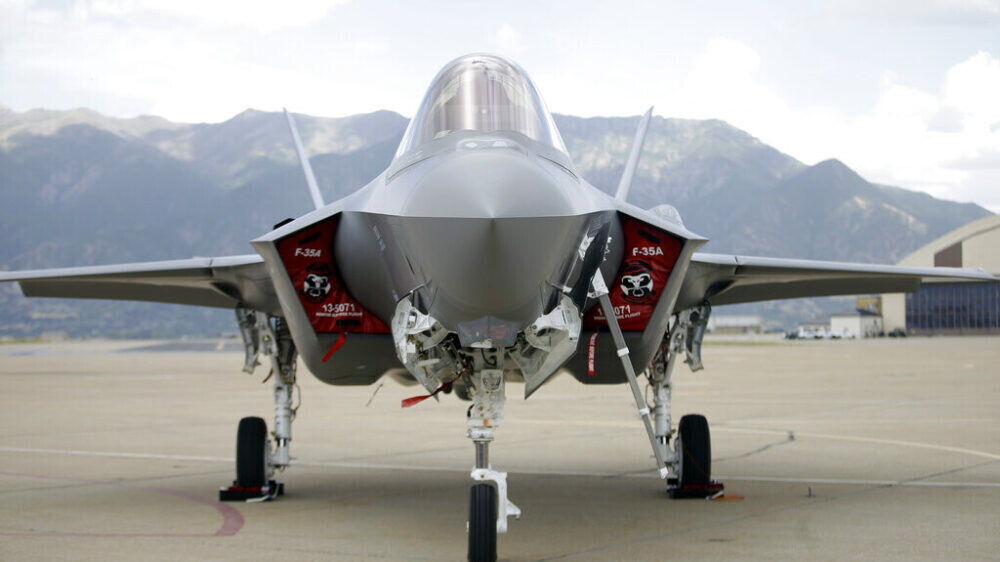
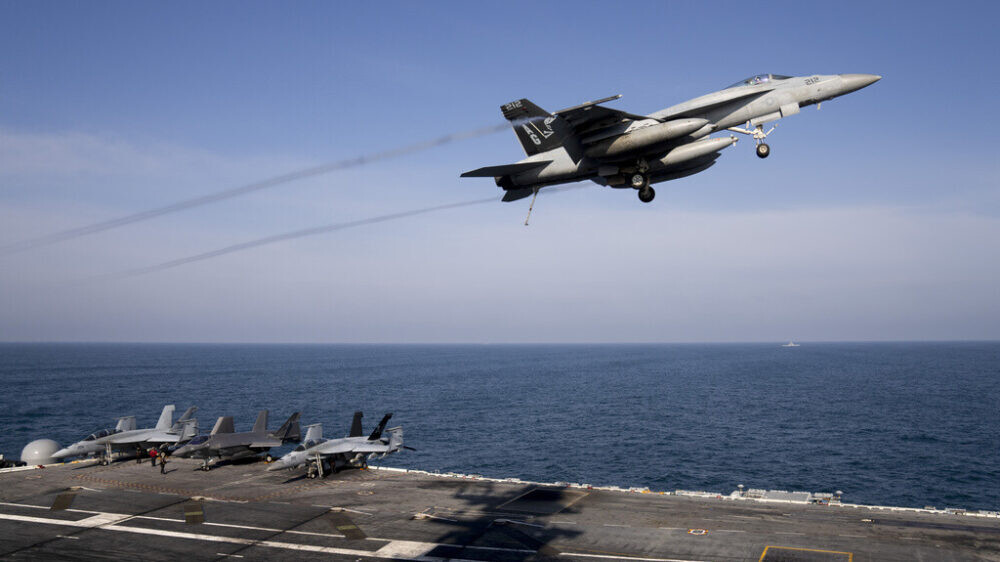
“In the 1980s, the Pershing missiles were deployed, which were nuclear weapons. This was their only purpose. Aircraft capable of carrying nuclear weapons are now being deployed. That is, aircraft whose main task is to carry out conventional strikes and ensure air superiority, but which at the same time are capable of carrying nuclear weapons. So this is not like the 1980s, when there was a Cold War and there was a real danger of massive nuclear attacks. Pershing missiles were also first strike weapons. Their flight time to Russian settlements was measured in minutes. So now the situation is completely different,” he concluded.