


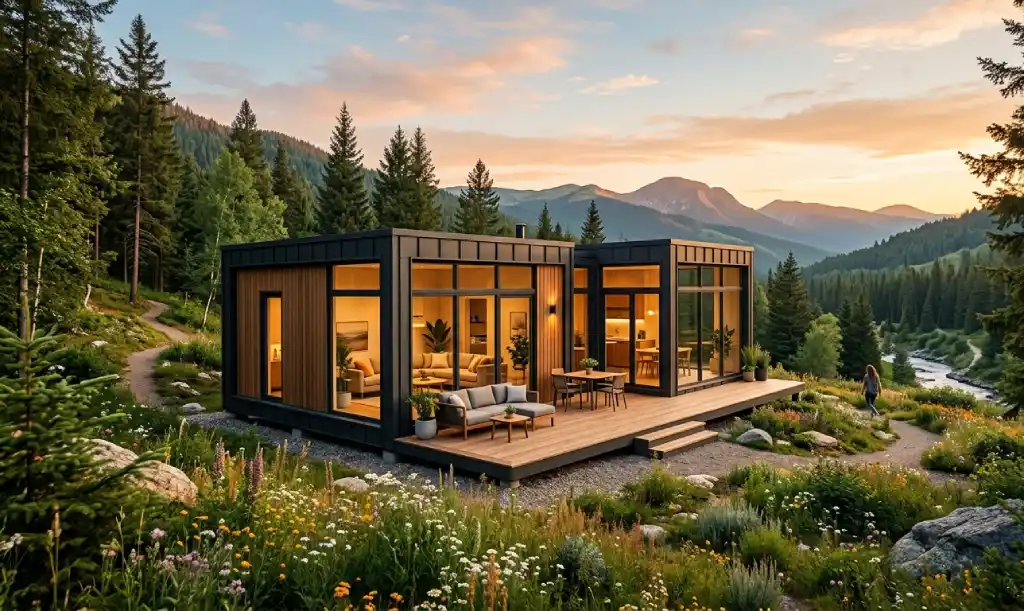

The modern pace of life forces us to rethink familiar things, and housing is no exception. For years, building one’s own home was associated with a prolonged, exhausting process that consumed a vast amount of time, nerves, and resources. Today, however, traditional brick and months of waiting are being replaced by an innovative technology that transforms the creation of a home into a fast and exciting process. Modular houses, which are assembled at a factory on the principle of a construction set and delivered to the site completely finished, have become a new trend in the architectural market. This approach fundamentally changes the perception of architecture, offering people freedom, energy efficiency, and the opportunity to move into a new home in just a few weeks.
A Construction Set for Adults: The Technical Essence and Advantages of the Technology
At the heart of modular construction lies a simple yet revolutionary idea: to transfer most of the construction work from a regular site to the dry, controlled workshops of a factory. Each module is a separate part of the future building, which already has walls, a floor, a ceiling, and often finished interior decoration, installed utilities, and even fitted furniture. This production method provides a whole range of unique advantages that make these structures popular:
- Speed of erection: production in the workshop takes from a few weeks to a month, while installation directly on the site takes just 1–3 days.
- Weather independence: since the blocks are assembled in an enclosed space, rain, snow, or frost have no impact on the quality of the materials.
- High assembly quality: the use of precise factory equipment minimizes the human factor and ensures the perfect geometry of the walls.
- Mobility of the structure: if necessary, such a house can be disassembled, loaded onto a platform, and transported to a completely new place of residence.
Eco-friendliness and cleanliness: during installation on the site, there is none of the usual construction debris, and the surrounding landscape remains undamaged.
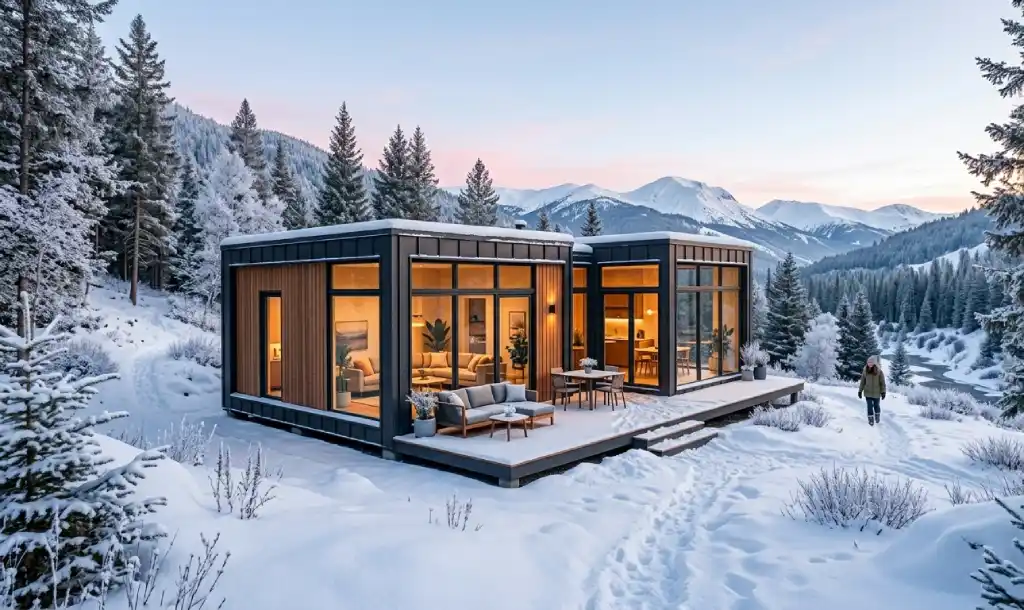
Thanks to the combination of speed and reliability, this technology has become a real lifesaver for those who do not want to get involved with classic, multi-year “construction.” Factory control guarantees that all layers of insulation, vapor barriers, and internal engineering networks are laid strictly according to the technology. The client receives not just a box, but a fully tested product ready for operation in any climatic conditions immediately after connection to external power and water supply networks.
Architectural Diversity: What Types of Modular Buildings Exist
Modern manufacturers have long moved away from the stereotype that a temporary block container or a construction trailer is the limit of this technology’s capabilities. Today, real masterpieces of design are created using this method, which are visually difficult to distinguish from capital stone structures. Depending on their purpose, number of stories, and design features, finished buildings are divided into several main types:
- Suburban cottages and countryside houses — full-fledged private houses for year-round living with living rooms, bedrooms, and terraces.
- Guest and garden houses — compact single-module structures for relaxation or temporary accommodation of guests.
- Commercial properties — modern mobile offices, cafes, coworkings, and hotel rooms for glampings and eco-resorts.
- Multi-module and two-story villas — large-scale buildings created by blocking several elements vertically and horizontally.
- Specialized medical or administrative posts — rapidly deployable structures for emergency services in humanitarian crisis zones.
Such a variety of shapes and formats makes it easy to select an individual architectural solution for any need. The currently popular barnhouse style or minimalist high-tech with panoramic windows are perfectly realized in a modular execution. Moreover, the flexibility of the system allows the owner to start with one small block, and over time, as the family grows or financial opportunities arise, simply purchase and attach another module, expanding the living space without a global reconstruction.
The Philosophy of Freedom: Why Modules Characterize the Future of Architecture
The transition to finished factory solutions is not just a change of building material, but a change in the very philosophy of property ownership. In a world where mobility and flexibility are becoming core values, tying oneself to a single plot of land for life seems like an outdated approach. Modular technologies give a person a unique sense of dynamism and independence. By purchasing such a house, the user invests primarily in their own comfort, choosing housing solutions based on the principles of rational consumption:
- Energy efficiency: the use of modern certified eco-insulation allows for significant savings on heating in winter and cooling in summer.
- Predictable budget: the cost of the project is fixed at the stage of signing the contract at the factory and does not increase due to sudden price hikes in materials.
- Autonomy: the possibility of easy integration of solar panels, heat pumps, and autonomous water purification systems for complete independence.
Ultimately, finished eco-houses demonstrate that high-quality housing can be affordable, stylish, and environmentally friendly all at the same time. They fit perfectly into the concept of conscious living, where a person seeks to minimize their anthropogenic impact on nature but is not ready to give up a high level of urban comfort. This is an architectural response to the challenges of a new era, where speed, mobility, and high technology define the success and quality of our daily existence.