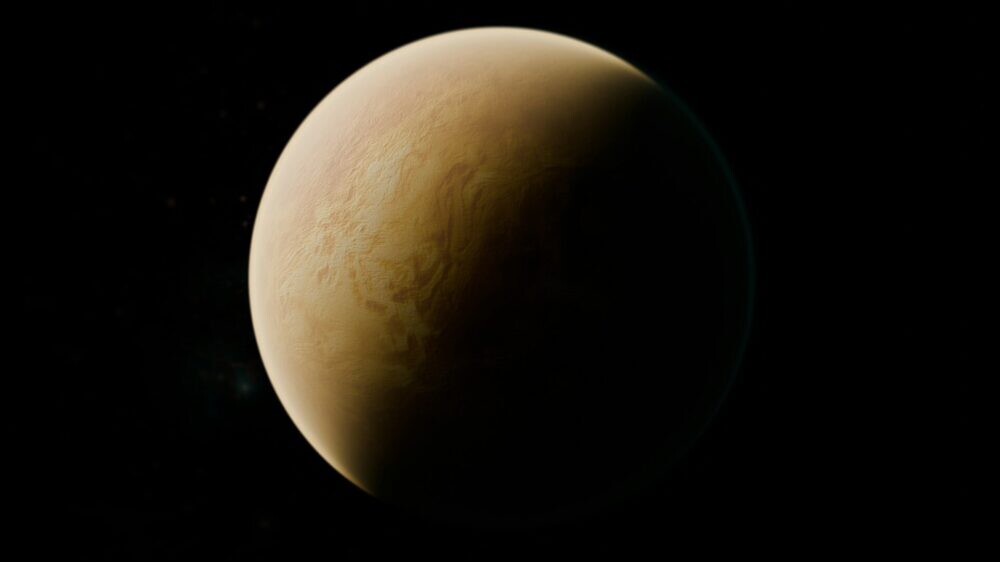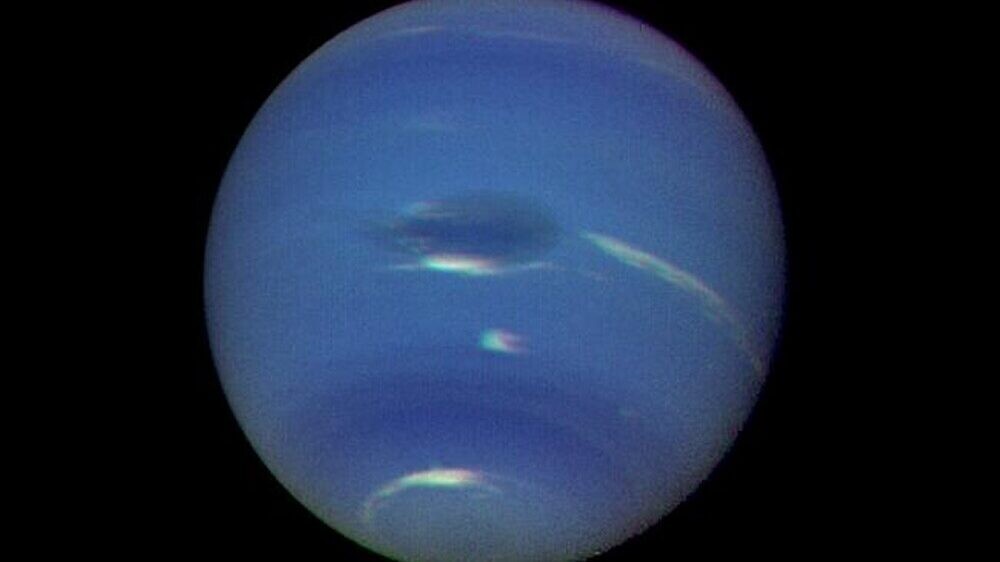

So-called mini-Neptunes, located outside the solar system but comparable in size to its eighth planet, may harbor more water than is visible to modern telescopes, University of Chicago scientists say in a new study.
The assumption was made based on an analysis of the atmosphere of the planet TOI-270 d, which orbits a star in the constellation Pictor. It is almost five times heavier than Earth and has a radius twice as large. The planet is located more than 70 light years from ours.
Using the James Webb Space Telescope, American scientists were able to detect hydrogen, methane and carbon dioxide in the planet’s atmosphere, which indicates the “abundant presence” of water on it. However, this assumption could not be confirmed by empirical observations.
There may be millions or even billions of planets similar to TOI-270 d, astronomers believe. The article was published in The Astrophysical Journal.
“The challenge was how to extrapolate atmospheric data to form an understanding of the surface [планеты]”, lead author Caroline Piolet-Gorayeb explained in a comment to the university's website.
The team, using an original methodology, concluded that the water on TOI-270 d could have drowned in lighter hydrogen and therefore disappeared from the sight of the James Webb. In this regard, scientists believe that the planet is in any case less suitable for life than Earth, due to the extremely high atmospheric pressure and temperature.
They also did not rule out the possibility that a certain mixture of gas and solids “mimics” the presence of water on the planet.
“This is an interesting question because water is critical to life as we understand it, and the situation suggests that we need to be more careful in processing the information we get from new, powerful telescopes to understand what is really going on,” the lead author added.