
Since ancient times, the night sky has served humanity not only as a landmark during long journeys but also as a kind of magical book in which the answers to the most complex questions of existence are encrypted. Observing the constant movement of celestial bodies, our ancestors learned to distinguish certain sectors of the ecliptic, linking them to the characters, temperaments, and life paths of people. Today, these perceptions have transformed into a complex system where Zodiac signs act not just as a tool for fortune-telling, but as a psychological key to understanding one’s inner “Self,” personal ambitions, and ways of interacting with the surrounding world. Despite the rapid development of technology, interest in astrology does not fade, as the search for harmony with the cosmos remains an eternal need for everyone who strives to grasp the logic of their own success or failures.
The Elemental Nature of Personality: Classification and Energy
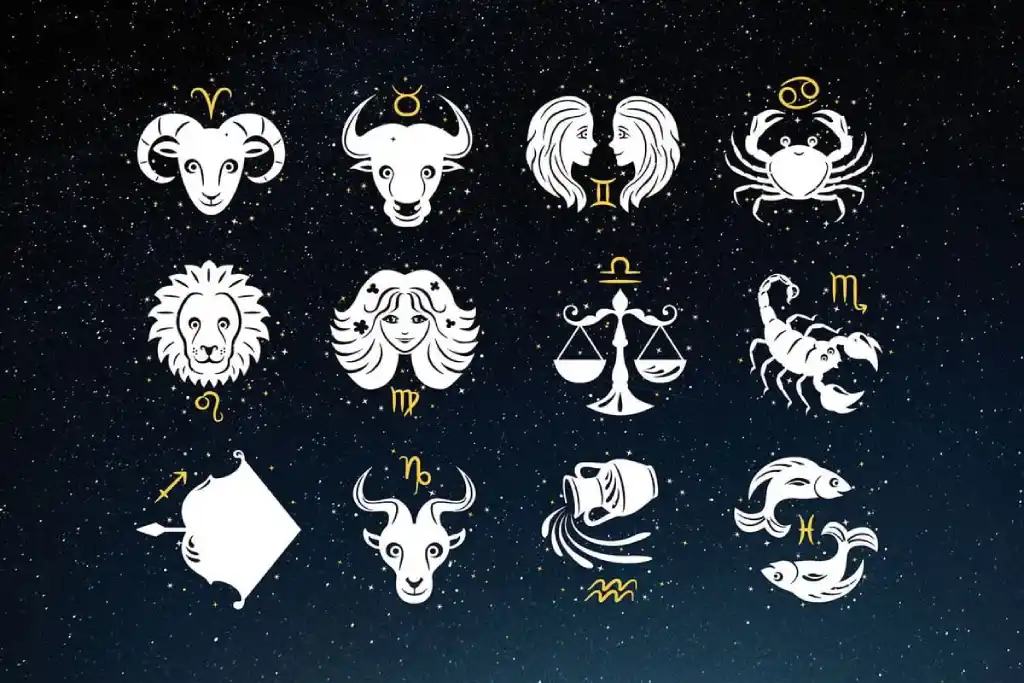
At the heart of astrological doctrine lies the concept of four elements, each of which endows its sector with unique vibrations and priorities. This division allows for grouping signs by their way of responding to external challenges, their level of emotionality, and their approach to making strategic decisions. Understanding elemental belonging helps to better realize one’s strengths and areas for development, which is the basis of modern astropsychology:
- Fire (Aries, Leo, Sagittarius): the embodiment of passion, leadership, energy, and an unstoppable desire for self-realization.
- Earth (Taurus, Virgo, Capricorn): symbolizes practicality, stability, diligence, orientation toward material results, and structure.
- Air (Gemini, Libra, Aquarius): reflects intellectual flexibility, sociability, a thirst for new knowledge, and social activity.
- Water (Cancer, Scorpio, Pisces): represents intuition, deep emotionality, sensitivity to the environment, and a developed inner world.
This elemental division is the foundation for creating a dynamic horoscope, where each person combines a unique balance of energies. For example, representatives of fire signs more often become drivers of change, while earth signs provide the foundation for translating these changes into reality. A harmonious combination of elemental energies in each individual’s natal chart determines their potential and ability to adapt in the conditions of the constant flow of life.
Astrological Archetypes: From Aries to Pisces as a Path of Development
Each sign of the zodiac in a holistic system symbolizes a certain stage of human experience, traversing the path from instinctive self-assertion to spiritual wisdom. This is not just a set of character traits, but a holistic archetypal image that helps to see patterns in personal growth and challenges. Throughout the year, passing through all twelve sectors, we can observe how life emphases and social demands change:
- Spring signs (Aries, Taurus, Gemini) — energy of birth, cognition of one’s own “Self,” and initial contacts with the environment.
- Summer signs (Cancer, Leo, Virgo) — a period of flourishing, emotional attachment, creative expression, and improvement of skills.
- Autumn signs (Libra, Scorpio, Sagittarius) — a time of partnership, transformation, deep analysis, and the search for a higher meaning.
- Winter signs (Capricorn, Aquarius, Pisces) — a period of social realization, collective responsibility, and spiritual completion of the cycle.
This sequential movement through the zodiac circle demonstrates how the experience of each sign complements the next, creating a unified picture of human evolution. We do not just live within the framework of our sign; we learn from others, borrowing their qualities at critical moments in life. Thus, the astrological system becomes a guide that teaches us tolerance for the diversity of human characters and an awareness of our own place in the great cosmic mechanism.
Synthesis of Traditions and Modern Worldview: How to Read the Stars Today
The modern approach to astrology differs significantly from medieval practices, as the focus has shifted from fatalism to conscious choice. We no longer perceive zodiacal influence as an inevitable sentence, but view it as a set of tendencies that can be consciously managed. For a successful interpretation of one’s potential in the present time, it is worth considering the following important aspects of astrological forecasting:
- Analysis of the natal chart: a full snapshot of the position of the planets at the moment of birth, which provides a significantly deeper picture than a general forecast.
- Consideration of transits: tracking the current movement of the planets, which “activate” certain sectors of the personal horoscope and create new opportunities.
- Work with astrological aspects: the interaction between the planets, which determines tension or harmony in affairs, relationships, and the professional sphere.
In this way, zodiacal knowledge transforms into a powerful tool of self-management, allowing one to avoid “hidden pitfalls” and act in harmony with one’s internal cycles. Understanding one’s nature through the prism of the stars gives a sense of confidence, helping to maintain composure even in the most difficult periods. Ultimately, the main goal of astrology is not to predict the future, but to teach a person to take responsibility for their own life, relying on ancient wisdom that has passed the test of millennia.