


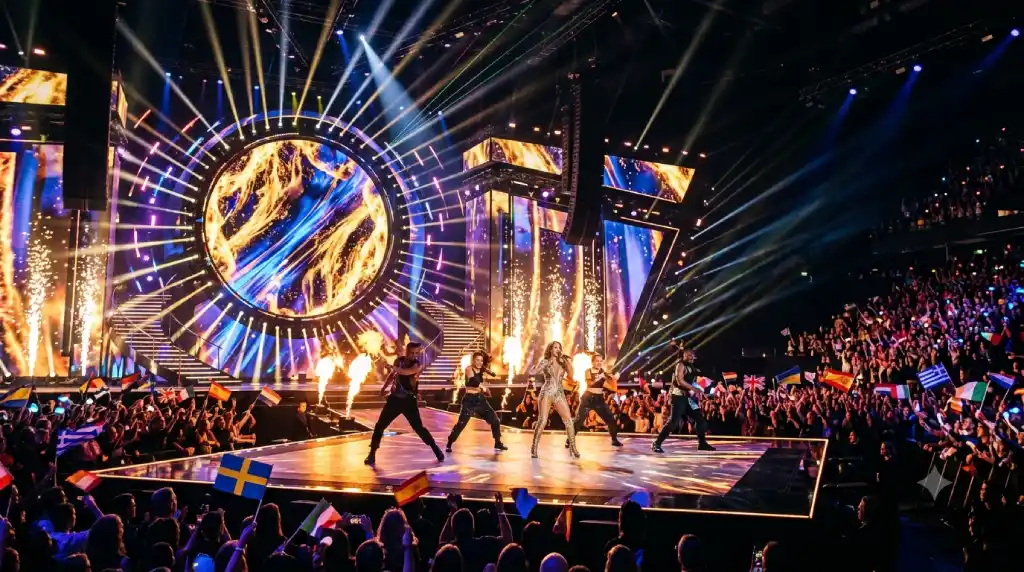

Every year, millions of television viewers are glued to their screens, watching the largest song contest on the planet. For many, it is just a bright television show, but in reality, Eurovision is much more than just another music competition. It is a unique cultural platform where nations demonstrate their identity, dreams, and values through melodies, lyrics, and stage performances. Founded in 1956 as a radio broadcasting experiment, today this festival has turned into a global event that erases borders and language barriers, making Europe (and beyond) beat in unison for one week in May. It is a true arena for creative expression, where each artist attempts to win the hearts of the audience and leave a mark on the history of world music.
Evolution of the Show: From an Intimate Contest to a Global Phenomenon
The history of this event resembles the evolution of media technology and social attitudes. It all began with a desire to unite post-war Europe through live broadcast technologies and turned into a high-tech show that surprises with its scale and innovations every time. Over the decades, the structure and rules of the contest have undergone significant changes:
- The introduction of professional juries and public voting, which influenced the objectivity of the results.
- The appearance of semi-finals, driven by the growing number of participating countries and the need to select the best.
- The use of modern visual effects: from augmented reality to complex lighting constructions on stage.
- The lifting of language restrictions, allowing artists to sing in their native languages more often.
- The transition to an online streaming format and interactive engagement with the audience through social media.
Each such stage was a reaction to changing generations and the development of the music industry. Thanks to these transformations, the contest never turned into an archaic event; on the contrary, it always remained at the forefront of trends, setting the tone for the entire entertainment industry. Past years have proven that the ability to adapt is the project’s main advantage, allowing it to remain not just relevant, but also a coveted place for the most ambitious contemporary musicians to launch their careers.
More Than Music: Political and Social Dimensions
The contest is often called apolitical, but history proves the opposite: it has always been a reflection of geopolitical processes. Victories or high-profile performances often become symbols of solidarity, protest, or hope for a better future. This makes it not only entertainment but also a powerful tool of public diplomacy, where aspects like the following matter:
- Demonstration of cultural diversity and respect for the national traditions of each participant.
- Support for social initiatives: many participants use the stage to highlight issues of human rights, freedom, or peace.
- Economic impact: the winning country receives the right to host the contest, which stimulates the development of tourism and infrastructure.
- Formation of the European community: creation of a common space for dialogue and mutual understanding between nations.
- Influence on the popularity of artists who receive a chance to reach an international level and sign contracts with leading labels.
Such a context turns every performance into a statement that carries weight far beyond the stage. Viewers vote not only for vocal ability, but also for the message the artist brings, which makes every vote an act of civic position. Thus, the contest becomes a mirror reflecting all the hopes, fears, and aspirations of modern society, forcing us to reflect on the issues that concern each of us today.
How the Selection Mechanism Works: Rules and Emotions
To understand why this event causes such excitement, it is worth examining the process of determining the winner itself. It is a complex system of balance between professional assessment by music experts and the popular will, which ensures suspense until the very last minute of the show. The main principles of the competition are as follows:
- Evaluation of the performance based on two independent criteria: points from the jury and votes from viewers.
- A points system from 1 to 12, where “douze points” is the highest mark for the best song.
- The Grand Final, in which the “Big Five” (founding countries) and the semi-final winners participate.
- Strict rules regarding the duration of the song and the number of participants on stage to ensure equal chances.
- The voting procedure, which takes into account the opinions of both professionals and regular music fans.
It is precisely this division of responsibility that creates the drama and unpredictability of the final. Professionals pay attention to technical details: vocals, staging, and musical composition, while viewers vote with their hearts, reacting to the charisma and emotional sincerity of the performers. This symbiotic interaction creates a special atmosphere where every vote matters, and the result becomes the collective choice of millions of people, making this project truly democratic and open to everyone ready to share this unforgettable experience with us.