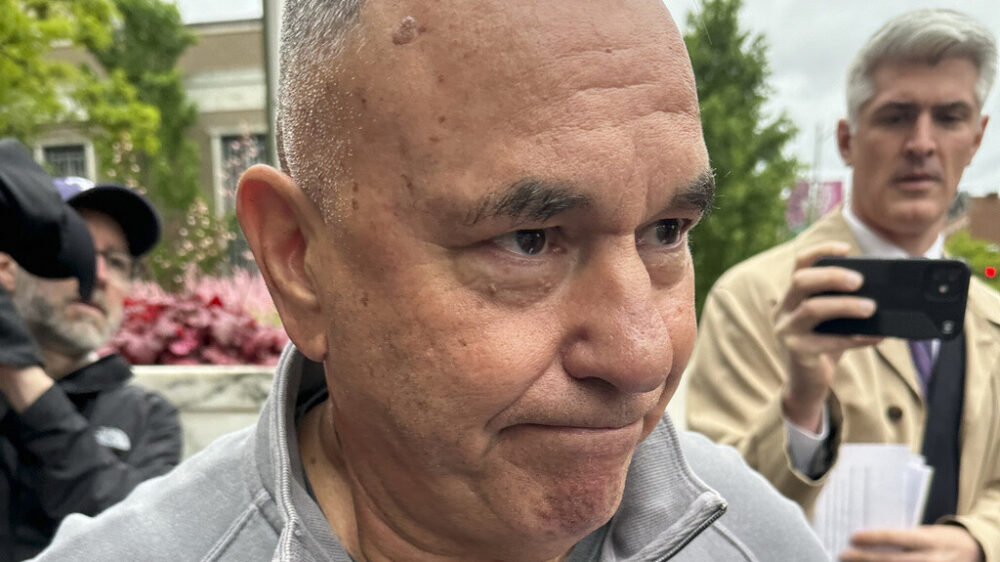







How to make sure the diagnosis is correct and what to do if there are doubts about the prescribed treatment or different doctors come to different conclusions? A patient, especially one with a serious diagnosis, should get the opinion of a second specialist, and if there is a discrepancy in the conclusions, consult a third doctor. In a special interview with RTVI, Israeli therapist, chief physician of the Horev Medical Center in Haifa and director of the Rambam international clinic, Roman Barak, spoke about how to deal with such situations and how to prevent advanced diseases.
The development of medicine and the availability of a huge amount of information have led to the fact that patients increasingly doubt their diagnoses and independently study possible treatment options. Barak noted that the desire to double-check the doctor’s conclusion is justified, and advised, if in doubt, to seek the opinions of other specialists.
“Before you can be sure that this diagnosis is correct and the treatment is correct, you need to hear at least another opinion, which is called a second opinion,” he said.
If the conclusions of two doctors coincide, this, according to Barak, is enough to decide on further tactics. If their opinions differ, then the opinion of a third specialist is needed.
“Today we have a huge number of medical problems in humans that arise in the world and in an era of rapid development of medical information and medical knowledge. And of course, a huge number of different schools compete: the American one, which is undoubtedly the leader all over the world, the European one, our school, the Israeli one, there is a school in our post-Soviet space,” Barak noted.
What to do when there is no consensus
Determining the diagnosis and treatment can be especially difficult with rare diseases or in cases where the patient has several health problems at the same time. Then it may be necessary to discuss it with several specialists of different profiles at once.
According to Barak, in practice, however, organizing such a consultation can be difficult. Usually the patient consistently visits different specialists, but they do not always have the opportunity to simultaneously discuss his condition and come to a common conclusion.
“Each specific doctor, either in a clinic or within a hospital complex, will refer for consultation to one, to another, to a third, but sitting down on one problem and discussing one patient at the same time with three, four, five specialists practically does not happen in today’s life,” Barak noted.
Barak also believes that a doctor must be willing to admit his own lack of knowledge in a particular case. According to him, telling a patient “I don’t know” requires courage, but it is more correct in such a situation to refer the person to a specialist more competent in a particular area.
“You have to be brave and strong to say that there are people more [компетентные]“than each specific doctor, who may be completely incompetent in this or that problem, in this or that diagnosis, in this or that treatment,” he said.
“You can always help”
Barak also commented on situations where the patient is told that the disease is incurable and treatment options have been exhausted. Even then, medical care should not stop, he said.
“First of all, you can always help. Even if we are not ready and it is impossible to extend a person’s life even more than what we already have, then we can always psychologically support this person,” the doctor emphasized.
According to him, with incurable diseases, the fight against pain and other severe symptoms, as well as psychological assistance to the patient, become important tasks. Barak paid special attention to fear, anxiety and depression that can accompany a serious illness.
Even if medicine can no longer cure a person or prolong his life, it is necessary to try to ensure the highest possible quality of the remaining time, the doctor believes.
When to start getting examined
Barak named preventive examinations as one of the ways to reduce risks – screenings that are carried out on people even before symptoms of the disease appear.
“We don’t even wait for symptoms and complaints to appear. That is, without such screenings, which are a set of checks aimed at healthy people, we will not be able to identify this problem, we will not be able to catch the disease when it is not yet life-threatening,” he said.
According to Barak, special attention should be paid to preventive examinations starting from about 45-50 years of age. The doctor compared them to car maintenance and named 45 years as the age at which such a “technical inspection” should begin, and 50 years as the upper limit for starting it.
However, there is no universal age for everyone. If a person has hereditary risks, exposure to certain environmental factors or other individual circumstances, screenings may be needed earlier, at age 30 or 40, according to Barak.
The RTVI interlocutor believes that in the future medicine should increasingly shift its emphasis from the treatment of already existing diseases to their early detection and prevention in people who still consider themselves healthy.
Watch the full interview with Roman Barak on the YouTube channel “Duty in America/RTVI”.