
Biologists from the US Fish and Wildlife Service (FWS), together with the White Sulfur Springs National Fish Hatchery in West Virginia, tried a new way to track the movement of freshwater crayfish – before releasing hatchery-bred specimens into the natural environment, miniature devices resembling “backpacks” were attached to their shells. This method will be used later as part of a program to restore the population of the great sand crayfish.
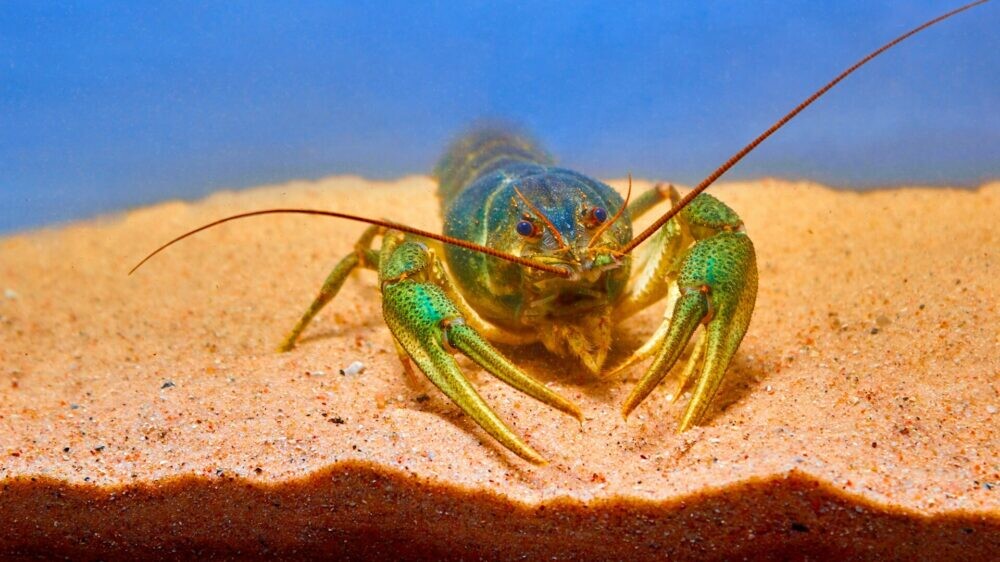
The Great Sandy Crayfish (Cambarus callainus) lives in the rivers and streams of the Appalachian region. For about ten years now, the species has had federal status as endangered in the United States.
To restore the population, biologists raise young crayfish in a nursery for one to two months and then release them into the wild. Previously, before release, animals were tagged with elastomeric implants that were inserted under the abdomen. At one time, specialists usually release about 300 tagged crayfish, so subsequently searching for each individual individual turned into a labor-intensive task.
According to Popular Science, FWS specialists decided to try a different marking method – using a small electronic chip with a unique identification code. It is activated using a special scanner. Young crayfish, about 25 mm long, are too small to safely implant such devices inside the body. Therefore, biologists came up with the idea of attaching tags to the outside – directly on the shell.
First, the device is fixed with ordinary superglue. Then a second, more flexible adhesive composition is applied on top, and the surface is treated with a solution of baking soda so that the structure hardens faster.
“Choosing a new backpack for the school year? Us too. Because these crayfish are too small for conventional PIT tags, biologists are testing miniature “backpacks” that can assign each individual a unique identification number and track its movements and survival,” FWS said.
Before using the technology on the rare species, the researchers tested it on the crayfish Faxonius sanbornii. The experiment lasted two and a half weeks: 40 crayfish were given tags, another 40 animals were included in the control group and remained without them. Tests have shown that the devices adhere securely to the shell and do not interfere with normal life activities.
During molting, the cancer sheds its old shell, so the mark attached to it is lost along with it. For the researchers, however, this is not a problem: the main goal of the experiment is to find out whether crayfish raised in the nursery survive the first month after being released into the natural environment. Finding a tag shed along with the shell will mean that the animal has lived long enough to molt.
This fall, experts plan to test the new technology directly on large sand crayfish for the first time.