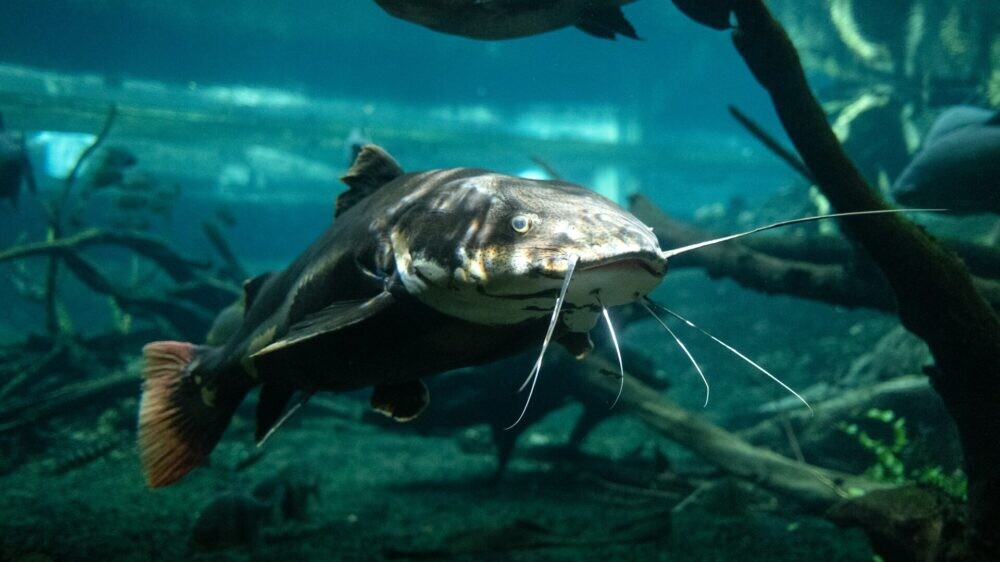

An international team of scientists has discovered a transmissible form of cancer in the American catfish (Ameiurus nebulosus): tumor cells are transmitted from one individual to another and continue to multiply in the body of a new host. This is the first documented case of contagious cancer in fish and the first such case to be identified in a freshwater ecosystem. The results of the study were published in the journal Nature.
In 2012, biologists noticed an unusually large number of catfish with black skin lesions in Lake Memphis, located on the border of the American state of Vermont and the Canadian province of Quebec. Spots representing malignant melanoma were found in 23-37% of the individuals studied.
At first, scientists speculated that the cause could be a toxic substance or pathogen associated with environmental pollution. One of the suspicions concerned flooding caused by Tropical Storm Irene in 2011: floodwaters could have carried pollutants into the lake and degraded water quality.
However, analysis of the genetic material did not reveal viruses or bacteria that were directly associated with the development of tumors. Researchers do not rule out that a pathogen could have triggered the initial onset of cancer or contributed to its spread, however, available data indicate that the transmission agent is the tumor cells themselves.
Scientists suggested that all the detected tumors could have originated from a single cell line, which over time acquired the ability to be transmitted between individuals. Previously, transmissible cancer was identified only in dogs, Tasmanian devils and some species of shellfish.
To test this hypothesis, the researchers sequenced the genomes of tumors and healthy tissue from infected fish. The analysis showed that tumor cells taken from different individuals are genetically identical to each other, but at the same time differ from the healthy tissues of the host fish. In addition, genetic variants that were not present in healthy cells of the same individuals were repeated hundreds of thousands of times in different tumors.
As the study authors note, such a pattern would be virtually impossible if each melanoma arose independently. For comparison, the researchers analyzed hundreds of human cases of melanoma and found that almost all of the mutations were unique to each patient. In fish, on the contrary, most mutations in tumors occurred in many individuals at once – this is a characteristic sign of transmissible cancer.
It remains unclear how cancer is transmitted from one catfish to another. The researchers offer several possible explanations. First, during reproduction, catfish gather in a confined space and come into close contact with each other, which may facilitate cell exchange. It is also possible that tumor cells survive for some time in water or bottom sediments and then enter the body of other fish through the skin, gills or mouth. Another hypothesis is that hormonal changes associated with reproduction affect the immune system and create conditions for cancer cells to take root.
“By studying how tumors survive and spread beyond their original host, we can learn a lot about the mechanisms that normally prevent cancer from spreading beyond these boundaries and what happens when they are disrupted,” said study author Julie Dragon from the University of Vermont.