

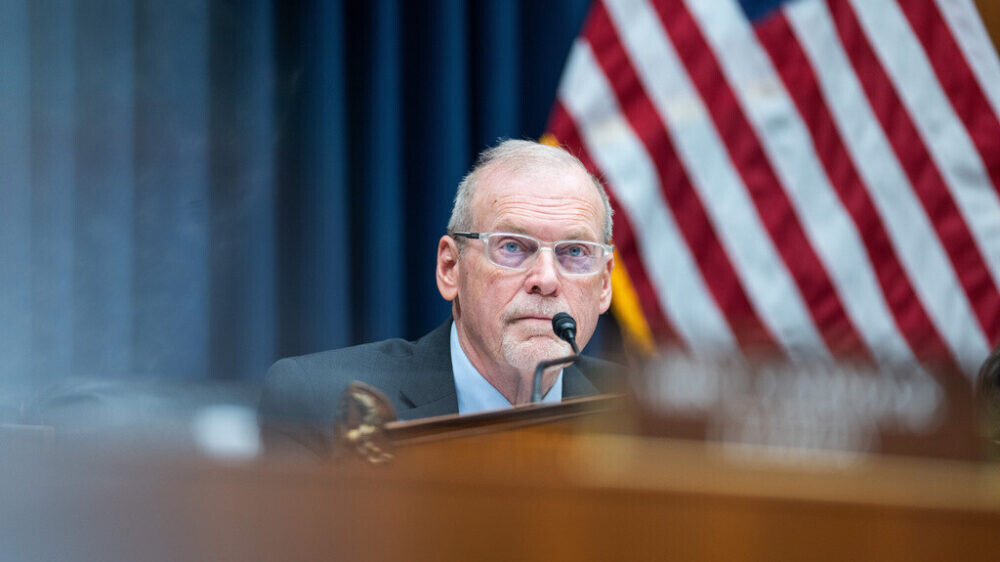

US Congressman Morgan Griffith, R-Virginia, introduced the House of Representatives bill “Abolishing Birthright Citizenship in the United States Territories.” The initiative concerns the process of granting citizenship to children born in Puerto Rico, Guam, the US Virgin Islands and the Northern Mariana Islands.
Since Donald Trump's return to the White House, his administration has begun pushing to overhaul current birthright citizenship rules. The authorities argued that children of illegal migrants and certain categories of aliens temporarily in the country are not subject to the jurisdiction of the United States, and therefore cannot be citizens of the country.
For this purpose, after his inauguration in January 2025, Trump signed a corresponding decree, but the document never came into force – at first it was blocked by lower courts, and at the end of June the decree was invalidated by the Supreme Court. The judges found that the restrictions violated the 14th Amendment to the Constitution, which guarantees American citizenship to anyone born in the United States.
As noted in a press release about Griffith's bill, the Supreme Court's decision does not affect birthright citizenship in U.S. territories because it differs from the rules in the 50 states and Washington, D.C.
Thus, natives of Puerto Rico, Guam and the US Virgin Islands obtain US citizenship under federal law, including the Immigration and Nationality Act of 1952. Residents of the Northern Mariana Islands are granted similar rights through a different legislative mechanism. Thus, to limit birthright citizenship in these territories, it is enough to change federal laws through Congress.
According to the bill, a child born in one of these territories will be able to obtain American citizenship only if at least one of his parents is a US citizen or has permanent resident status. If the document is adopted and changes are made to the laws, the new rules will apply to children born from January 1, 2027.
According to Griffith, the initiative will help combat “the so-called birth tourism industry, which allows foreigners to take advantage of US citizenship laws.”
“I am leading legislation to limit birthright citizenship in the territories and combat foreigners who exploit loopholes in our laws by abusing the generosity of the United States,” the press release said.
As Newsweek notes, passage of the bill could spark a legal dispute over whether the Constitution protects the right to citizenship for people born in American territories, or whether the issue can still be regulated only by Congress.
Critics of the proposal say it could create legal uncertainty for all people born in the territories from 2027 onwards. Right to Democracy co-director Adi Martinez-Roman said the initiative raises questions about the limits of the federal government's power to grant citizenship.
“The bill is particularly troubling because it would unilaterally change the citizenship provisions of the Northern Mariana Islands Agreement. Law 94-241 requires mutual consent of the parties to make such changes. This agreement was concluded precisely to prevent such unilateral actions,” Martinez-Roman said.
American Samoa will not be affected by the bill, since US citizenship by birthright is not currently available there.