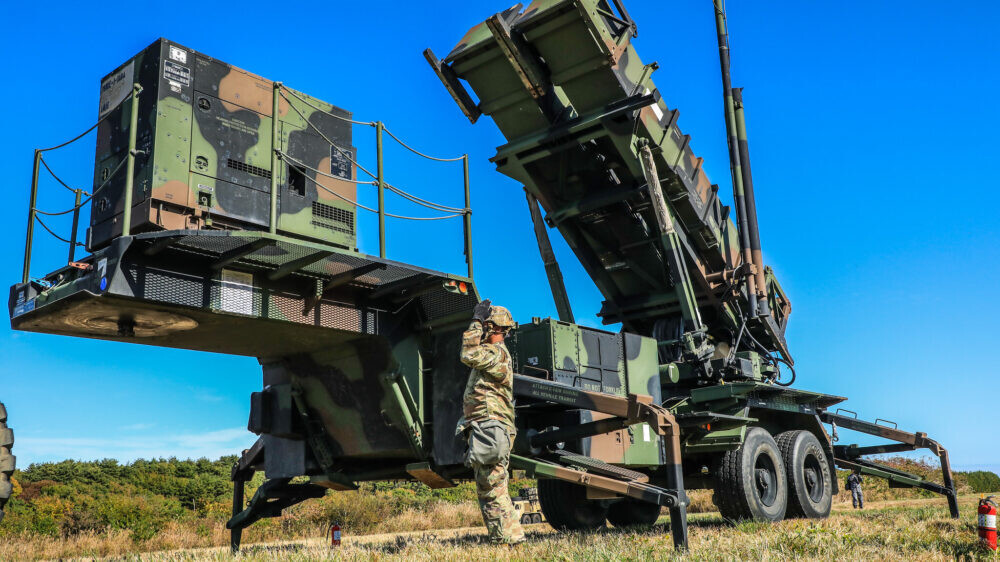

US President Donald Trump's proposal to transfer to Ukraine a license to produce missiles for Patriot anti-aircraft missile systems (SAM) can only be implemented in a few years and is unlikely to satisfy Kyiv's existing requests, reports ABC News citing defense experts interviewed.
Earlier, Trump, at a meeting with Ukrainian President Vladimir Zelensky on the sidelines of the NATO summit in Turkey, announced his readiness to transfer to Kyiv a license to manufacture interceptor missiles for American Patriot systems. He suggested that production could be established quickly, and the leader of Ukraine in this case would “stop complaining” about the shortage of these weapons.
According to some experts, the production of Patriot missiles in Ukraine will take years and will require the country to overcome a number of logistical obstacles, including supply chain problems and compliance with high safety standards. Some experts call the issuance of licenses a “PR stunt” on Washington’s part that will not solve Kyiv’s pressing problems.
Speaking to ABC News, Bradley Bowman, a fellow at the Foundation for Defense of Democracies, a nonprofit, nonpartisan research institute, noted that even allocating funds to Kyiv for production “will not lead to an increase in production capacity for a significant period of time.”
Bowman also suggested that such factories, if they appear, will immediately become the target of attacks, which will ultimately only lead to an increase in Kyiv’s need for interceptor missiles. As the channel notes, defense giant Lockheed Martin in the United States itself produces no more than 620 Patriot missiles per year, which does not correspond to the rate of their use in the Ukrainian and Middle Eastern conflicts.
Analyst Mark Cancian added in response to Trump's announcement that the White House “likes big gestures.”
“It sounds like rockets will start coming out of the factory in a couple of months, but that won’t happen,” the specialist noted.
Jennifer Kavanagh, a defense analyst at Defense Priorities, a national security and foreign policy think tank, said the licensing agreement may seem like a good deal for the U.S. and Ukraine, but it's actually a “lose for both sides.” The issuance of licenses does not mean the timely transfer of air defense systems, the specialist emphasized.
According to GlobalSecurity.org, the Patriot can shoot down aerial targets ranging from aircraft to missiles. Ammunition for this system has different modifications; they can be aimed at the target in different ways: using commands from the operator, independently, using the target image from a camera or through radar systems. Air defense missiles can hit targets at a distance of up to 160 km and fly at speeds 5 times faster than sound.
Such characteristics make the production process extremely complex, which seems to be another problem for Kyiv, Kavanagh emphasizes. If Ukraine does not produce all the components on its own, it will have to purchase them from the United States, which means that these components will not be available to the Pentagon, the expert notes.
“There are significant risks in transferring this type of technology to Ukraine because, in my opinion, it is very likely that Russia will ultimately gain access to the performance characteristics of Patriot missiles, which would obviously put the US military at risk,” Kavanagh adds.