



Dozens of lakes in New Hampshire are already infested with invasive aquatic plants, and experts are increasingly recognizing that once an alien species has established itself in a body of water, it is almost impossible to completely eradicate it. According to the New Hampshire Bulletin, fighting the invaders requires hundreds of volunteer hours and tens of thousands of dollars, but most often only helps slow the spread of the plants. Environmentalists warn that the problem has long gone beyond one state and is becoming part of a broader environmental crisis in the United States.
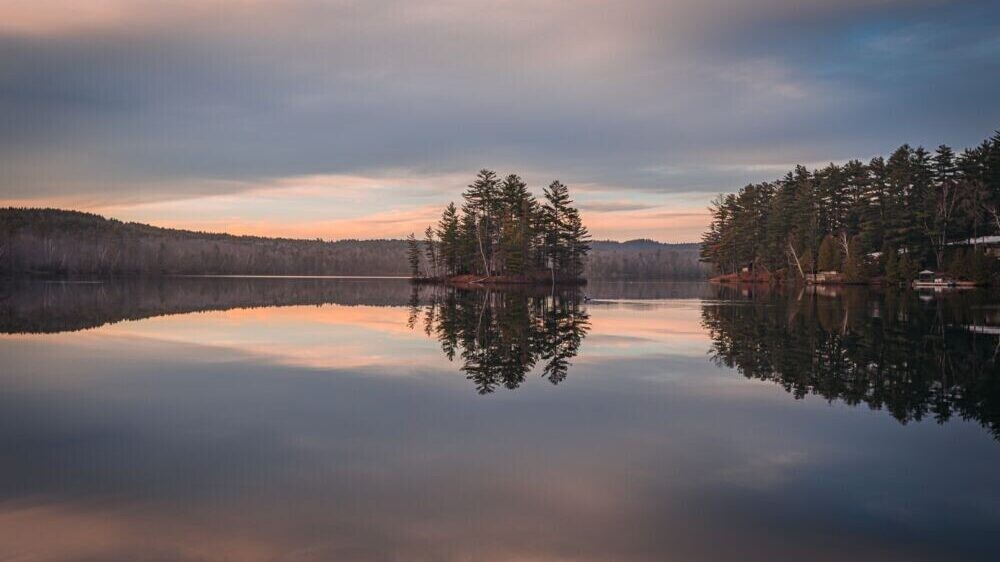
Every summer at Suncook Lake in New Hampshire, volunteers hit the water nearly every day. Some explore the water area on boats, others look for new sources of infection from kayaks and SUP boards, and divers manually remove dangerous plants from the bottom.
The main enemy is variable milfoil, one of the most aggressive invasive species to spread to American waterways.
“We are not making progress. We just keep it under control,” admitted volunteer Lee Petruk, who has been participating in the fight to preserve the lake for many years, in an interview with the publication.
According to the New Hampshire Department of Environmental Services, invasive aquatic plants have been officially detected in about 100 lakes and reservoirs in the state. However, experts from the environmental organization NH LAKES believe that the real number of contaminated water bodies may be much higher.
The problem lies in the biology of the plants themselves. Many of them are able to recover even from a small fragment of the stem. Sometimes all it takes is a tiny piece of plant that lands on a boat, trailer or fishing equipment to be transported to another body of water.
Climate change provides an additional benefit to invasive species. Warmer waters and rising nutrient concentrations create conditions in which non-native plants begin to crowd out native species.
“If left unchecked, they will become dominant,” warned New Hampshire Water Resources Commissioner David Neals.
According to experts, the consequences affect not only the environment. Overgrown vegetation degrades water quality, crowds out native plants and animals, and makes many lakes unsuitable for swimming, fishing, and recreation.
“When lakes are filled with invasive plants, recreation becomes impossible,” said Elizabeth Harper, executive director of the Lake Sunapee Conservation Association.
For many American regions, this also means direct economic losses. Lakes remain an important element of the tourism industry and influence property values around bodies of water.
The struggle comes at a cost. Removing plants by divers can cost hundreds of dollars per trip, and using herbicides or special underwater suction systems can cost tens of thousands of dollars per treatment. In early June alone, New Hampshire officials approved nearly $235,000 in grants for local organizations working to curb the spread of invasive species.
However, even large-scale expenditures do not guarantee success. Ecologists emphasize that the only real chance to completely get rid of an invasive plant occurs when it is detected at its earliest stage.
This happened on Lake Sunapee, where in 2024 an inspector noticed just one stem of a dangerous plant caught on a boat. After this, a large-scale operation was organized to survey the lake and remove all discovered plants. A year later, new checks revealed no traces of infection.
However, such stories remain rather the exception. At nearby Baptist Pond, the problem was noticed only a few years later, but this was enough to make complete eradication of the plant almost impossible.
According to experts, this is why many American lakes today are in a mode of endless defense. Once an invasive species has become established in an ecosystem, the challenge changes from one of victory to one of ongoing and costly containment.
“The question is not whether eradication is possible. The question is how much money are you willing to spend on it,” stated NH LAKES Program Director Brea Arvidson.