




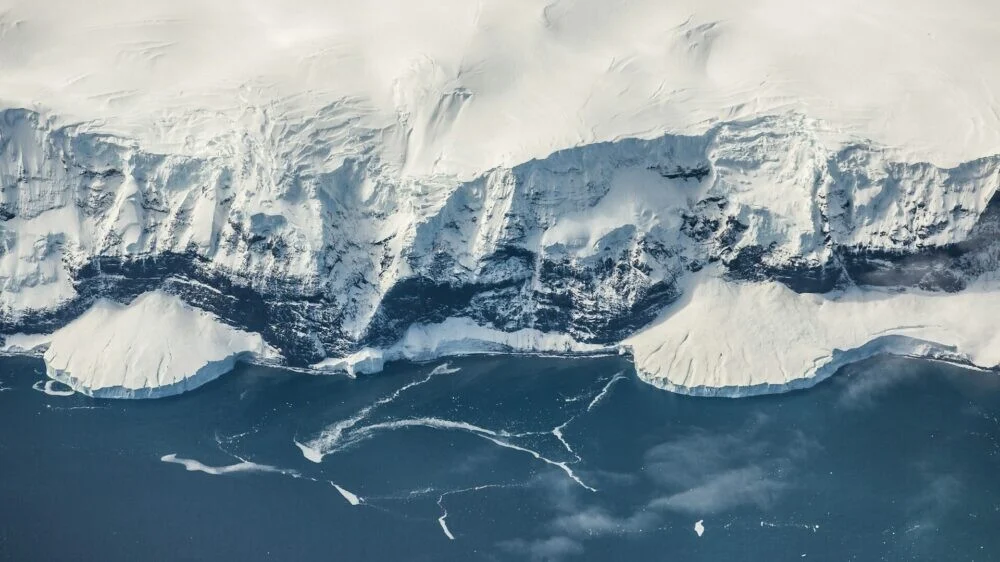

A large area of the Bellingshausen Sea off the west coast of Antarctica, which usually freezes in early June when winter sets in in the Southern Hemisphere, has been ice-free this year, the Australian Broadcasting Corporation (ABC) reports. The area of unfrozen waters is about 650 thousand square meters. km, which is comparable to the territory of France.
University of Tasmania (Australia) researcher Will Hobbs said he has been monitoring satellite images of the Bellingshausen Sea every day since April. According to him, current oceanographic conditions are not conducive to the formation of significant volumes of ice this season.
“It is highly likely that current oceanographic conditions will not allow significant amounts of winter sea ice to form,” Hobbs said.
This situation, in his opinion, is not surprising, since the sea temperature in this area is influenced by the relatively warm waters entering here, as well as warm ocean currents.
“This is a very unusual area in terms of oceanography. The water here is relatively warm and there is a close connection with warm ocean currents moving south. That is why there is significant loss of continental ice here,” he explained.
According to his forecasts, in August and September some amount of ice will still appear in the water area, but due to drift from other areas. However, he does not rule out that the ice cover in this area may not recover to its previous volume.
“It is likely that some ice will still form in August and September. Some of it may come from other areas, but I don’t think it will ever form a full volume of ice here in the future,” Hobbs added.
The trend towards decreasing sea ice in Antarctica was clearly evident in 2023, when its area decreased by 1.5 million square meters. km compared to previous years.
“We’ve experienced record lows before in the summer, but this is the first time this has happened in the winter,” Hobbs said.
Dr Hobbs said further loss of sea ice could have serious consequences for the region’s ecosystem. Populations of penguins and other animals dependent on the ice cover will be at risk.
In addition, a decrease in sea ice can indirectly affect the rise in sea levels. Ice sheet acts as a natural barrier between the ocean and ice shelves. The weakening of this barrier makes it easier for warm ocean waters to penetrate glaciers, which accelerates their destruction and, as a result, contributes to sea level rise.
“Sea ice itself is part of the ocean, so melting it does not directly raise sea levels. However, it serves as a protective barrier to ice shelves that influence sea levels,” Hobbs explained.
Speaking about the reasons, scientists note that a direct connection between the ongoing changes and the global increase in ocean temperature has not yet been proven. However, the available data is consistent with what researchers expect to see with global warming.
“Numerous studies of sea ice show that rising ocean temperatures, particularly at depths between 100 and 300 m, are having a significant impact on ice formation,” said oceanographer Edward Doddridge from the Tasmanian Institute of Marine and Antarctic Research.