




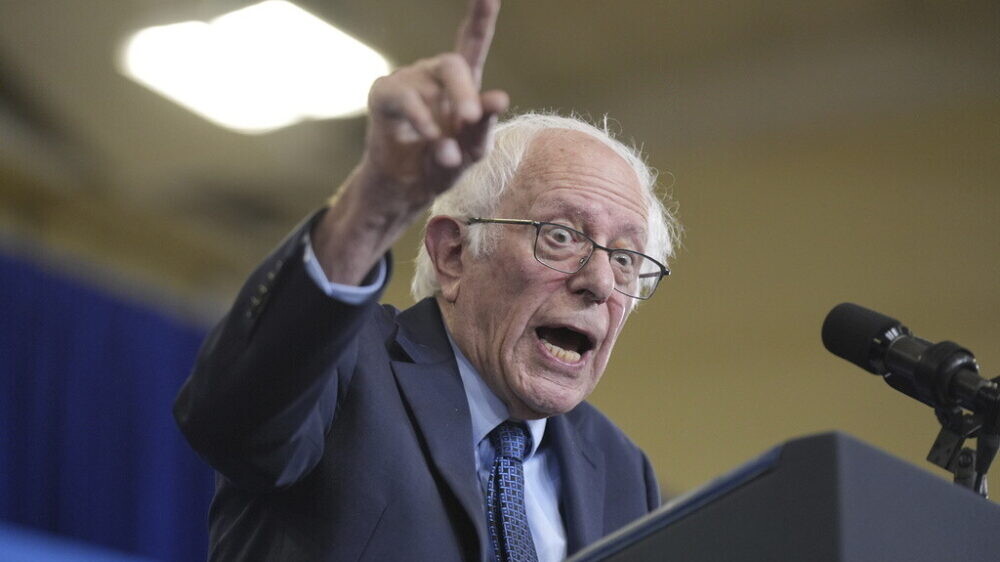

A bill has been reintroduced in the US Congress that aims to reduce the standard workweek from 40 to 32 hours. The authors of the initiative were independent Senator from Vermont Bernie Sanders and member of the House of Representatives from California, Democrat Mark Takano.
The document was intended to amend the Fair Labor Standards Act of 1938 (FLSA) and was called the “32-Hour Workweek Act.” A gradual transition to the new schedule is implied. In the first year after the law comes into force, a maximum of 38 hours per week is established, then a year later – 36, then 34 and finally 32 hours at the end of the transition period.
The bill is also intended to change the rules for overtime pay: if an employee works more than 8 hours a day, the rate should increase by one and a half times. If a person works more than 12 hours a day, the payment should be at least twice as high as usual.
Employers wishing to maintain the 40-hour week will be required to pay the extra shift as overtime. We are also not talking about a mandatory four-day week – the distribution of 32 hours of work will be left to the discretion of organizations. Separately, the initiative notes that employers will not be able to reduce wages or cut benefits for employees due to the transition to a shortened week.
Sanders said that in an era when artificial intelligence (AI) and robotics will “radically transform” the U.S. economy, it is critical that the financial benefits of these new technologies “go to working families, not a handful of billionaires and corporate CEOs.” The senator sees one of the ways of such a redistribution of funds in this bill.
“The 32-hour work week is not a radical idea. What's so radical is that despite rapid advances in technology and productivity over the past 50 years, millions of workers are working longer hours for less pay while nearly $80 trillion has been redistributed from the bottom 90% of the population to the richest 1%. This must change,” Sanders said.
Takano takes a similar position, noting that the 40-hour work week was enshrined in law almost 90 years ago. The Democrat stressed that since then, mobile phones, the Internet, and now artificial intelligence have increased productivity, but the profits largely “end up in the hands of billionaires and corporations.”
“It is time to bring labor standards into line. I am proud to continue to work with Senator Sanders to reintroduce this bill so that all American workers can benefit from historically strong productivity,” Takano said.
As noted in press releases from both politicians, the bill has received the approval of several major trade unions and organizations. Among them are the Association of Flight Attendants (AFA-CWA), the American Federation of Labor-Congress of Industrial Organizations (AFL-CIO), and others. The initiative was also supported by the National Labor Law Project (NELP), the National Nurses Union (NNU), the Electrical, Electronics and Mechanical Workers Union of America (UE) and other groups.
However, the bill also has critics. Republican strategist Karl Rove called the idea “idiotic” in comments to Fox News host Brian Kilmade, noting that he himself worked more than 40 hours. Separately, he mentioned the disproportion between the employment of workers and the payment for their labor with the potential adoption of the bill.
“Tell me how it is possible that you, for example, the owner of a small company, have six employees who will now work only 32 hours, but you will continue to pay them for 40 hours of work. How are you going to find 20% more money to pay people for the remaining eight hours?” Rove asked.
US Agriculture Secretary Brooke Rollins also discussed the idea of shortening the workweek in an interview with Fox Business. She stressed that she could not imagine a scenario in which workers could be told to “let everyone just stay home for a couple more days.” She called work “biblically based” and added that the American Dream, in her view, does not include a four-day workweek.
The president of the conservative organization Club for Growth, which advocates for economic freedom, David McIntosh, in an interview with the TV channel, called the introduction of the bill into Congress “far-left radical socialist politics” and emphasized that the initiative risks “making the lives of Americans even more unaffordable.”
“AI will make people more productive and get paid more, but Bernie's idea [Сандерса] will harm the very workers he is trying to help. A lot of people will lose their jobs and benefits when something like this is implemented,” McIntosh added.
This is not the first time that politicians have advocated for a shorter working week. Takano introduced similar bills in Congress in 2021 and 2023, and Sanders introduced similar bills in 2024, but the initiatives were never successful. This year, the chances of its adoption and entry into force are also low, since Republicans currently control both the House of Representatives and the Senate, USA Today clarifies.