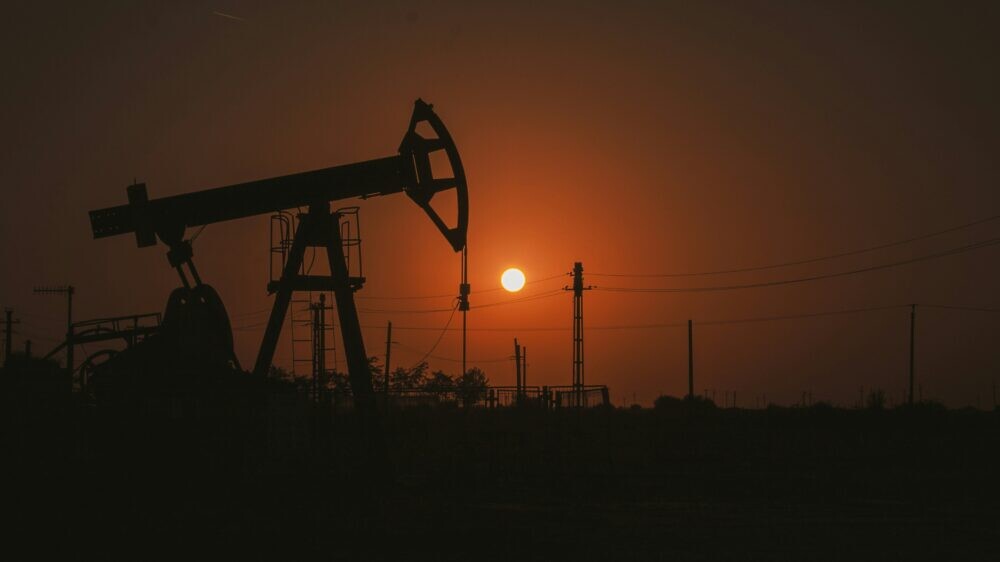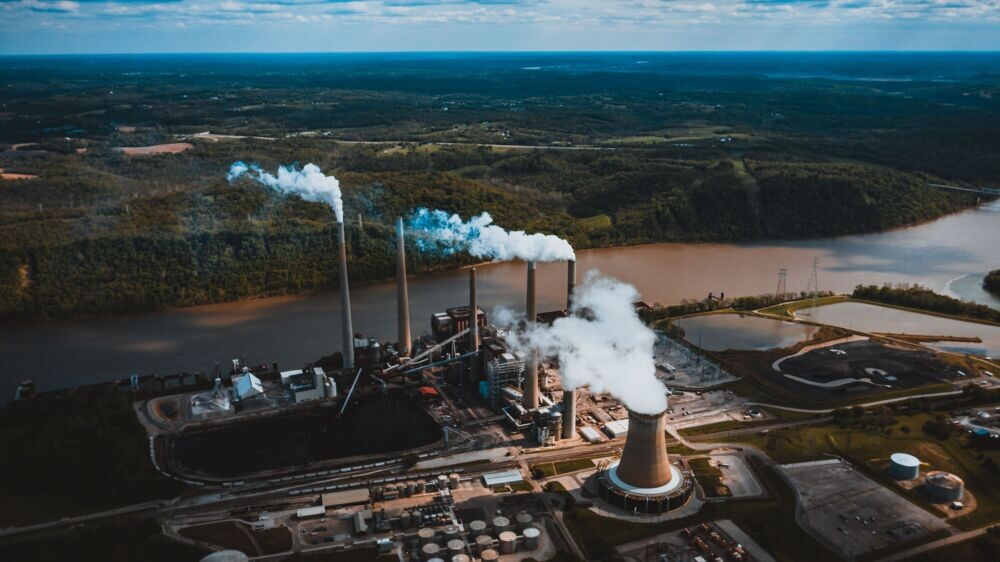

About half of the impacts of climate change on water resources in the western United States can be attributed to emissions from the world's largest oil, gas, coal and cement companies, including BP, Chevron, ExxonMobil and Shell. This conclusion was reached by the authors of a study published in the journal Communications Earth & Environment. According to their calculations, emissions associated with the largest producers led to reductions in snow cover and river flows, while simultaneously increasing agricultural demand for water.
The study's authors analyzed the impact of emissions from the so-called Carbon Majors—122 of the largest producers of oil, gas, coal and cement—on water resources in the western United States. This group includes, among others, BP, Chevron, ExxonMobil and Shell. Collectively, the Carbon Majors have accounted for about 70% of global industrial carbon dioxide emissions since 1854, with approximately 97% of these emissions occurring after 1950.
The researchers concluded that emissions of Carbon Majors since 1950 are responsible for approximately 40-64% of changes in water resources in the western United States caused by human-caused climate change.
Over the past decade – from 2014 to 2024 – emissions associated with the largest pollutants, according to scientists' calculations, led to a reduction in the volume of water in the snow cover by about 15%, or 35 cubic meters, by April 1. km per year. This is comparable to the maximum capacity of Lake Mead, the largest reservoir in the United States.
Scientists found the most noticeable effects in the northwestern United States and California. The situation is complicated by the fact that most of the precipitation in the west of the country falls in the winter in the form of snow. The mountain snow cover actually acts as a natural reservoir: in spring and summer, the snow gradually melts and provides water to the rivers precisely when consumption reaches its maximum.
Due to rising temperatures, there is less snow and melting begins earlier. As a result, there is less water during the hot months, when agriculture especially needs it. At the same time, higher temperatures increase evaporation and the need for crop irrigation.
The researchers paid special attention to the Central Valley of California, one of the most important agricultural regions in the United States. From 2003 to 2024, Carbon Majors emissions accounted for about a third of climate-related groundwater loss, according to the authors' calculations. When all causes of underground depletion are taken into account, they account for about 10% of the total decline.
“Emissions associated with Carbon Majors are exacerbating an already severe water crisis in the western United States. Taxpayers, states, municipalities and local communities are paying for the damages and costs associated with these climate impacts,” said Union of Concerned Scientists (UCS) climate scientist Angel Fernandez-Bow, one of the study’s authors.
UCS separately names BP, Chevron, ExxonMobil and Shell among the largest fossil fuel producers. Among private oil and gas companies, Chevron, ExxonMobil and BP account for the largest historical emissions, according to the Carbon Majors database.
The authors of the study note that the results obtained may have not only environmental, but also legal consequences. A number of states are already attempting through the courts and so-called climate superfund laws to force fossil fuel producers to compensate for part of the costs associated with the consequences of climate change. The new methodology makes it possible to estimate what share of specific environmental damage is associated with emissions from a certain group of producers.
The water crisis in the western United States has worsened significantly in 2026. As RTVI wrote, by spring drought of varying severity covered more than 60% of the country's continental territory, and March became the third driest in the history of observations. The heat caused unusually little snow to form in the western United States, further reducing natural water supplies.
The situation is particularly difficult in the Colorado River basin, on whose water more than 40 million people and vast agricultural areas depend. Lake Powell's spring water level was about 23% of its full capacity. Authorities were considering diverting water from the upstream Flaming Gorge Reservoir to prevent levels from falling to critical levels that would cause problems with hydroelectric power at Glen Canyon Dam. RTVI reported that problems also affect downstream Lake Mead. Dwindling water supplies in the Colorado system threaten not only water supply and agriculture, but also power generation.