



Democratic senators called on the administration of US President Donald Trump to step up efforts to free Americans imprisoned in Russia. Among other things, the authors of the appeal propose to include the Russian Federation in the list of states sponsoring illegal detentions.
Trump signed a decree creating this category of countries in September last year. It was assumed that the State Department would grant this status to states that “wrongfully detain US citizens or support non-state actors doing so.” There are currently only two countries on the corresponding list: Iran was included there in February of this year, and Afghanistan in March.
In a collective letter, Democratic senators led by Minority Leader Chuck Schumer called on the Trump administration, among other things, to ensure adequate consular access to all US citizens detained in Russia, to “create a plan for further action” and to intensify dialogue with Moscow, which has been “stalled” amid the Ukrainian conflict.
“We are deeply concerned that linking the fate of these Americans and their families to broader problems in the U.S.-Russia relationship and delaying acknowledgment that they were wrongfully detained only prolongs their suffering,” the lawmakers wrote.
The letter mentions five US citizens imprisoned in Russia: Andre Khachaturian (in 2023 he was sentenced to eight years in a general regime colony for transporting a pistol at Moscow Sheremetyevo Airport), David Barnes (in 2024 he received 21 years in prison for pedophilia, the sentence was later tightened), Olga Yetsler (in 2022 he received 10 years in prison for drug trafficking), Alexander Antonov (in 2025 sentenced to six years in prison for calls for terrorism and extremism) and Charles Zimmerman, who earlier this year was sentenced to five years in prison for illegally transporting and moving weapons and ammunition across the border.
Democrats called on the State Department to recognize all of these individuals as illegally detained in accordance with the Robert Levinson Act (at the moment, only one of them has such status). According to this document, a special group is being created in the US government to deal with the release of Americans arrested abroad, and Washington can impose sanctions against countries and individuals involved in the unlawful detention of US citizens.
“This would provide additional legal and social protections and strengthen the US negotiating position to secure the return of hostages,” the Democrats wrote. “Senators call on the administration to use all diplomatic, economic and political tools to secure the release of those detained.”
Earlier this week, ex-Marine Robert Gilman returned to the United States. Russian President Vladimir Putin reportedly pardoned him on humanitarian grounds so Gilman could receive treatment in the United States. Trump said that Putin made this decision after a conversation with him. At the same time, Moscow did not ask for the release of anyone in return.
As RTVI reported, Gilman was first detained on January 17, 2022, in the carriage of a Sukhum-Moscow passenger train. According to the Investigative Committee of Russia, he was drunk, violated public order and, not agreeing “with the legitimate actions of government officials,” kicked a policeman several times. Then a case was opened against the American for using violence against a government official in connection with the performance of his official duties. In the fall of the same year, a Voronezh court sentenced Gilman to four and a half years in prison, but then the sentence was commuted to three and a half years. Later, in October 2024, the Central District Court of Voronezh sentenced Gilman to another 7 years and 1 month in a maximum security colony for attacks on pre-trial detention center and colony staff, as well as an investigator during the period when he was already serving his sentence.
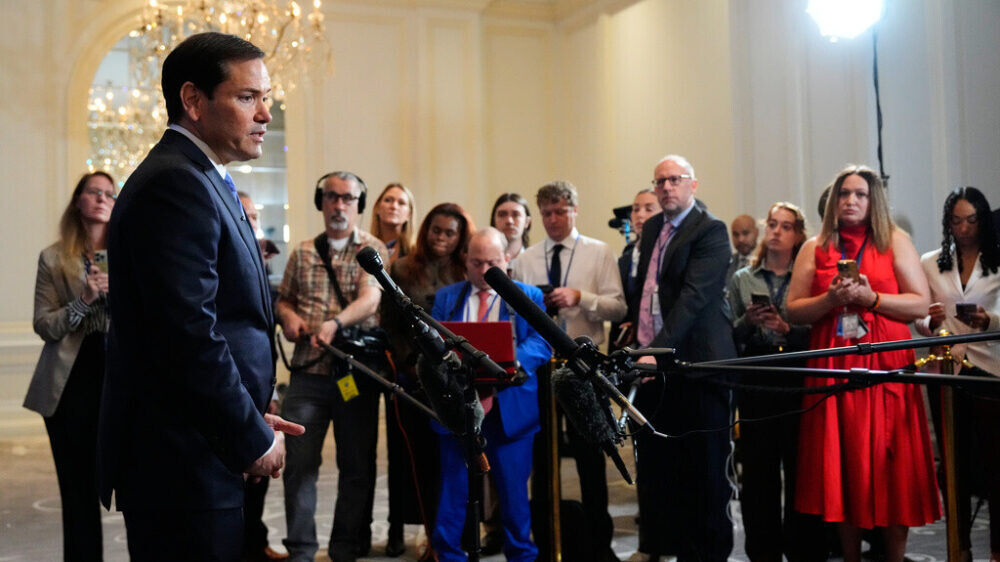
After Gilman's release, US Secretary of State Marco Rubio noted on social media that Washington would work for the “immediate return” of “all other unjustly detained Americans.” At the same time, he mentioned only Stephen Hubbard, to whom in 2024 the Moscow City Court sentenced him to 6 years and 10 months in prison in a mercenary case. The court's decision came on the same day as Gilman's second sentencing.
In May last year, Washington, according to Reuters, handed over to Moscow a list of nine Americans sentenced to prison terms in Russia, but whom the White House would like to return to their homeland. Earlier, in April 2025, the United States released Artur Petrov, who was accused of smuggling, violating export control and money laundering, and Moscow released ballerina Ksenia Karelina (aka Havana), a citizen of the Russian Federation and the United States, who was previously sentenced in Russia to 12 years in prison on charges of treason. It was alleged that on February 24, 2022, she “on her own initiative” transferred funds to “one of the Ukrainian organizations, which were subsequently used to purchase tactical medicine, equipment, weapons and ammunition by the Ukrainian Armed Forces.”
Also in February 2025, Moscow released American Mark Vogel, who was arrested in 2021 for attempting to enter Russian territory with 17 grams of cannabis. According to relatives of the man, who worked as a US Embassy employee and a teacher at an Anglo-American school in Moscow, the drug was prescribed to him for medical reasons to treat chronic back pain. He was eventually sentenced to 14 years in a maximum security colony for smuggling and illegal possession of drugs.