

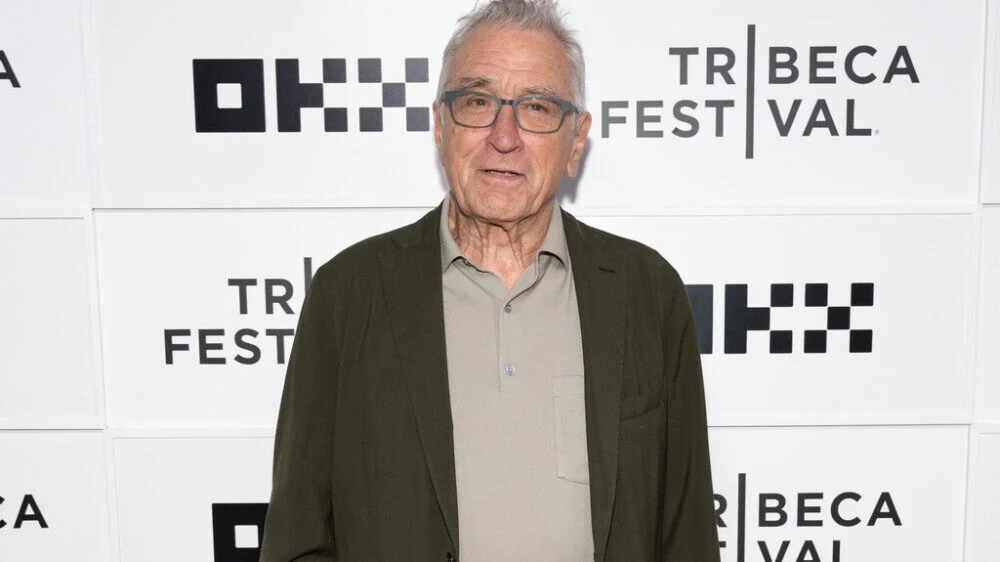

When people talk about film festivals, they usually think of Cannes, Venice or Berlin. But for New York, Tribeca has a special meaning – a festival that was born not from a desire to create another red carpet, but from the need to bring life back to the city after the tragedy of September 11.
This year Tribeca took place over 10 days and ends on Sunday, June 14th. The program featured 146 full-length and short films, including 103 world premieres.
The festival was founded in 2002 by Robert De Niro, producer Jane Rosenthal and entrepreneur Craig Hatkoff. After the attacks on the World Trade Center, Lower Manhattan was virtually paralyzed: residents left, businesses closed, and the Tribeca area lost its usual energy. Then the idea arose to use culture as a tool for city restoration.
That’s why Tribeca was more than just a film festival from the very beginning. This was a civilian project.
For Robert De Niro, the festival has always remained a personal story. He has lived and worked in Tribeca for decades and is seen by many as the area’s unofficial custodian. If Cannes is associated with the Cote d’Azur, then Tribeca is largely associated with De Niro himself. Its role cannot be overestimated: the festival helped bring people back to the city center and became a symbol of New York’s cultural revival after 9/11.
In 25 years, Tribeca has grown far beyond the cinema. Today it is a festival of films, TV series, music, podcasts, games, technology and conversations about the future of culture. Hollywood stars, independent directors, documentarians and startup founders feel equally comfortable here.
If De Niro symbolizes Manhattan and Tribeca, then Darren Aronofsky is the other New York. His New York is Brooklyn. It was there that his worldview and aesthetics were formed. Aronofsky’s films, from Requiem for a Dream to Black Swan, capture the energy of a city beyond the tourist postcards: nervous, cerebral, controversial and ever-changing.
So there is an interesting symbolic division in the cultural map of New York today. Robert De Niro represents historic Tribeca, a neighborhood that became a symbol of recovery and resilience after 9/11. Darren Aronofsky embodies creative Brooklyn—a territory of experimentation, independent thinking, and new voices.
It is between these two poles – memory and experiment, tradition and the search for the new – that the Tribeca Festival has been developing for a quarter of a century.
And perhaps that is why this festival remains the most “New York” of all the major film festivals in the world.
Nellie Holmes
Journalist, cultural researcher and producer
For 17 years she represented Russia as a member of the international jury of the Golden Globe Awards. For the last five years, he has been developing his own intellectual platform, Silicon Tatar™, dedicated to issues of culture, technology, human behavior and the future in the era of AI.