
According to the National Aeronautics and Space Administration (NASA), on Tuesday, June 9, a parade of planets will be seen throughout the United States – an astronomical event when celestial bodies will be close to each other in the sky and can be seen with the naked eye from Earth.
Since the planets of the Solar System rotate around the star at different speeds, sometimes their location in orbits visually brings the celestial bodies closer together and they end up on the same side of the Sun. When this coincides, people on Earth see what is called a “conjunction” in astronomy parlance, the Planetary Society notes.
“A planetary conjunction is a phenomenon where, from Earth, two or more planets appear close to each other. This is a special opportunity for astronomers – from professional scientists to ordinary observers,” the organization clarifies.
First, on June 9, Venus and Jupiter, the two brightest planets, will meet in the sky. From June 11 to June 15, Mercury will join them, NASA notes. It will be a multi-day spectacle involving three planets, visible throughout the United States, the space agency said.
Venus will be brightest and easiest to see, with Jupiter nearby. Mercury will be lower, closer to the horizon, so observers will need a clear view to the west to see it in the twilight light.
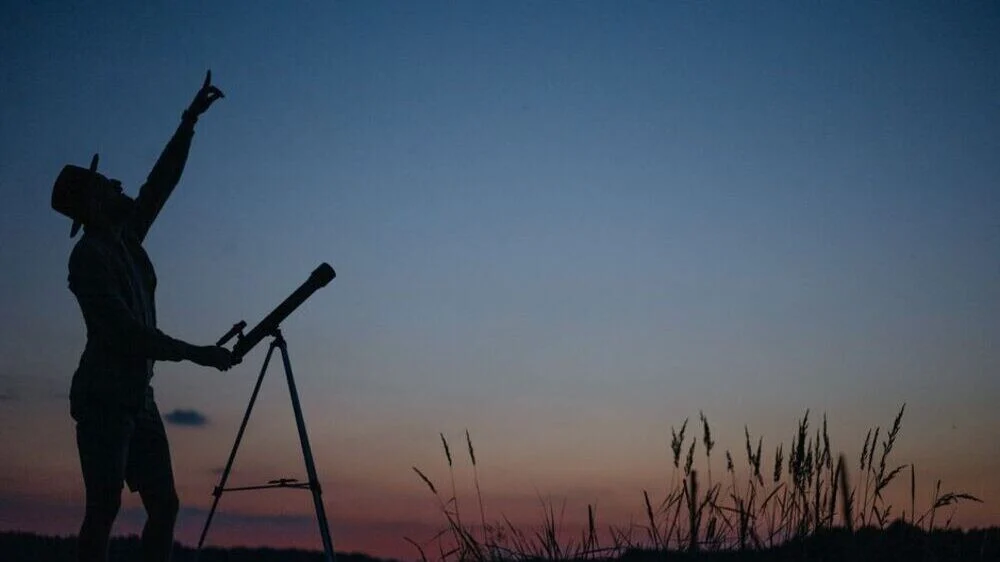
For maximum comfort, it is recommended to find a place free of “light pollution”, that is, unnecessary light sources, and provide a view of the horizon without obstacles such as trees or tall buildings. Mercury, Venus and Jupiter are among the five planets, along with Mars and Saturn, that are visible without optical instruments. However, if you wish, you can use a telescope or binoculars to see celestial bodies more clearly.
The parade of planets will not be the only astronomical event this month. On June 17, the Moon will pass in front of Venus.
“The phenomenon is called occultation by the Moon. To observers in the correct line of sight, Venus will appear as if it disappears behind the Moon and then reappears,” NASA said.
The eclipse will be visible in parts of the United States, Canada, Brazil and Venezuela. At the same time, when observing it, you should not point binoculars, a telescope or a camera close to the Sun unless special protective equipment is used, the space agency warns. Looking at a star through conventional optics can cause serious eye injury.
Towards the end of the month, on the 21st, the June solstice will occur and astronomical summer will begin in the Northern Hemisphere. On this day, the Sun reaches its maximum height above the horizon, and daylight hours become the longest of the year.