
New York's 25,000-member Amish community has issued an ultimatum to local officials that they will leave the state unless they are allowed to opt out of mandatory vaccinations in their schools. According to the New York Post (NYP), a lawsuit by a religious movement, which was filed in connection with fines for non-compliance with rules, is already being considered by the US Supreme Court.
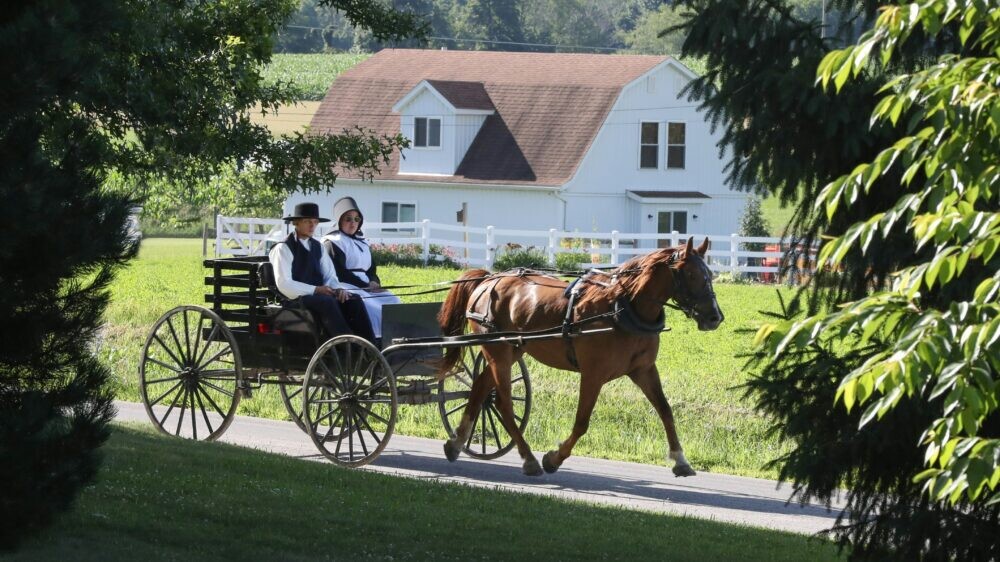
The Amish represent an ultra-conservative branch of the Mennonite Church of Christianity, which arose as a result of a schism in the 17th century. They are known for their frugal lifestyle, eschewing modern technology and fashion, riding horse-drawn carts and using little or no electricity. In the United States, almost half a million Amish live in 32 states, and the community in New York is the fifth largest.
According to the New York City school vaccination schedule, children should receive 24 to 27 vaccinations from 1st to 12th grade. The state previously had an exemption for religious communities, but it was rescinded by former Gov. Andrew Cuomo after a measles outbreak among Orthodox Jews in 2019.
Three Amish schools in the community have recently received fines totaling $118,000 for failing to comply with vaccination requirements, $2,000 per case, New York Amish lawyers told NYP. The situation became the reason for a protracted lawsuit over possible violations of religious freedom, which went through several instances and reached the US Supreme Court.
“When you think of American culture, the Amish is always on the list, along with apple pie and fireworks. They are part of the fabric that America is made of. This will be a litmus test and a good test of our religious freedom and tolerance,” lawyer Hiram Sasser told the newspaper.
In a handwritten letter provided to NYP, plaintiff Ezra Wengerd, 55, of the village of Canajoharie, explained that his family and community could not agree to be vaccinated for religious reasons.
“We, a peace-loving religious group, sincerely regret causing trouble to the state. We are truly grateful to New York State for the many privileges, freedoms and protections it has provided us with over the years. Our Almighty God wants us to rely completely on His faith and trust. And this contradicts trust in vaccines. We are also commanded not to be like this world,” Wengerd wrote.
Law professor Christopher Lund suggested that the Amish have little chance of success in the Supreme Court, even though they are considered a “sympathetic” population in the United States.
According to the NYP expert, during the COVID-19 pandemic, the court sided with the authorities and doctors in similar claims from other communities. New York's law is considered to be based on scientific consensus and neutral in relation to different groups of the population, he also believes.
As the publication adds, if the trial is lost, the Amish are going to move to Pennsylvania, where the largest community in the country lives – about 95,000 people. In addition, judicial practice can play an important role when choosing a new place of residence.
In Minnesota, Ohio and Pennsylvania, Amish plaintiffs from the 1980s to the 2020s won state-level cases involving photo IDs, horse-drawn vehicle safety equipment and building codes, the newspaper said.
The Amish in the Supreme Court are supported by the US Department of Health and Human Services (HHS), led by Robert Kennedy Jr., NYP adds. The official was previously often reproached for being skeptical about vaccines.
A ministry representative in a comment to the publication mentioned US President Donald Trump's recent decree on new recommendations to reduce childhood vaccinations, noting that the administration reaffirmed its commitment to “the principle of parental freedom of choice and freedom of religion in matters of childhood vaccination.”
“The Department of Health and Human Services will continue to protect the right of parents to make informed health care decisions for their children consistent with their deeply held beliefs,” the HHS spokesperson added.