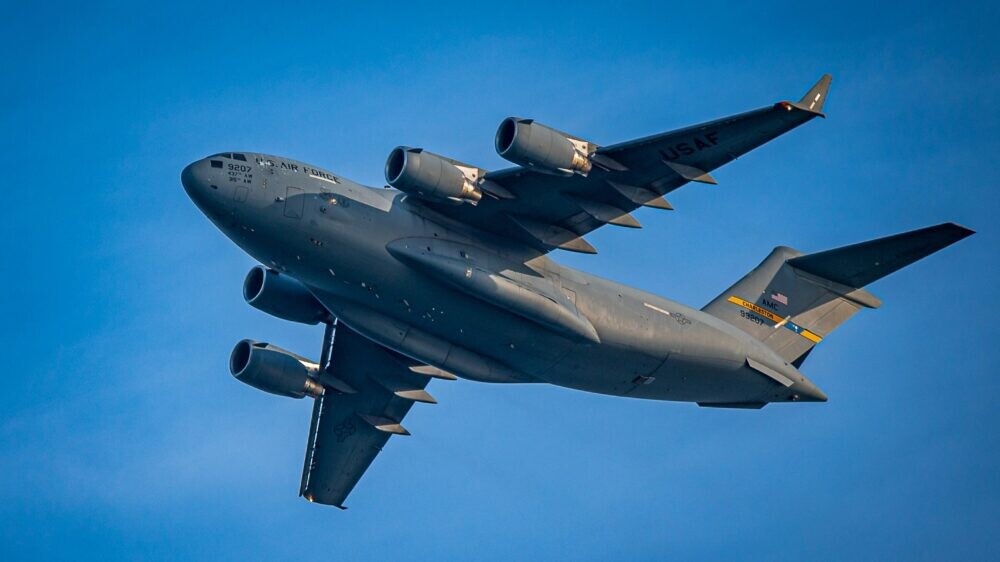
A US Air Force C-17 Globemaster cargo plane took off from Christchurch Airport in New Zealand to Antarctica but was forced to turn around after a report from Russia about “potentially dangerous” space activities, New Zealand's The Post reported.
The flight was planned during the annual winter air travel period, when flights resume between Christchurch and the American Antarctic Research Base at McMurdo, as well as New Zealand's Scott Base in Antarctica, CNN reports. This is the period for transporting personnel, equipment and supplies before the summer research season, the TV channel clarifies.
The plane took off from Christchurch at around 9am local time on Tuesday and headed to McMurdo Station. A few hours later it turned over the Southern Ocean after a warning, and in total it spent about 150 minutes in the air.
The local Civil Aviation Authority (CAA) is said to have received a notice to pilots from Russia's Air Traffic Control Center about the planned missile launch and the associated “potential danger to international airspace” within the New Zealand oceanic area. New Zealand Foreign Minister Winston Peters told The Post he had been briefed on the situation.
“New Zealand is aware that Russia has notified aircrew and naval forces of the planned missile launch and the associated potential threat to international airspace south-east of New Zealand. However, the details of the Russian notification are unclear at this time and we are requesting additional information,” Peters said.
New Zealand's Deputy Transport Minister James Meagher, who is responsible for aviation, also said he was monitoring the situation. As soon as there was notice of a planned missile launch affecting the country's oceanic flight zone, a danger zone was created and a warning was issued so that air traffic controllers could make informed decisions, he said.
Security analyst Paul Buchanan, in a comment to the publication, called the trajectory of Russian activity “extending to the very depths of the South Pacific region.” He said it was “a little weird,” although it could have been either accidental or intentional. In the case of the latter, this would raise “diplomatic concerns,” the expert added.
Former New Zealand Defense Minister Wayne Mapp, speaking to The New Zealand Herald, suggested that the threat of falling space debris could be the reason for the change in the American plane's route. According to his version, Russia could have warned about the return of a spent rocket stage or other object to the atmosphere after launch. Mapp noted that such fragments usually burn up in the atmosphere, but larger pieces are capable of reaching the Earth's surface, so aircraft should avoid the potential impact zone.
At the time of writing this material, no official comments from Washington or Moscow had been published.