


Protests in Kenya against a US-funded center for isolating people exposed to the Ebola virus have become the latest example of growing resistance from African countries to the policies of the Donald Trump administration, CNN writes.
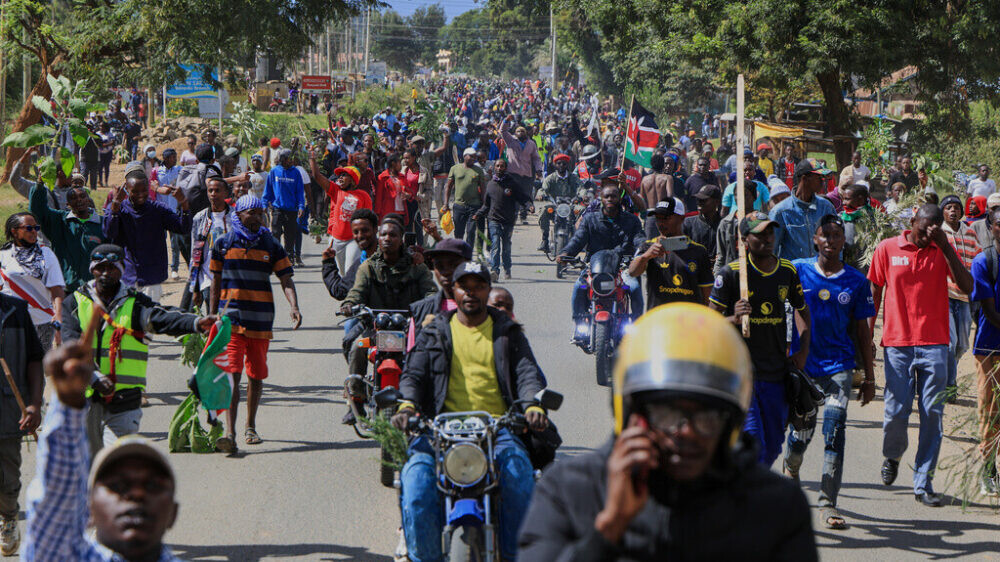
Last week, protests took place in Nairobi and other cities in Kenya under the slogans “Kenya is not an American colony!” The reason was plans to create a special department in the country for Americans who might have come into contact with the Ebola virus abroad.
The initiative has raised fears that the deadly disease could enter the country, where no cases of Ebola have yet been reported. The closest outbreaks are in the east of the Democratic Republic of Congo (DRC) and neighboring Uganda.
Critics of the project argue that the United States is trying to shift risks onto Kenya that it is not prepared to take on within its own country. Despite a court decision that temporarily stopped construction of the center until the proceedings are completed, the Kenyan government continues to support the project. This only increased public discontent.
President William Ruto said abandoning the Washington-funded facility would be “inhumane” after years of American aid to Kenya. However, former Vice President of Kenya Rigati Gachagua, who resigned in 2024, called the developments a manifestation of double standards on the part of the United States.
“If Americans themselves are not willing to treat such patients at home because of the risk to the population, why should this happen in Kenya? We consider this unfair and are categorically against it,” he told CNN.
According to CNN, the dispute over the Ebola center reflects a broader trend: more and more African countries are beginning to openly resist Washington’s approach to cooperation, which critics call transactional and focused primarily on US interests.
Since returning to the White House, Donald Trump has suspended most foreign aid and canceled thousands of USAID contracts. The measures were part of a dismantling of the US Agency for International Development and led to cuts in funding for health and humanitarian programs around the world, including Africa, one of the largest recipients of American aid.
For decades, the United States has funded programs to combat HIV, malaria and tuberculosis on the continent. Now they are gradually being replaced by Trump’s America First Global Health Strategy, which involves a transition from large-scale assistance to direct agreements with individual states. Washington explains this by the desire to reduce countries’ dependence on external support and at the same time promote American interests.
However, as aid moves from a transactional system, questions are increasingly raised about what exactly African countries should provide in return.
Thus, Zambia last month refused to support a $2 billion medical aid package proposed by the United States. The country’s Foreign Minister Mulambo Haimbe said that the agreement provided for preferences for American companies in access to Zambia’s strategic minerals, as well as the transfer of data that violated citizens’ right to privacy.
Similar claims were previously made by the authorities of Zimbabwe and Ghana, who criticized the requirements for the transfer of medical data under new agreements with the United States.
“We need partnerships without hidden conditions,” said Ghana’s Health Minister Kwebena Minta Akanda.
Discontent extends beyond the healthcare sector. In the Democratic Republic of Congo, critics have questioned Washington’s motives in trying to resolve the conflict in the country’s east, which is rich in coltan, a key mineral for making smartphones and other electronics.
After Trump hosted the signing of a peace agreement in Washington between DRC President Felix Tshisekedi and Rwandan President Paul Kagame, some activists and representatives of armed groups accused the United States of seeking access to strategic resources in the region under the pretext of peacekeeping efforts.
According to Solomon Dersso, director of the pan-African think tank Amani Africa, the United States has always promoted its own interests in Africa, but now it is doing so “much more openly and without the same diplomatic conventions.”
Representatives of African countries are increasingly saying that the era of unconditional dependence on foreign aid is coming to an end. Former African Union Special Representative for Somalia and the Sahel Simon Mulongo told CNN that the question today is no longer whether Africa should cooperate with world powers, but on what terms this will happen.
“African states are no longer willing to quietly give away strategic resources under the guise of aid, partnership or emergency support,” he said.