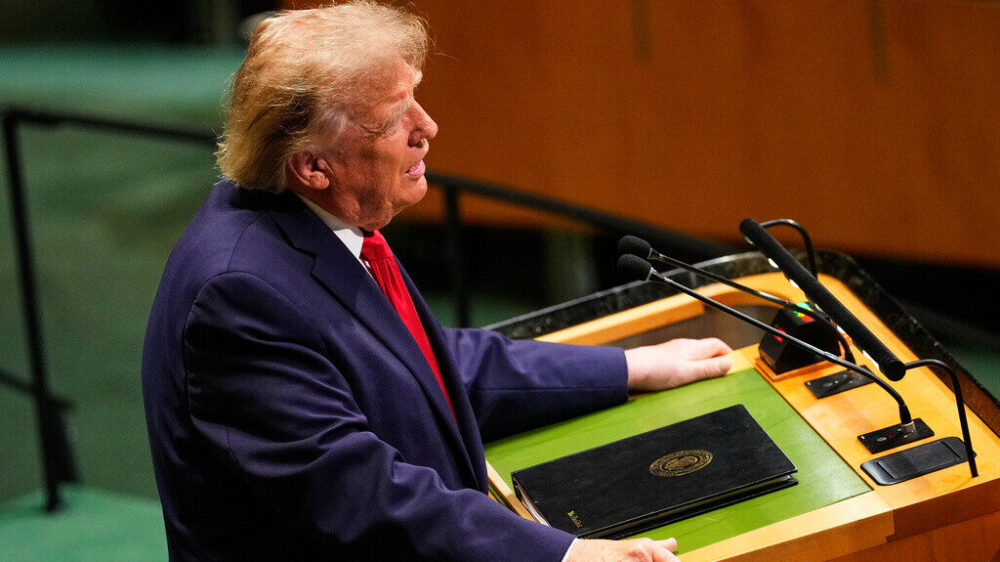

The U.S. Supreme Court ruled Monday in favor of President Donald Trump's administration, allowing federal authorities to continue working to create voter rolls that will allow the Postal Service to deliver ballots only to verified citizens. The justices, by a vote of six to three, overturned a lower court's ruling in a lawsuit brought by 23 mostly Democratic-run states, NBC News reported. Experts interviewed by RTVI said whether this decision will allow Trump to limit mail voting in full and how possible changes could affect the midterm elections in November.
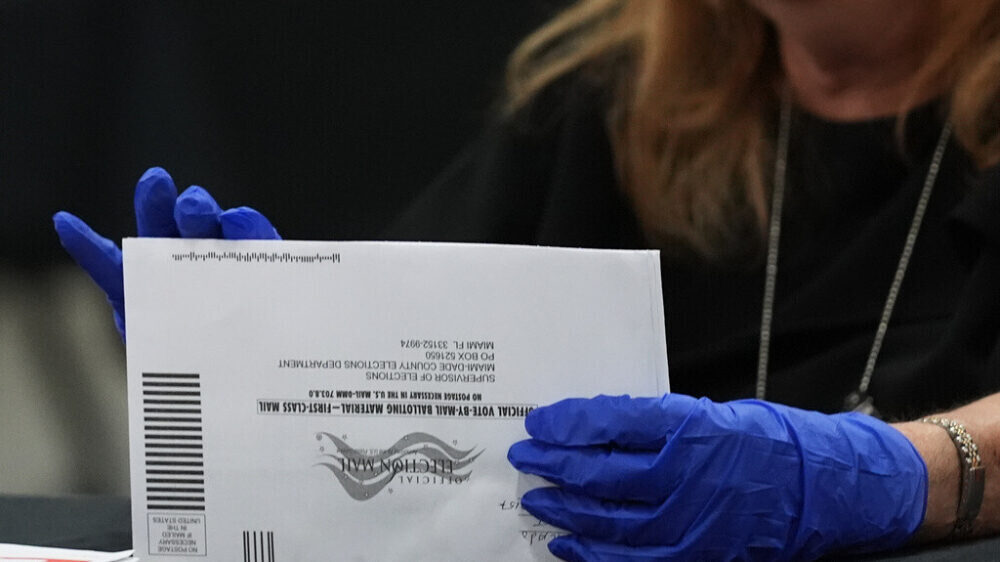
In voting by mail, a ballot is mailed to the home of a registered voter, who fills it out and returns it either by mail or in person at a secure mailbox or voting center. In the US capital Washington and eight states (California, Colorado, Hawaii, Nevada, Oregon, Utah, Vermont, Washington) elections are held exclusively by mail.
Trump has said this year that mail voting is a “corrupt” and “anti-democratic” method, and has erroneously claimed that the United States is the only country that allows this form of ballot submission. Despite criticism of mail-in elections, the president himself has cast ballots this way multiple times in Florida.
Trump's executive order in March, Enforcing Citizenship Verification and the Integrity of Federal Elections, directed the Department of Homeland Security to compile and transmit to states lists of U.S. citizens eligible to vote in each state. Under the mechanism, the U.S. Postal Service must not deliver ballots to those not on such lists. States that refuse to comply with the order could face loss of federal funding.
In June, a federal court in Massachusetts blocked the order following a lawsuit from 23 states and the District of Columbia. Ultimately, the Supreme Court ruled that the states filed their lawsuit too early, before federal agencies had developed a plan to implement the order.
As Richard Hasen, a professor of election law at the University of California at Los Angeles (UCLA), told RTVI, the Supreme Court's decision does not put an end to the proceedings: after the publication of the final rules of the Postal Service, the plaintiffs again went to court.
“The US Postal Service has issued final rules, and now the parties are back in federal district court, arguing over whether to issue a new injunction that would halt enforcement of Trump's mail-in voting rules. A decision on this issue is likely to be made in the next few days. After this, the case may again end up in the Supreme Court, and then the judges will have to consider the issue on its merits,” Khasen noted.
Even though a federal court in Massachusetts on Wednesday struck down the final restrictions of Trump's order in accordance with the Supreme Court, there is little time left to implement the new rules, according to an expert.
“The main problem is that the ballots have already been prepared: in some states they will begin sending them out next week, and for voters abroad by mid-September. Therefore, there is, in fact, almost no time left to implement this order. Everything happens at the last moment. And even if the courts ultimately side with the Trump administration, it is difficult to see how such changes could be implemented in practice,” Hasen said.
The expert called Trump's actions “an unprecedented attempt to interfere in an area that traditionally does not fall under the powers of the president.” He said there are strong arguments, both under the Constitution and under federal law, that the Postal Service cannot restrict delivery of ballots to voters in states that have refused to submit to federal oversight.
Political science professor at the University of Pennsylvania Daniel Hopkins, in turn, noted that Trump is seeking to tighten rules for voting by mail because he considers this method disproportionately popular among Democratic Party supporters.
“He is targeting a voting method that is often used by his political opponents,” Hopkins said.
According to him, if the new rules are introduced, millions of Americans will have to change the way they vote. At the same time, attempts to limit voting access for Democrats may backfire.
“If the executive order is fully implemented, I think we will see a significant voter response: millions of people, if given the opportunity, will change the way they cast a ballot to make sure their vote is counted. If this measure is implemented, Democrats will react more actively to it. They will begin to mobilize, and we will see more changes in the behavior of Democratic voters compared to Republicans,” he said.